

§1What this business is
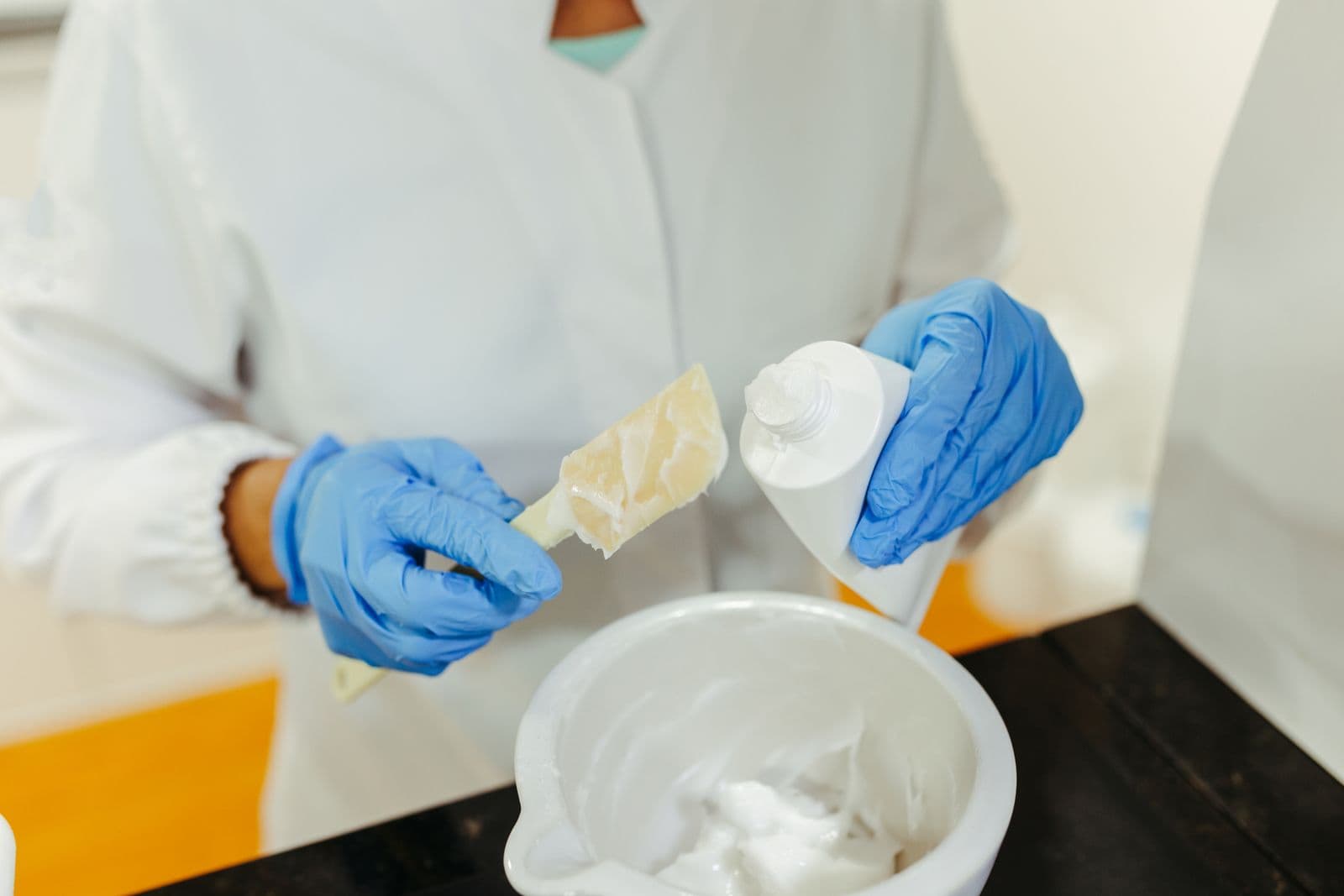
Fresh leaves bought from farmers go through a 4-stage wash (soak, chlorinated rinse, cutting, hot-water wash to remove aloin), then a pulp-removing machine separates the inner gel. The gel is juiced, heated with enzyme and preservative, rested, filtered, and thickened with Carbopol and Aristoflex in a homogeniser before tube filling. Leaves lose activity about six hours after harvest, so a farm-side site helps.
Capacity: 100 litres a day; 30,000 litres (3,00,000 tubes of 100 ml) a year at full capacity (report plans 45% in year 1 to 65% in year 5).
§2Is it right for you?
Who it is for
A farmer group, FPO member or rural entrepreneur near aloe farms, with a partner who can sell to shops or cosmetic firms.
Who it is not for
Someone far from aloe supply or without a hygiene-minded team.
Advantages
- Strong demand for herbal skin care
- Aloe grows easily on dry land — local farm supply
- Margins improve well with volume (net 8% to 15%)
- Gel also sells in bulk to cosmetic makers
Drawbacks
- Leaves spoil within hours of harvest
- Thickeners (Carbopol, Aristoflex) are costly
- Needs a cosmetics licence and hygienic plant
- Many brands already sell aloe gel
Skills you need
- Leaf washing and gel extraction
- Hygiene and batch quality control
- Contract farming with growers
- Retail and bulk sales
Why difficulty 3/5: Simple machines, but perishable leaves and hygiene make it demanding.
§3Market
Who buys
- Skin-care consumers
- Cosmetic and herbal product makers (bulk gel)
- Pharmacies
How it sells
- Medical and cosmetic stores
- Malls and supermarkets
- Bulk supply to cosmetic firms
Good to know
- The Samadhan report quotes global aloe gel market growth of 7.8% a year by value for 2018–2027.
- The NPCS summary quotes India's aloe products market at over USD 242 million by 2022.
§4Raw material & machinery
| Item | Qty | Cost |
|---|---|---|
| Aloe leaf washing unit | 1 | ₹2,50,000 |
| Ultrasound sterilizer | 1 | ₹2,50,000 |
| Aloe leaf pulp-removing machine, 125 kg/hr | 1 | ₹3,00,000 |
| Juicer, 125 kg pulp/hr | 1 | ₹40,000 |
| Mixing tank, 500 litres | 1 | ₹1,75,000 |
| Homogeniser | 1 | ₹1,50,000 |
| Filter | 1 | ₹1,50,000 |
| Paste (tube) filling machine | 1 | ₹1,25,000 |
| Conveyor | 1 | ₹1,50,000 |
| Storage tank, 500 litres | 1 | ₹1,00,000 |
| Leaf-cutting table | 1 | ₹1,00,000 |
| Other machines and equipment | — | ₹10,000 |
From: PMEGP sample project report — Aloe Vera Gel Manufacturing Unit (prepared by Udyami/Samadhan)
- Fresh aloe vera leaves100 tonnes a year at ₹18,000/tonne at full capacity
- Carbopol (thickener)1,500 kg a year at ₹2,000/kg
- Aristoflex (thickener)666 kg a year at ₹4,000/kg
- Calcium hypochlorite (disinfection)400 kg a year at ₹140/kg
- 100 ml tubes3,00,000 a year at ₹2 each
From: PMEGP sample project report — Aloe Vera Gel Manufacturing Unit (prepared by Udyami/Samadhan)
Suppliers in Building Business Bazaar
Aloe Vera, Turmeric Moring And Mushroom Value Addition Cluster · Namsai →
§5Licences & registration
- Cosmetics manufacturing licence from the state drug controller
- GST
- Udyam
- Pollution consent as per state category
- Legal Metrology registration for packaged goods
- Trademark for the brand (optional)
§6Schemes & subsidies
PMEGP sample project at ₹24.83 L; CGTMSE can cover the collateral-free loan.
§7Money
How the investment is worked out: Building/shed (500 sq ft) ₹2.00 L + plant & machinery ₹18.00 L + furniture ₹1.50 L + working capital ₹3.33 L = ₹24.83 L. Finance: own ₹2.48 L, term loan ₹19.35 L, working capital ₹3.00 L. The other PDF listed for this topic on the PMEGP site (₹18.60 L in the list) is an NPCS summary for a ₹164.22 L gel-and-powder plant, so it was not used for the range.
Working capital: Working capital ₹3.33 L, of which ₹3.00 L is bank finance; only 5 days of stock because leaves are perishable.
Year not printed on the report — check current machinery prices.
§8Export potential
The reports print no HS code; confirm the ITC(HS) line with DGFT before exporting.
§9Risks — where people fail
- Leaf supply or quality failure
- Microbial spoilage
- Thickener price rises
- Brand competition
§1030 / 60 / 90-day plan
A general plan that applies to any business. A plan for this business will be added after research.
- Days 1–30: Visit a working aloe vera gel unit, ask 10 buyers about price and quantity, and get quotations from 3 suppliers.
- Days 31–60: Udyam and the licences you need (Cosmetics manufacturing licence from the state drug controller, GST), a project report (DPR), and the scheme or loan file.
- Days 61–90: Space and machines, trial production, and first deliveries to 10 customers.
§11Who to connect with
Associations, clusters and training institutes — the directory is being built. Connect
§12Watch
There is no episode on this business yet. Shows are coming soon on the Podcast page.
Want to start Aloe Vera Gel?
DPR, loan file or registration — ask us on WhatsApp.
¶Sources
- PMEGP sample project report — Aloe Vera Gel Manufacturing Unit (prepared by Udyami/Samadhan)
- NPCS project summary — Aloe Vera Gel and Powder (file listed on PMEGP as the Aloe Vera Gel profile)
Data review: 6 October 2026. Spotted a mistake? Report it. For information only — not legal or financial advice.