

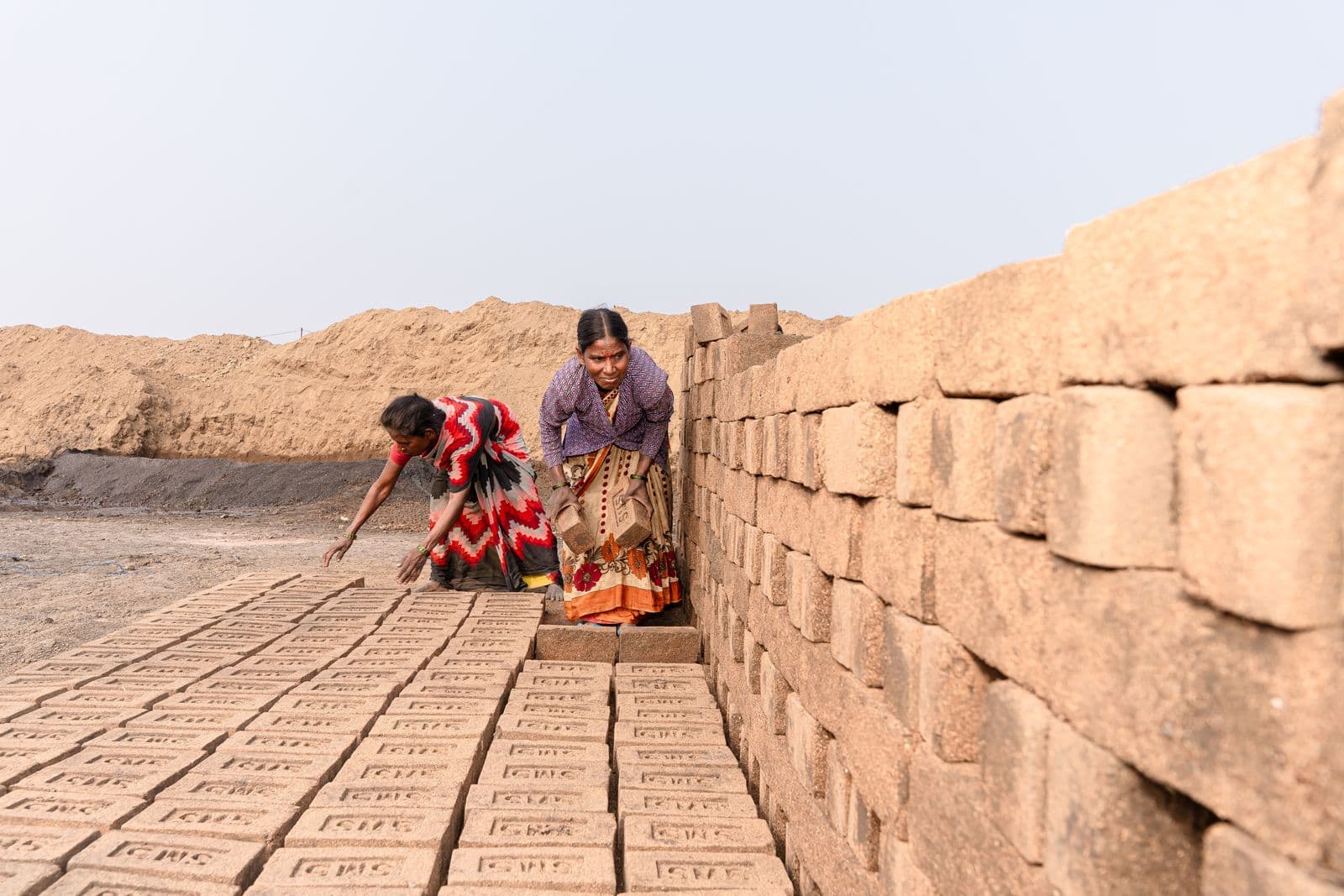
§1What this business is
A facing layer of cement, marble chips, marble powder and colour oxide is filled into an iron mould, backed by layers of cement, sand and stone chips, and pressed on a hydraulic press at about 150 kg per sq cm. Tiles set for a day, cure in water for about 15 days, dry, and are ground and polished on a levelling machine. Common sizes are 200 × 200 × 20 mm and 300 × 300 × 25 mm. Builders, contractors and house owners use them for residential and commercial floors.
Capacity: DC-MSME: about 8 lakh tiles (1,500 tonnes) a year, valued at ₹65 lakh.
§2Is it right for you?
Who it is for
Someone in a growing town who can sell to local builders and contractors.
Who it is not for
Someone who expects high margins or cannot spare yard space for curing.
Advantages
- Simple materials: cement, marble chips, sand, colour
- Tiles are easy to replace, so repair work brings repeat buyers
- Machinery is made in India (Morbi and Ahmedabad suppliers listed)
- Colour and design can be changed to order
Drawbacks
- Vitrified, granite and marble tiles compete hard
- 15-day curing ties up space and stock
- Thin margin in the DC-MSME profile
- Cement price changes hit cost directly
Skills you need
- Mix design and colour matching
- Press and grinding machine operation
- Curing and quality checks (IS 1237)
- Selling to builders and contractors
Why difficulty 2/5: Known technology and local raw material; selling against vitrified tiles is the hard part.
§3Market
Who buys
- Builders and civil contractors
- House owners renovating floors
- Hospitals, offices and commercial buildings
- Tile and building-material dealers
How it sells
- Building-material dealers
- Direct supply to builders
- Government building works through contractors
Good to know
- The DC-MSME profile puts mosaic tiles at about a quarter of flooring-tile demand when it was written and names vitrified, granite, marble and red clay tiles as substitutes.
- Damaged tiles can be replaced one by one, which the profile names as a selling point.
§4Raw material & machinery
| Item | Qty | Cost |
|---|---|---|
| Hydraulic press, 150 kg per sq cm, with pressure gauge | 3 | ₹3,00,000 |
| Hydraulic double-piston pump with 5 HP motor, feeds 4–5 presses | 1 | ₹1,00,000 |
| Levelling (grinding) machine, 4 tiles at a time, 5 HP | 1 | ₹1,50,000 |
| Colour mixing muller, 3 HP | 1 | ₹50,000 |
| Semi-polishing machine, 2 HP | 1 | ₹25,000 |
| Plain and chequered tile moulds, 3 sizes | 10 sets | ₹50,000 |
| Plant and machinery (Stand-Up Mitra list) | 1 lot | ₹5,50,000 |
From: DC-MSME project profile — Cement Mosaic Flooring Tiles (2003) · SIDBI Stand-Up Mitra project profile — Cement Mosaic Flooring Tiles (2018) — private guide — confirm locally
- Grey Portland cement30 tonnes a month at ₹3,000 a tonne (DC-MSME)
- White cement29 tonnes a month at ₹6,000 a tonne (DC-MSME)
- Marble and stone chips, sand24 tonnes of chips and 80 tonnes of sand a month (DC-MSME)
- Mineral colours (oxides)not more than 10% of the cement, says the profile
From: DC-MSME project profile — Cement Mosaic Flooring Tiles (2003)
§5Licences & registration
- Udyam
- GST
- State Pollution Control Board consent (cement dust)
- Trade licence from the local body
§6Schemes & subsidies
- PMEGPCentralActive15–35% subsidy
- CGTMSECentralActiveNo collateral, up to ₹10 crore
- Stand-Up IndiaCentralClosed₹10 lakh – ₹1 crore loan
Both project costs are within PMEGP's ₹50 lakh manufacturing limit; CGTMSE can guarantee the loan without collateral; Stand-Up India lends ₹10 lakh–₹1 crore to SC/ST and women founders.
§7Money
How the investment is worked out: Stand-Up Mitra 2018: land ₹10.00 L + building ₹7.50 L + plant and machinery ₹5.50 L + furniture and electricals ₹0.80 L + other assets ₹0.70 L + working-capital margin ₹8.00 L = ₹32.50 L. DC-MSME 2003: land and building ₹17.00 L + machinery ₹10.50 L + pre-operative ₹0.50 L + working capital (3 months) ₹12.61 L = ₹40.61 L.
Working capital: DC-MSME: ₹12.61 L for 3 months (raw material ₹3.29 L a month, mostly grey and white cement). Stand-Up Mitra: working capital ₹18.00 L, margin ₹8.00 L.
DC-MSME prices from 2003 and Stand-Up Mitra from 2018 — machinery and land will cost more now.
§8Export potential
Confirm the HS code in the DGFT ITC(HS) lookup before you export
- Cement tiles are heavy and mostly sold within the region.
- Confirm the 8-digit ITC(HS) line with DGFT or your customs broker before shipping.
§9Risks — where people fail
- Competition from vitrified tiles
- Cement price rise
- Breakage in handling
- Slow payments from contractors
§1030 / 60 / 90-day plan
A general plan that applies to any business. A plan for this business will be added after research.
- Days 1–30: Visit a working cement mosaic (terrazzo) flooring tiles unit, ask 10 buyers about price and quantity, and get quotations from 3 suppliers.
- Days 31–60: Udyam and the licences you need (Udyam, GST), a project report (DPR), and the scheme or loan file.
- Days 61–90: Space and machines, trial production, and first deliveries to 10 customers.
§11Who to connect with
Associations, clusters and training institutes — the directory is being built. Connect
§12Watch
There is no episode on this business yet. Shows are coming soon on the Podcast page.
Want to start Cement Mosaic (Terrazzo) Flooring Tiles?
DPR, loan file or registration — ask us on WhatsApp.
¶Sources
- DC-MSME project profile — Cement Mosaic Flooring Tiles (2003)
- SIDBI Stand-Up Mitra project profile — Cement Mosaic Flooring Tiles (2018)
Data review: 6 October 2026. Spotted a mistake? Report it. For information only — not legal or financial advice.