

§1What this business is
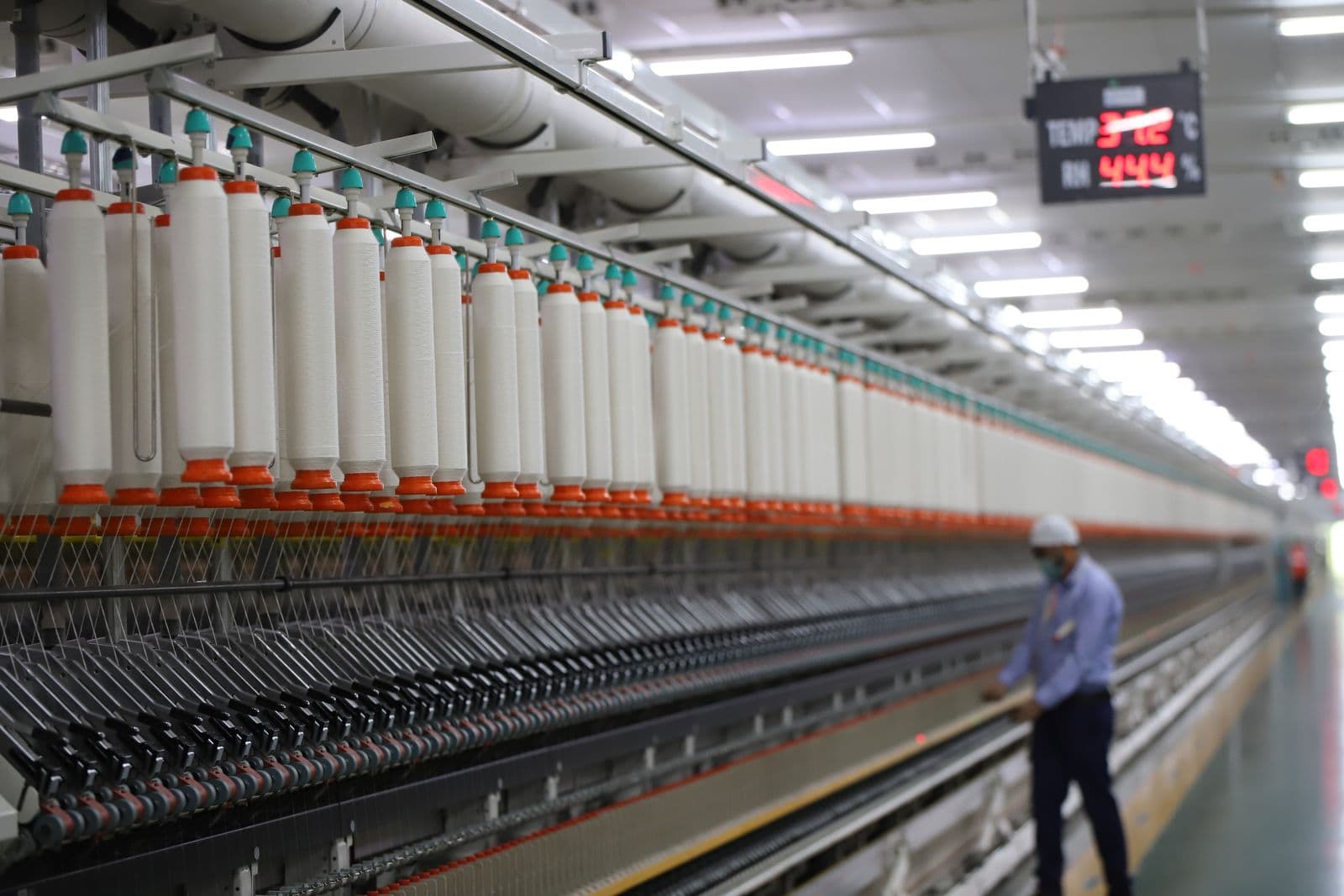
Interlock is a double-knit fabric made with two sets of needles (cylinder and dial) on interlock knitting machines of 18–30 gauge. Combed cotton yarn of 30s–50s count (or 80–160 denier filament for synthetics) is loaded from cones, threaded through tensioners and stop motions, and knitted into rolls; each roll is checked and marked with count and date. Compared with plain knit it has better sweat absorbency, weight (GSM) and strength. Buyers are undergarment, sportswear, children's and baby wear makers.
Capacity: 1,21,200 kg of interlock fabric a year, sold grey at ₹150 a kg — ₹1.818 crore.
§2Is it right for you?
Who it is for
A knitter or yarn trader with steady orders from innerwear or sportswear makers.
Who it is not for
Someone without working capital for yarn or a buyer base.
Advantages
- The profile says few units make interlock, so innerwear makers look for it
- Better absorbency and strength than plain knit
- Small team and low machinery cost
- No pollution from knitting
Drawbacks
- Thin margin — about 5% of sales
- Most of the money goes into yarn
- Established centres (Kolkata, Tiruppur, Ahmedabad) set prices
- Machine stoppages from yarn breaks cut output
Skills you need
- Setting up interlock machines and gauges
- Judging yarn knittability
- Fabric inspection for faults
- Selling to garment makers
Why difficulty 2/5: Simple machines, but thin margins and heavy yarn working capital.
§3Market
Who buys
- Undergarment makers
- Sportswear makers
- Children's and baby wear makers
- Fabric traders and exporters
How it sells
- Direct supply of grey fabric rolls to garment units
- Fabric traders in hosiery centres
Good to know
- The profile says cotton interlock is made mainly in Kolkata, Tiruppur and Ahmedabad.
- It reports a positive export trend for quality knitted fabric.
§4Raw material & machinery
| Item | Qty | Cost |
|---|---|---|
| Interlock knitting machines, 18 gauge, 14 in dia, with motor | 4 | ₹2,00,000 |
| Interlock knitting machines, 18 gauge, 15 in dia, with motor | 4 | ₹2,20,000 |
| Interlock knitting machines, 20 gauge, 16 in dia, with motor | 2 | ₹1,20,000 |
| Interlock knitting machines, 20 gauge, 17 in dia, with motor | 2 | ₹1,30,000 |
| Weighing balance | 1 | ₹30,000 |
| Workshop accessories | 1 lot | ₹10,000 |
From: DC-MSME project profile — Interlock Knitted Fabric (2003)
- Cotton grey yarn of various counts (combed 30s–50s)10,300 kg a month at ₹125 a kg in the profile
- Texturised filament yarn, 80–160 denier, for synthetic interlock
From: DC-MSME project profile — Interlock Knitted Fabric (2003)
Suppliers in Building Business Bazaar
Adinath Textiles Ltd · Ludhiana →Raj Mechanical Works · Ludhiana →T.S. Mechanical Works · Ludhiana →Vardhman Spinning General · Ludhiana →
In our raw material database
§5Licences & registration
- Udyam registration
- GST
- Trade licence from the local body
- Factory licence, EPF and ESI registration depending on workers and power
§6Schemes & subsidies
- PMEGPCentralActive15–35% subsidy
- CGTMSECentralActiveNo collateral, up to ₹10 crore
- Stand-Up IndiaCentralClosed₹10 lakh – ₹1 crore loan
PMEGP fits the project size; CGTMSE for loans without collateral; Stand-Up India for SC/ST or women founders.
§7Money
How the investment is worked out: DC-MSME profile (SISI New Delhi, May 2003): fixed capital ₹8.07 L (12 interlock knitting machines ₹6.70 L, accessories and balance ₹0.40 L, erection, furniture and pre-operative ₹0.97 L) + working capital for 3 months ₹41.07 L = ₹49.14 L. 350 sq m rented at ₹7,000 a month.
Working capital: Working capital is ₹41.07 L for 3 months — mostly 10,300 kg of cotton grey yarn a month at ₹125 a kg.
Prices from 2003 — machinery, raw material and wage costs will be much higher now.
§8Export potential
Confirm the HS code in the DGFT ITC(HS) lookup before you export
Export council / board: TEXPROCIL (The Cotton Textiles Export Promotion Council)
- Dyed interlock falls under 6006.22; confirm the 8-digit ITC(HS) line with DGFT.
- You need an Import Export Code (IEC) from DGFT before the first shipment.
§9Risks — where people fail
- Yarn price swings
- Slow payment from garment makers
- Competition from large knitting clusters
- Low machine use when orders dip
§1030 / 60 / 90-day plan
A general plan that applies to any business. A plan for this business will be added after research.
- Days 1–30: Visit a working interlock (double-knit) cotton fabric unit, ask 10 buyers about price and quantity, and get quotations from 3 suppliers.
- Days 31–60: Udyam and the licences you need (Udyam registration, GST), a project report (DPR), and the scheme or loan file.
- Days 61–90: Space and machines, trial production, and first deliveries to 10 customers.
§11Who to connect with
Associations, clusters and training institutes — the directory is being built. Connect
§12Watch
There is no episode on this business yet. Shows are coming soon on the Podcast page.
Want to start Interlock (Double-Knit) Cotton Fabric?
DPR, loan file or registration — ask us on WhatsApp.
¶Sources
Data review: 6 October 2026. Spotted a mistake? Report it. For information only — not legal or financial advice.