

§1What this business is
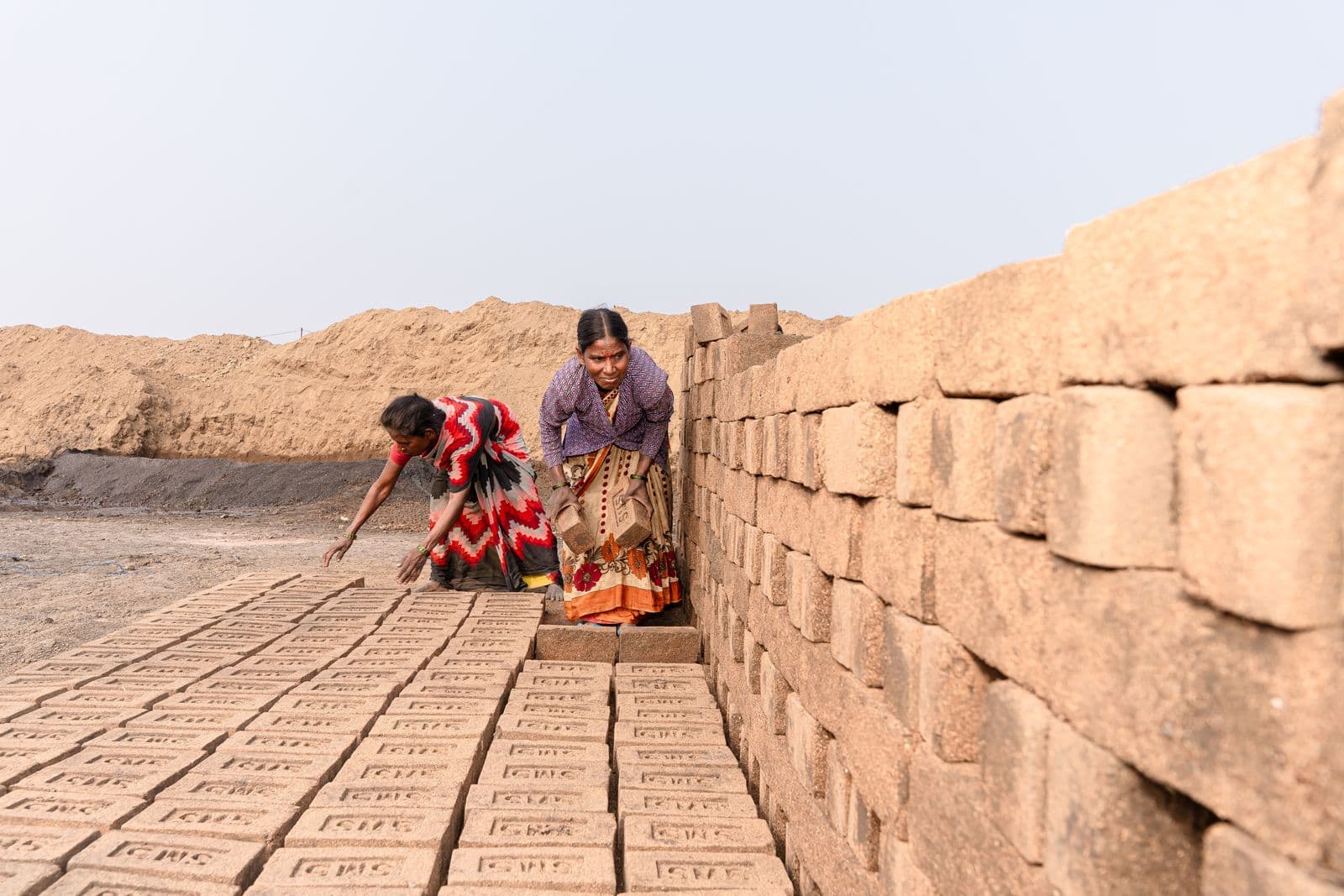
Cement, sand, stone chips (jelly) and dust are proportioned, mixed, compacted in hydraulic block machines, cured and dried. The blocks have projections and recesses so walls go up dry and fast; pavers are used on footpaths, gardens, bus stops and open areas.
Capacity: 2,000 bricks a day, 6,00,000 a year (8 hours, 300 days).
§2Is it right for you?
Who it is for
Someone with contacts among builders, contractors or civic works in a growing town.
Who it is not for
Remote places far from construction activity.
Advantages
- Saves mortar and building time
- Steady demand from roads, footpaths and housing
- Simple raw materials found everywhere
- High gross margin (about 35–39%)
Drawbacks
- Heavy product — sell within a short radius
- Cement price changes hit cost
- Needs open yard space for curing
- Builders pay late
Skills you need
- Mix design and curing
- Machine operation
- Selling to builders and contractors
- Collections
Why difficulty 2/5: Proven machines and simple materials; sales and collections need effort.
§3Market
Who buys
- Builders and contractors
- Municipal and road works (footpaths, bus stops)
- Housing societies, offices and commercial buildings
How it sells
- Direct site supply
- Building-material dealers
Good to know
- The report advises setting up in urban or semi-urban areas near the market.
- Hollow interlocking blocks with grout and steel suit earthquake-prone areas, per the report.
§4Raw material & machinery
| Item | Qty | Cost |
|---|---|---|
| Hydraulically operated concrete block-making machine | 3 | ₹8,00,000 |
| Concrete mixer | 1 | ₹90,000 |
| Water pump | 1 | ₹40,000 |
| Colour mixer | 1 | ₹1,00,000 |
| Other machines and equipment | 1 lot | ₹50,000 |
From: PMEGP sample project report — Interlocking bricks (prepared by Udyami/Samadhan)
- Portland cement170 t a year at ₹6,500 a tonne
- Sand95 t a year at ₹4,000 a tonne
- Stone chips (jelly)60 t a year at ₹1,200 a tonne
- Stone dust45 t a year at ₹1,000 a tonne; full-year raw material ₹16.82 L incl. ₹80,000 consumables
From: PMEGP sample project report — Interlocking bricks (prepared by Udyami/Samadhan)
In our raw material database
§5Licences & registration
- GST registration
- Udyam registration
- Trademark for your brand name (optional)
- Consent from the State Pollution Control Board
§6Schemes & subsidies
Prepared for PMEGP; CGTMSE covers collateral-free loans.
§7Money
How the investment is worked out: Building/shed (1,000 sq ft) ₹5.00 L + plant & machinery ₹10.80 L + furniture ₹1.50 L + working capital ₹2.78 L = ₹20.08 L. Term loan ₹15.57 L, working capital ₹2.50 L, own ₹2.01 L.
Working capital: Working capital ₹2.78 L (bank ₹2.50 L): 5 days of stock; most is money owed by buyers.
Year not printed in the report — check current machinery and raw-material prices.
§8Export potential
Confirm the HS code in the DGFT ITC(HS) lookup before you export
Export council / board: CAPEXIL
- Blocks are heavy and low in value, so they rarely travel far.
§9Risks — where people fail
- Weak blocks from poor mix or curing
- Slowdown in local construction
- Cement price rise
- Late payments
§1030 / 60 / 90-day plan
A general plan that applies to any business. A plan for this business will be added after research.
- Days 1–30: Visit a working interlocking bricks and blocks unit, ask 10 buyers about price and quantity, and get quotations from 3 suppliers.
- Days 31–60: Udyam and the licences you need (GST registration, Udyam registration), a project report (DPR), and the scheme or loan file.
- Days 61–90: Space and machines, trial production, and first deliveries to 10 customers.
§11Who to connect with
Associations, clusters and training institutes — the directory is being built. Connect
§12Watch
There is no episode on this business yet. Shows are coming soon on the Podcast page.
Want to start Interlocking Bricks and Blocks?
DPR, loan file or registration — ask us on WhatsApp.
¶Sources
Data review: 6 October 2026. Spotted a mistake? Report it. For information only — not legal or financial advice.