

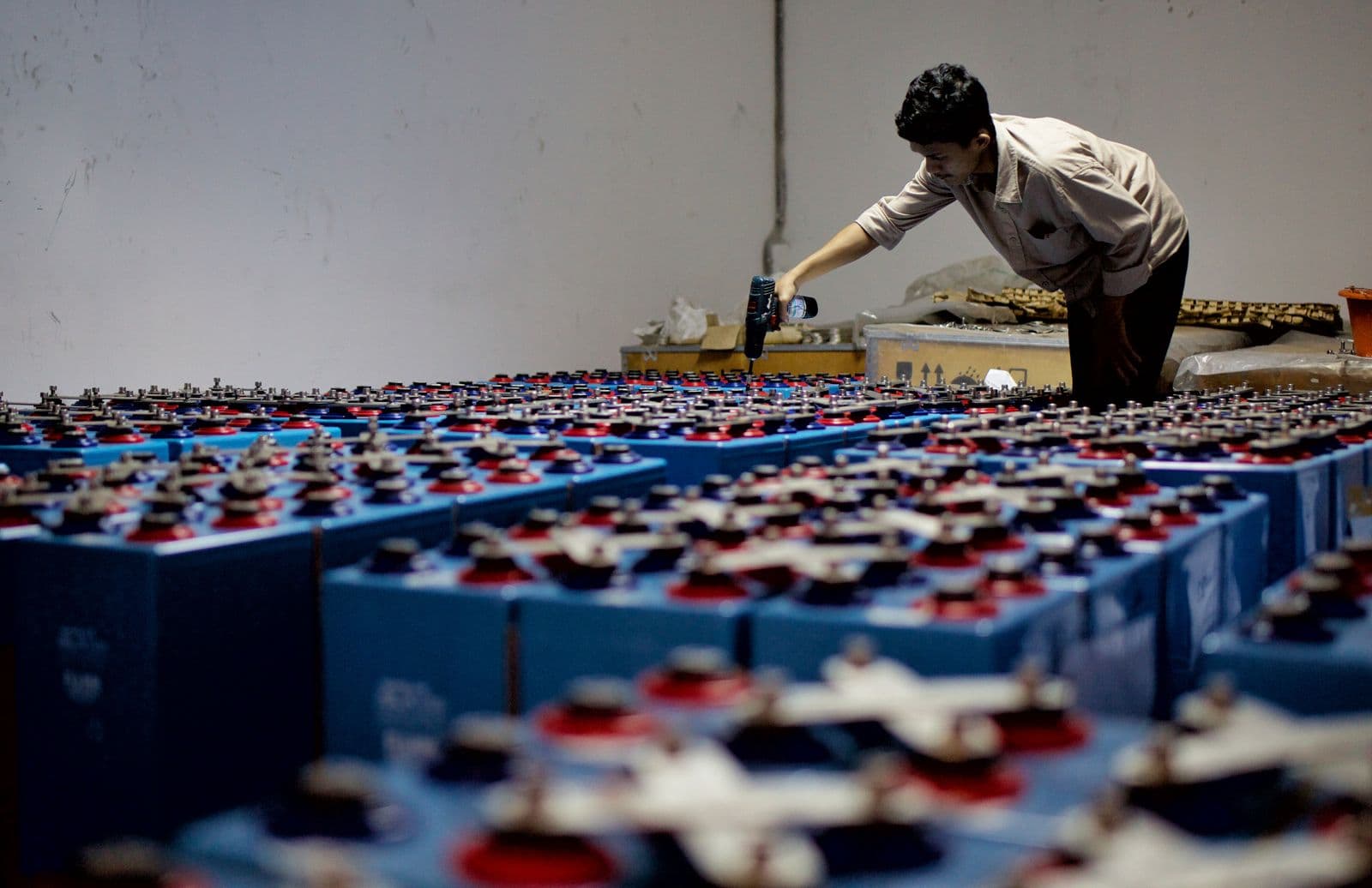
§1What this business is
Lead is melted in a furnace and cast into grids, which are pickled; lead oxide made in a ball mill is mixed into paste, pasted on the grids and dried. Plates are brushed, enveloped with separators, stacked, welded, sealed into containers, filled with acid and tested.
Capacity: 25 batteries a day (10-hour shift); 30% capacity in year 1.
§2Is it right for you?
Who it is for
Someone with battery-trade experience who can run a safe, compliant plant.
Who it is not for
Residential areas, or anyone not ready for pollution-control spending.
Advantages
- Big, steady replacement market for inverter batteries
- Proven, mature technology
- Can sell to local inverter assemblers and dealers
- Large turnover
Drawbacks
- Lead is toxic — strict pollution and health rules
- Thin net margin (about 4–6%)
- Lead prices swing with world markets
- Strong national brands
Skills you need
- Lead handling and safety
- Plate pasting and formation
- Quality testing
- Dealer network
Why difficulty 4/5: Hazardous lead process with strict pollution rules and thin margins.
§3Market
Who buys
- Households and shops with inverters
- Inverter assemblers
- Solar installers and telecom sites
How it sells
- Battery and electrical dealers
- Supply to assemblers under their brand
Good to know
- The report names Exide, Luminous, Amara Raja, V-Guard and Okaya among the big players.
- Lead-acid is the most common battery in solar photovoltaic systems, per the report.
§4Raw material & machinery
| Item | Qty | Cost |
|---|---|---|
| Cupola furnace | 1 | ₹1,25,000 |
| Pickling plant | 1 | ₹1,00,000 |
| Lead oxide ball mill plant | 1 | ₹3,50,000 |
| Paste mixing machine | 1 | ₹50,000 |
| Pasting machine | 1 | ₹1,25,000 |
| Drying oven with conveyor belts | 1 | ₹1,00,000 |
| Lug brushing machine | 1 | ₹1,50,000 |
| Enveloping and stacking machine | 1 | ₹3,20,000 |
| Gas welding machine | 1 | ₹70,000 |
| Heat sealing machine | 1 | ₹18,000 |
| Filling machine | 1 | ₹2,50,000 |
| Other equipment | 1 lot | ₹50,000 |
From: PMEGP sample project report — Inverter Battery Casting (prepared by Udyami/Samadhan)
- Lead and lead oxidelead is melted for grids; oxide is made in the ball mill
- Battery plates and separatorslisted as basic raw materials
- Sulphuric acid, electrolytes and additivesfilled after sealing
- Containers, covers and terminalsbought-in plastic and metal parts
From: PMEGP sample project report — Inverter Battery Casting (prepared by Udyami/Samadhan)
In our raw material database
§5Licences & registration
- Udyam registration
- GST registration
- Consent from the State Pollution Control Board
- Registration under the Battery Waste Management Rules, 2022 (extended producer responsibility)
- Factory licence if you cross the worker limit
§6Schemes & subsidies
Prepared for PMEGP; CGTMSE gives collateral-free cover.
§7Money
How the investment is worked out: Plant & machinery ₹17.08 L + furniture ₹0.30 L + working capital ₹7.59 L = ₹24.97 L. Land and building owned or rented (not costed). Term loan ₹15.64 L, working capital ₹6.83 L, own ₹2.50 L.
Working capital: Working capital ₹7.59 L (bank ₹6.83 L): 10 days of raw material and finished stock, 10 days' credit to buyers.
Year not printed in the report — check current machinery and raw-material prices.
§8Export potential
Confirm the HS code in the DGFT ITC(HS) lookup before you export
Export council / board: EEPC India
- Inverter (stationary) batteries normally fall under 8507 20.
§9Risks — where people fail
- Lead poisoning of workers
- Pollution board action
- Lead price rise
- Warranty failures
§1030 / 60 / 90-day plan
A general plan that applies to any business. A plan for this business will be added after research.
- Days 1–30: Visit a working inverter battery (lead-acid) making unit, ask 10 buyers about price and quantity, and get quotations from 3 suppliers.
- Days 31–60: Udyam and the licences you need (Udyam registration, GST registration), a project report (DPR), and the scheme or loan file.
- Days 61–90: Space and machines, trial production, and first deliveries to 10 customers.
§11Who to connect with
Associations, clusters and training institutes — the directory is being built. Connect
§12Watch
There is no episode on this business yet. Shows are coming soon on the Podcast page.
Want to start Inverter Battery (Lead-Acid) Making?
DPR, loan file or registration — ask us on WhatsApp.
¶Sources
Data review: 6 October 2026. Spotted a mistake? Report it. For information only — not legal or financial advice.