

§1What this business is
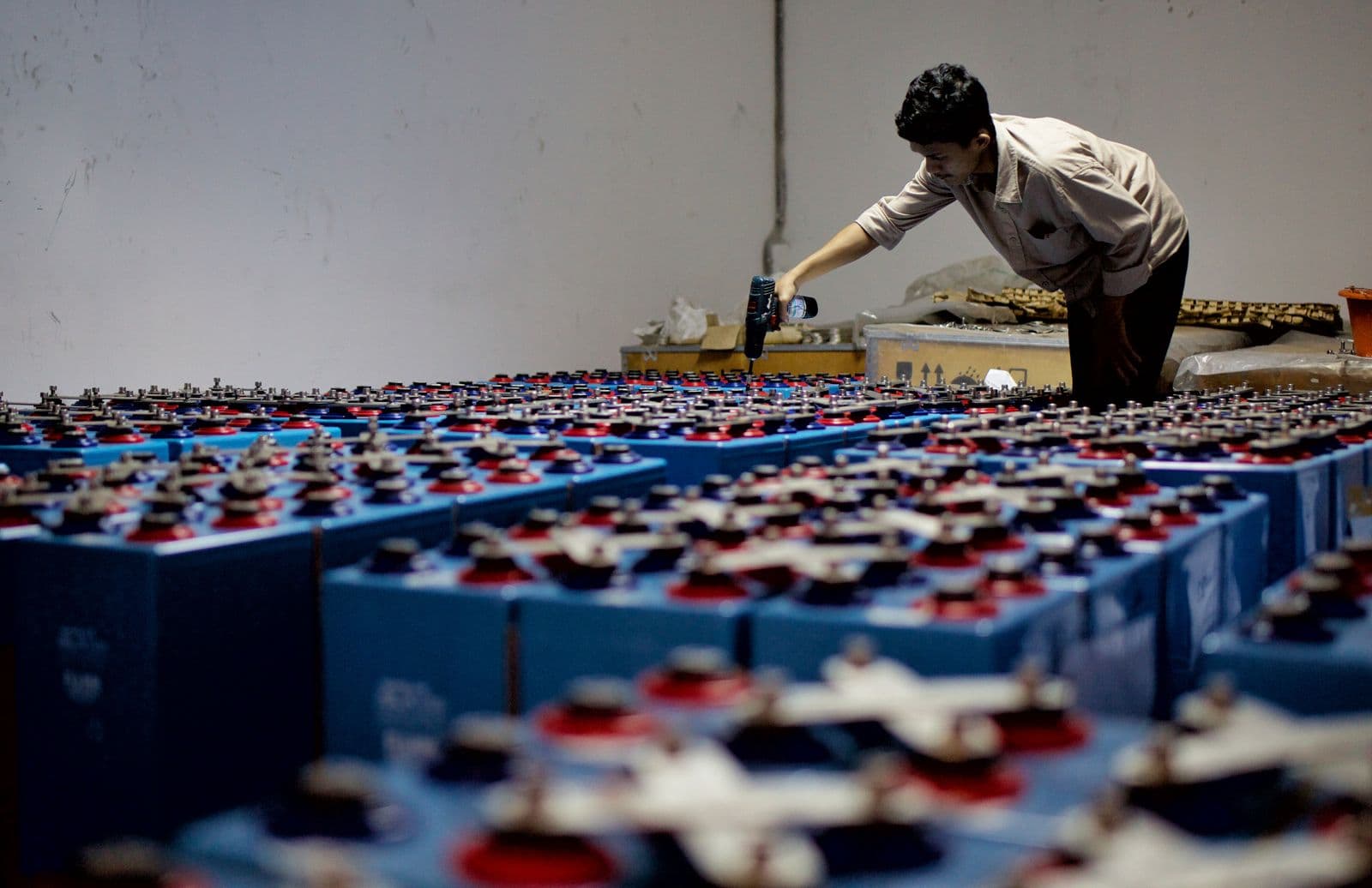
Positive and negative plates are stacked in the container with PVC separators, joined in parallel and the cells in series by soldering; terminals are cast with molten lead alloy, the top is sealed with bitumen and each battery is tested to IS 7372:1995. Plates are bought at first and can be made in-house later. Buyers are vehicle owners, workshops, and inverter and solar dealers.
Capacity: 7,500 batteries a year; year 1 at 60% (4,500).
§2Is it right for you?
Who it is for
Someone from the battery trade who can meet pollution, EPR and BIS rules.
Who it is not for
Anyone who cannot run a safe, licensed lead-handling workshop.
Advantages
- Batteries are needed for vehicles, inverters, telecom and solar
- Low machinery cost (₹3.01 L)
- Large replacement market
- Can move into plate-making later
Drawbacks
- Gross margin is only about 11% in the report
- Lead is toxic — strict pollution and waste rules
- Big brands like Exide and Amara Raja dominate
- Very high working capital
Skills you need
- Battery assembly and lead burning
- Testing and charging
- Pollution and waste compliance
- Dealer sales and warranty handling
Why difficulty 4/5: Hazardous material, heavy compliance and very high working capital.
§3Market
Who buys
- Vehicle owners and workshops
- Inverter and UPS users
- Telecom and solar installers
How it sells
- Battery dealers and auto-parts shops
- Inverter and solar dealers
- Direct supply to workshops
Good to know
- The report puts the market at about ₹1,300 crore, growing 18–20% a year, with the automobile sector the largest user.
- Big makers named: Exide, Amara Raja; many small units also recondition scrapped batteries.
§4Raw material & machinery
| Item | Qty | Cost |
|---|---|---|
| Melting pot | 1 | ₹10,000 |
| Burner | 1 | ₹10,000 |
| Dies | 8 | ₹16,000 (₹2,000 each) |
| Welding torch | 2 | ₹6,000 (₹3,000 each) |
| LPG cylinder with regulator | 2 | ₹10,000 (₹5,000 each) |
| Oxygen cylinder | 2 | ₹50,000 (₹25,000 each) |
| Compressor | 1 | ₹15,000 |
| Battery tester | 2 | ₹8,000 (₹4,000 each) |
| Resistance / capacity discharge tester | 1 | ₹10,000 |
| Hydrometer | 5 | ₹3,000 (₹600 each) |
| Temperature meter | 1 | ₹3,000 |
| Battery charger | 1 | ₹35,000 |
| Moulds, die tools, jigs and fixtures | Lump sum | ₹50,000 |
| Electrification | Lump sum | ₹75,000 |
From: PMEGP sample project report — Lead Acid Battery (prepared by Udyami/Samadhan)
- Positive and negative lead platesbought from outside at first; the main raw material
- Containers, top covers and PVC separator sheetsfor assembly
- Lead alloymelted to cast terminals
- Bitumen sealing compoundto seal the top cover
From: PMEGP sample project report — Lead Acid Battery (prepared by Udyami/Samadhan)
Suppliers in Building Business Bazaar
POCL Enterprises Ltd · Chengalpattu →Emaar Lead Company Private Limited · Coimbatore →KMR Metal Mart · Coimbatore →Universal Iron Traders · Coimbatore →S.V.M.A Alloys · Dindigul →Metstar Industries Private Limited · Erode →Jayachandran Alloys Pvt Ltd · Erode →Pondy Oxides and Chemicals Limited · Kancheepuram →Global Lead Alloys · Krishnagiri →Prakash Alloys Industries · Pudukkottai →Power Tech Industries, · Pudukkottai →Subhraa Metals Private Limited · Ranipet →
In our raw material database
§5Licences & registration
- Udyam registration
- GST
- BIS certification to IS 7372 (the standard the report cites)
- State Pollution Control Board consent and hazardous-waste authorisation (lead)
- EPR registration with CPCB under the Battery Waste Management Rules, 2022
- Factory licence and fire NOC as required
§6Schemes & subsidies
- PMEGPCentralActive15–35% subsidy
- CGTMSECentralActiveNo collateral, up to ₹10 crore
- Stand-Up IndiaCentralClosed₹10 lakh – ₹1 crore loan
PMEGP fits (₹25 L manufacturing project); CGTMSE for collateral-free loans; Stand-Up India for SC/ST or women owners.
§7Money
How the investment is worked out: Samadhan report: building & civil work (2,000 sq ft) ₹5.00 L, plant & machinery ₹3.01 L, furniture ₹0.95 L, pre-operative ₹0.84 L, working capital ₹15.20 L = ₹25.00 L.
Working capital: Working capital ₹15.20 L (bank ₹13.68 L) — plates make up most of the cost: raw material ₹144.95 L against ₹165.02 L sales in year 1.
Year not printed on the report — check current machinery prices.
§8Export potential
Confirm the HS code in the DGFT ITC(HS) lookup before you export
Export council / board: EEPC India
- EEPC India covers electrical and engineering goods.
- Shipping lead-acid batteries follows dangerous-goods packing rules.
§9Risks — where people fail
- Lead exposure and pollution penalties
- Lead price swings
- Warranty claims
- Competition from brands and the unorganised sector
§1030 / 60 / 90-day plan
A general plan that applies to any business. A plan for this business will be added after research.
- Days 1–30: Visit a working lead acid battery assembly unit, ask 10 buyers about price and quantity, and get quotations from 3 suppliers.
- Days 31–60: Udyam and the licences you need (Udyam registration, GST), a project report (DPR), and the scheme or loan file.
- Days 61–90: Space and machines, trial production, and first deliveries to 10 customers.
§11Who to connect with
Associations, clusters and training institutes — the directory is being built. Connect
§12Watch
There is no episode on this business yet. Shows are coming soon on the Podcast page.
Want to start Lead Acid Battery Assembly?
DPR, loan file or registration — ask us on WhatsApp.
¶Sources
Data review: 6 October 2026. Spotted a mistake? Report it. For information only — not legal or financial advice.