

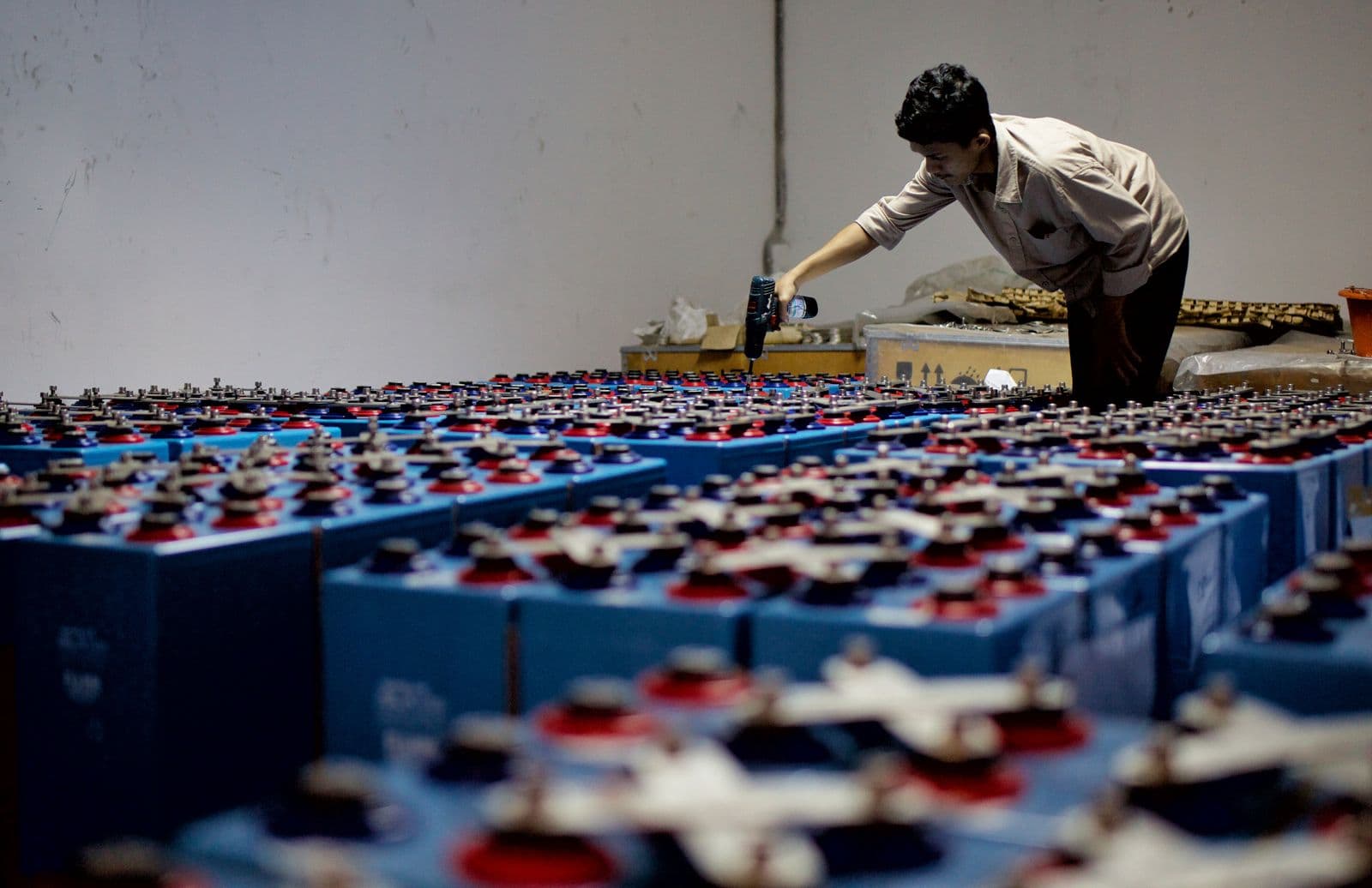
§1What this business is
You buy lithium-ion cells, sort and grade them, spot-weld them in series and parallel to the customer's voltage and capacity, solder a battery management system (BMS), then test charging and discharging and pack them. Buyers are e-vehicle and e-rickshaw makers, inverter and solar dealers and electronics brands. This is assembly, not cell making.
Capacity: 50 battery packs a day, 15,000 a year; 7,500 in year 1 at 50%.
§2Is it right for you?
Who it is for
An electronics technician or EV dealer with tie-ups among e-rickshaw, solar or inverter sellers.
Who it is not for
Someone without electrical safety knowledge or after-sales capacity.
Advantages
- Fast-growing demand from e-mobility and solar storage
- Assembly needs modest space and 10 HP
- Packs are custom-made, so local makers can compete on service
- Skills are learnable with training
Drawbacks
- Thin first-year profit in the report
- Cell prices and supply depend on imports
- Fire and safety risk if cells are mishandled
- BIS registration and battery-waste rules add compliance
Skills you need
- Cell grading and matching
- Spot welding and BMS wiring
- Testing and safety
- Warranty and after-sales service
Why difficulty 4/5: Technical work with safety, warranty and compliance demands.
§3Market
Who buys
- E-rickshaw and e-scooter makers
- Inverter and solar-storage dealers
- Electronics and flashlight brands
- Battery replacement shops
How it sells
- Direct B2B supply to vehicle and device makers
- Dealer network
- Custom orders
Good to know
- The report cites India's lithium-ion demand growing to about 132 GWh by 2030 and a recycling opportunity of $1,000 million by 2030.
§4Raw material & machinery
| Item | Qty | Cost |
|---|---|---|
| Cell sorting machine | as per report | — |
| Cell grading machine | as per report | — |
| CDS machine (as named in the report) | as per report | — |
| BMS testing machine | as per report | — |
| Spot welding machine and hot air gun | as per report | — |
| Total plant and machinery | 1 lot | ₹21.00 lakh |
From: PMEGP sample project report — Lithium Ion Battery (prepared by Udyami/Samadhan)
- Lithium-ion cellsmain input; cells, nickel, BMS and sleeve together about ₹750 per pack in the report
- Nickel strip, BMS boards, sleevesnamed as major raw materials in the report
From: PMEGP sample project report — Lithium Ion Battery (prepared by Udyami/Samadhan)
Suppliers in Building Business Bazaar
§5Licences & registration
- BIS registration (Compulsory Registration Scheme) for lithium cells and batteries, IS 16046
- Producer registration (EPR) under the Battery Waste Management Rules, 2022 with CPCB
- Udyam registration
- GST
- Fire NOC
§6Schemes & subsidies
- PMEGPCentralActive15–35% subsidy
- CGTMSECentralActiveNo collateral, up to ₹10 crore
- Stand-Up IndiaCentralClosed₹10 lakh – ₹1 crore loan
PMEGP fits; CGTMSE for a collateral-free loan; Stand-Up India for SC/ST or women founders.
§7Money
How the investment is worked out: Samadhan report: plant and machinery ₹21.00 L, furniture ₹1.22 L, working capital ₹4.44 L = ₹26.66 L; building 2,000 sq ft own or rented (not costed).
Working capital: Cells, nickel strip, BMS and sleeves cost about ₹750 per pack in the report; working capital ₹4.44 L (bank ₹4.00 L).
Year not printed on the report — check current machinery prices.
§8Export potential
Confirm the HS code in the DGFT ITC(HS) lookup before you export
Export council / board: EEPC India
- Confirm the 8-digit ITC(HS) line with DGFT or your customs broker.
- You need an Import Export Code (IEC) from DGFT before the first shipment.
§9Risks — where people fail
- Cell price and supply shocks
- Battery fire or failure claims
- Warranty returns
- Cheap imported packs
§1030 / 60 / 90-day plan
A general plan that applies to any business. A plan for this business will be added after research.
- Days 1–30: Visit a working lithium-ion battery pack assembly unit, ask 10 buyers about price and quantity, and get quotations from 3 suppliers.
- Days 31–60: Udyam and the licences you need (BIS registration (Compulsory Registration Scheme) for lithium cells and batteries, IS 16046, Producer registration (EPR) under the Battery Waste Management Rules, 2022 with CPCB), a project report (DPR), and the scheme or loan file.
- Days 61–90: Space and machines, trial production, and first deliveries to 10 customers.
§11Who to connect with
Associations, clusters and training institutes — the directory is being built. Connect
§12Watch
There is no episode on this business yet. Shows are coming soon on the Podcast page.
Want to start Lithium-Ion Battery Pack Assembly?
DPR, loan file or registration — ask us on WhatsApp.
¶Sources
Data review: 6 October 2026. Spotted a mistake? Report it. For information only — not legal or financial advice.