

§1What this business is
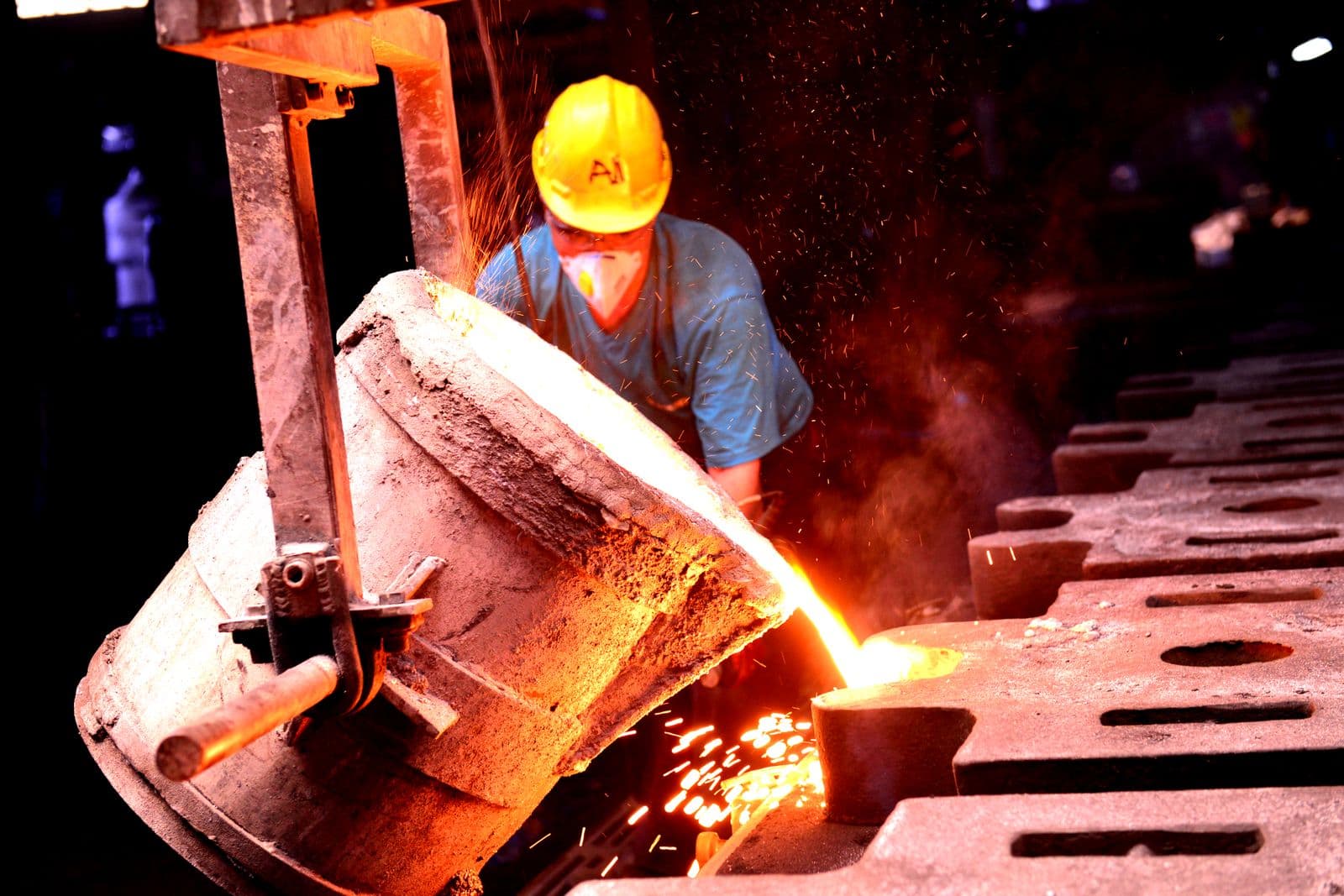
Pig iron and steel scrap are melted in an oil-fired rotary furnace and poured into sand moulds to make white cast iron. The castings are then heated in stages in an annealing furnace for 5–7 days, which turns the hard carbon into nodules and makes the iron strong and malleable. Parts are then machined, threaded and, if the buyer wants, galvanised and painted. Typical products are pipe fittings (elbows, tees, sockets, plugs, caps), lamp-post brackets and truck parts.
Capacity: 500 MT of finished malleable iron parts a year (without galvanising), worth ₹1.10 crore.
§2Is it right for you?
Who it is for
A foundry owner or metallurgist near a pipe-fitting or auto-parts market.
Who it is not for
Someone who wants quick turnover — every batch spends a week in the annealing furnace.
Advantages
- Pipe fittings and auto parts give regular demand
- Good margin in the profile — over 16% of sales
- Existing cupola foundries can add annealing to enter this trade
- Rented premises keep the start-up cost moderate
Drawbacks
- Annealing takes 5–7 days, so stock moves slowly
- Foundry smoke needs a Pollution Control Board NOC
- Machining and heat treatment are the bottleneck, says the profile
- Burning loss of about 5% in melting
Skills you need
- Moulding and core making
- Melting white iron to the right chemistry
- Annealing cycle control
- Machining and threading fittings
Why difficulty 4/5: Foundry work with a long heat-treatment cycle and pollution rules.
§3Market
Who buys
- Pipe-fitting traders and plumbing dealers
- Automobile and truck part makers
- Railway and lamp-post bracket buyers
- Bicycle and sewing machine makers
How it sells
- Dealers and wholesalers of pipe fittings
- Direct supply to part makers
Good to know
- The profile says malleable iron use is mostly limited to pipe fittings and auto parts but could spread to bicycle and sewing machine parts.
- It says the user industries are mainly in Punjab, Haryana and around Delhi, and that eastern UP had no such unit.
§4Raw material & machinery
| Item | Qty | Cost |
|---|---|---|
| Oil-fired rotary furnace, 1 MT, with 5 HP motor | 2 | ₹2,00,000 |
| Oil-fired annealing furnace, 2 × 4 × 3.5 m, with fan | 1 | ₹1,75,000 |
| Moulding machines, 3 HP | 4 | ₹1,50,000 |
| Core sand mixer, 100 kg | 1 | ₹35,000 |
| Gyratory sieve shaker, 24 in | 1 | ₹40,000 |
| Sand muller, 100 kg | 1 | ₹32,000 |
| Coal-fired core baking oven, 2 × 2 × 3.5 m | 1 | ₹25,000 |
| Lathe, 6 in | 1 | ₹40,000 |
| Shaping machine, 24 in stroke | 1 | ₹55,000 |
| Rockwell hardness tester | 1 | ₹20,000 |
| Chemical testing equipment | 1 lot | ₹50,000 |
| Diesel generator set, 10 kVA | 1 | ₹60,000 |
From: DC-MSME project profile — Malleable Iron Casting (2003)
- Pig iron30 MT a month at ₹10,800 a MT in the profile
- Steel scrap20 MT a month at ₹9,200 a MT in the profile
- Ferro-alloys, fluxes and limestone
- Hard coke, steam coal and furnace oil4 MT coke, 8 MT steam coal and 2,000 litres of furnace oil a month in the profile
From: DC-MSME project profile — Malleable Iron Casting (2003)
Suppliers in Building Business Bazaar
Process and Product Development Centre (PPDC), Agra · Agra →Ashoka Machine Tools Corporation · Delhi →Chola Ram Om Prakash · Delhi →Doeba Electric Welding Works · Delhi →Engineering and Industrial · Coimbatore →Foundry Accessories · Mumbai →Greaves Cotton amd Co. Ltd · Delhi →Inspection Instruments Corpn · Mumbai →Kulkani Foundry · Delhi →National Mechanical Works · Delhi →Toshniwal Brothers · Delhi →Wesman Eng. Company Pvt. Ltd · Kolkata →
In our raw material database
§5Licences & registration
- Udyam registration
- GST
- State Pollution Control Board NOC and consent to operate (foundry)
- Factory licence under the Factories Act
- BIS certification if your fittings fall under a Quality Control Order (malleable pipe fittings are covered by IS 1879)
§6Schemes & subsidies
- PMEGPCentralActive15–35% subsidy
- CGTMSECentralActiveNo collateral, up to ₹10 crore
- Stand-Up IndiaCentralClosed₹10 lakh – ₹1 crore loan
PMEGP fits the project size; CGTMSE for loans without collateral; Stand-Up India for SC/ST or women founders. The profile notes UPFC then asked for 40% promoter share.
§7Money
How the investment is worked out: DC-MSME profile (Branch SISI Varanasi, Jan 2003): fixed capital ₹13.31 L (plant and machinery ₹9.33 L, electrification ₹0.93 L, dies and patterns ₹0.50 L, moulding boxes and annealing pots ₹0.75 L, office ₹0.80 L, pre-operative ₹1.00 L) + working capital for 3 months ₹21.66 L = ₹34.97 L. Premises rented at ₹21,000 a month.
Working capital: Working capital is ₹21.66 L for 3 months; each month needs 30 MT of pig iron at ₹10,800 a MT and 20 MT of steel scrap at ₹9,200 a MT.
Prices from 2003 — machinery, raw material and wage costs will be much higher now.
§8Export potential
Confirm the HS code in the DGFT ITC(HS) lookup before you export
Export council / board: EEPC India
- The profile prints no HS code; confirm the 8-digit ITC(HS) line with DGFT or a customs broker.
- You need an Import Export Code (IEC) from DGFT before the first shipment.
§9Risks — where people fail
- Pig iron and coke price swings
- Wrong annealing gives brittle parts
- Competition from fittings made in Punjab, Haryana and Delhi clusters
- Pollution complaints
§1030 / 60 / 90-day plan
A general plan that applies to any business. A plan for this business will be added after research.
- Days 1–30: Visit a working malleable iron castings (pipe fittings and auto parts) unit, ask 10 buyers about price and quantity, and get quotations from 3 suppliers.
- Days 31–60: Udyam and the licences you need (Udyam registration, GST), a project report (DPR), and the scheme or loan file.
- Days 61–90: Space and machines, trial production, and first deliveries to 10 customers.
§11Who to connect with
Associations, clusters and training institutes — the directory is being built. Connect
§12Watch
There is no episode on this business yet. Shows are coming soon on the Podcast page.
Want to start Malleable Iron Castings (Pipe Fittings and Auto Parts)?
DPR, loan file or registration — ask us on WhatsApp.
¶Sources
Data review: 6 October 2026. Spotted a mistake? Report it. For information only — not legal or financial advice.