

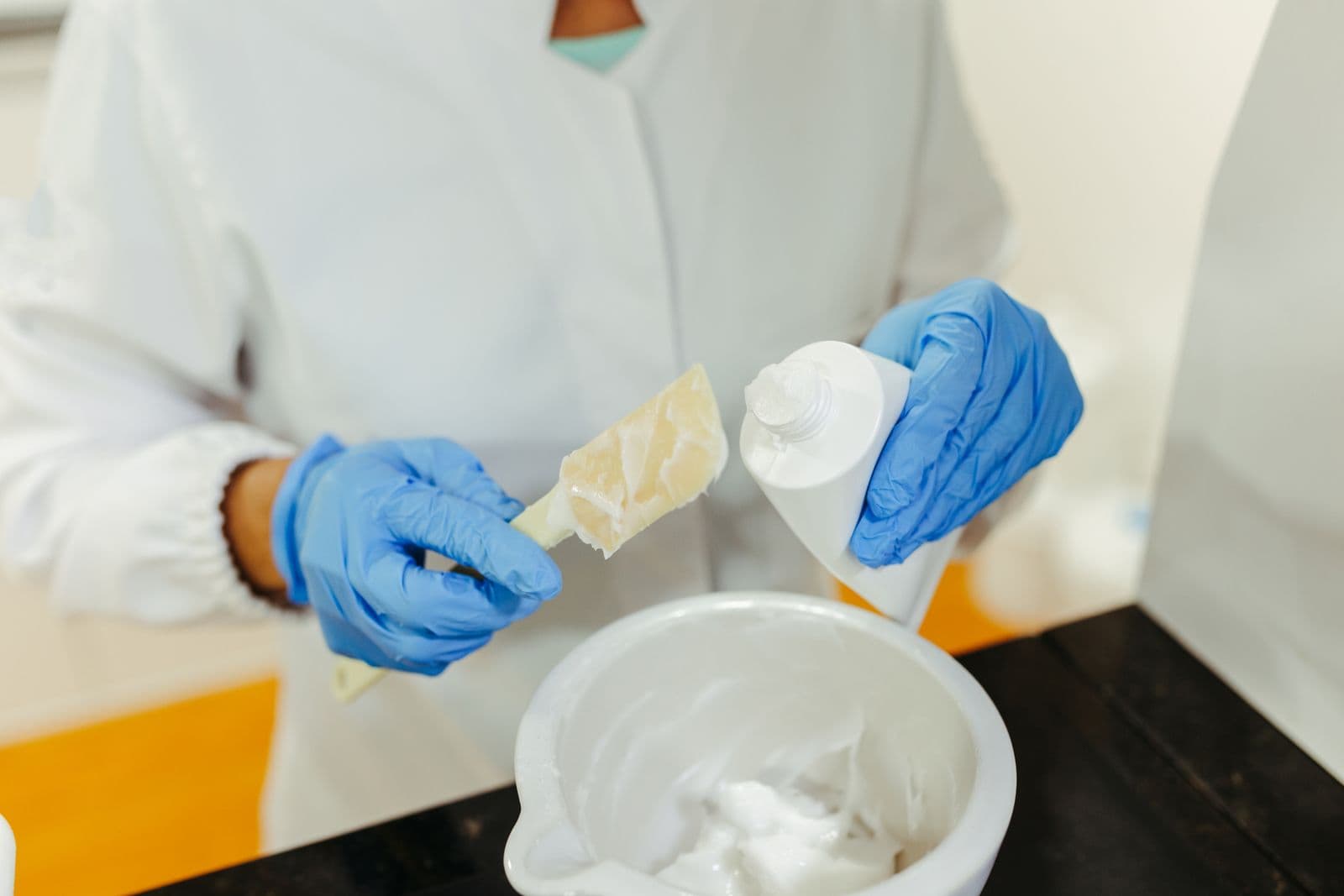
§1What this business is
A water phase (aloe or rose water, glycerin) and oils are mixed with emulsifying wax, stearic acid, preservative and fragrance in a jacketed vessel, then filled into tubes and sealed. The report's plant makes 100 kg a day — 3,00,000 tubes of 100 g a year at full capacity. You need a cosmetics manufacturing licence before you sell.
Capacity: 100 kg a day; 30,000 kg (3,00,000 tubes of 100 g) a year; 65% use in year 1.
§2Is it right for you?
Who it is for
A chemist or someone from pharma/cosmetics who can make creams for brand owners or build a brand.
Who it is not for
Someone hoping to sell without a licence or a marketing budget.
Advantages
- Skin care demand keeps growing (report: India market $1.6 billion in 2017)
- The same plant can make creams for other brands on contract
- Tubes are light and easy to ship
- Gross margin rises from 17% to 25% over five years in the report
Drawbacks
- High machinery cost — ₹32.50 L
- Needs a cosmetics licence and a qualified technical person
- Big brands dominate shop shelves
- Selling costs rise every year in the report
Skills you need
- Cosmetic formulation and stability testing
- GMP and batch records
- Packaging and label rules
- Selling to distributors or brand owners
Why difficulty 4/5: Licence, GMP and brand-building make it harder than a simple workshop.
§3Market
Who buys
- Households
- Salons and beauty parlours
- Brand owners who outsource making
How it sells
- Distributors to chemist and cosmetic shops
- Supermarkets
- Online marketplaces
Good to know
- The report sells a 100 g tube at ₹50 in year 1, rising ₹4 a year.
- The report puts India's skin care market at $1.6 billion (2017), growing about 9% a year.
§4Raw material & machinery
| Item | Qty | Cost |
|---|---|---|
| Ointment manufacturing plant, 100 kg, GMP model | 1 | ₹18,50,000 |
| Load cell for the manufacturing vessel (optional accessory) | 1 | ₹2,50,000 |
| PLC and 8-inch HMI touch screen for controls | 1 | ₹3,75,000 |
| Tube filling and sealing section | 1 | ₹7,50,000 |
| Other equipment and hand tools | LS | ₹25,000 |
From: PMEGP sample project report — Skin Care Cream (prepared by Udyami/Samadhan)
- Water phase: aloe water, rose water, glycerincream has less water than oil
- Oils: almond, mineral, olive, sunflower or palm oil; aloe butterthe larger share of the formula
- Emulsifying wax, stearic acid, preservative, fragranceaverage raw material ₹300–400 a kg (report)
- Printed tubes and cartonsdetails can be printed by the tube supplier (report)
From: PMEGP sample project report — Skin Care Cream (prepared by Udyami/Samadhan)
§5Licences & registration
- Udyam registration
- GST registration
- Cosmetics manufacturing licence from the State Licensing Authority (Cosmetics Rules, 2020)
- Legal Metrology registration for packaged goods
- Trademark for your brand (optional)
§6Schemes & subsidies
- PMEGPCentralActive15–35% subsidy
- CGTMSECentralActiveNo collateral, up to ₹10 crore
- Stand-Up IndiaCentralClosed₹10 lakh – ₹1 crore loan
PMEGP (manufacturing projects up to ₹50 lakh), CGTMSE for a loan without collateral, Stand-Up India for SC/ST or women founders. Above MUDRA's ₹20 lakh limit.
§7Money
How the investment is worked out: Samadhan report: plant & machinery ₹32.50 L (100 kg ointment plant ₹18.50 L, load cell ₹2.50 L, PLC/HMI ₹3.75 L, tube filling & sealing ₹7.50 L, tools ₹0.25 L), furniture ₹1.50 L, working capital ₹8.89 L = ₹42.89 L. Finance: term loan ₹30.60 L, cash credit ₹8.00 L, own money ₹4.29 L.
Working capital: Working capital ₹8.89 L (bank ₹8.00 L); 15 days of stock; raw material ₹300 a kg in year 1.
Year not printed on the report — check current machinery and material prices.
§8Export potential
Confirm the HS code in the DGFT ITC(HS) lookup before you export
Export council / board: CHEMEXCIL (cosmetics and toiletries panel)
- Get an Import Export Code (IEC) from DGFT before exporting.
- Each importing country has its own cosmetic registration and label rules.
§9Risks — where people fail
- Licence or label non-compliance
- Batch spoilage or contamination
- Price war with big brands
- Depending on a few contract clients
§1030 / 60 / 90-day plan
A general plan that applies to any business. A plan for this business will be added after research.
- Days 1–30: Visit a working skin care cream manufacturing unit, ask 10 buyers about price and quantity, and get quotations from 3 suppliers.
- Days 31–60: Udyam and the licences you need (Udyam registration, GST registration), a project report (DPR), and the scheme or loan file.
- Days 61–90: Space and machines, trial production, and first deliveries to 10 customers.
§11Who to connect with
Associations, clusters and training institutes — the directory is being built. Connect
§12Watch
There is no episode on this business yet. Shows are coming soon on the Podcast page.
Want to start Skin Care Cream Manufacturing?
DPR, loan file or registration — ask us on WhatsApp.
¶Sources
Data review: 6 October 2026. Spotted a mistake? Report it. For information only — not legal or financial advice.