

§1What this business is
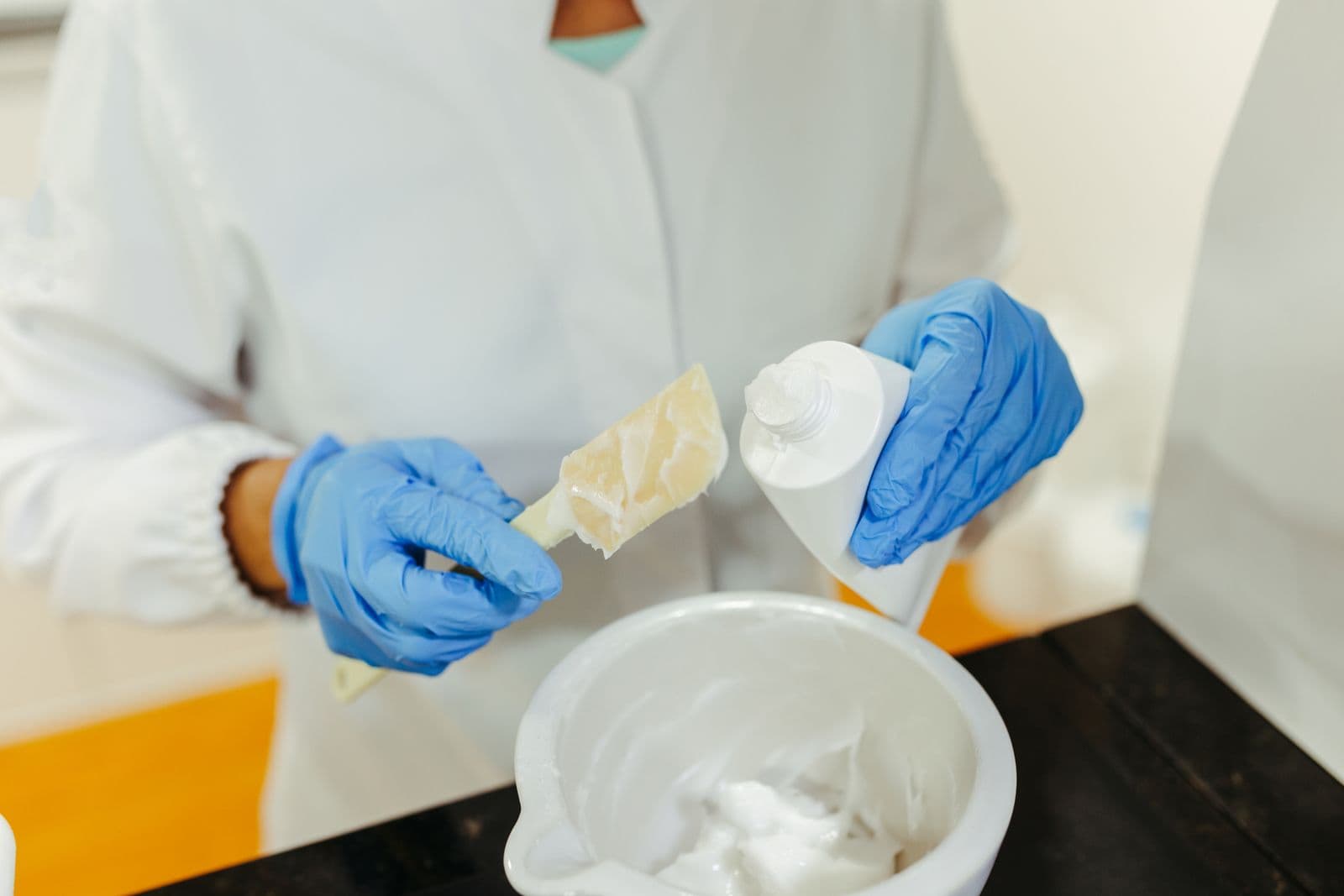
Stearic acid, beeswax and lanolin are melted with light liquid paraffin at 80–85 °C (oil phase); water with triethanolamine, glycerine and preservative is heated separately (water phase). The two are mixed with slow stirring, cooled, and perfume is added at about 40 °C. The cream protects skin from dryness in all seasons and is sold in 100 g and 200 g jars.
Capacity: 200 kg a day; 60,000 kg a year at full capacity (report plans 65% in year 1 to 85% in year 5).
§2Is it right for you?
Who it is for
Someone with a chemist on the team and a plan to sell through local retailers, parlours or private-label clients.
Who it is not for
Someone hoping to take on national cream brands without a marketing budget.
Advantages
- Simple process with low-cost machines (₹3.43 lakh)
- Gross margin about 30% in the report
- Raw materials are easy to buy across India
- Sold in cities, small towns and villages, and through beauty parlours
Drawbacks
- Big brands dominate the shelf
- Needs a cosmetics licence under the Drugs and Cosmetics Act
- Jars and packaging are a large share of material cost
- Building a brand takes marketing money
Skills you need
- Cosmetic formulation
- Hygiene and batch quality control
- Licensing and labelling compliance
- Retail distribution
Why difficulty 2/5: Easy process and small machines; licence and brand-building are the work.
§3Market
Who buys
- Office workers, students and other skin-conscious buyers
- Beauty parlours
- Rural and small-town households
How it sells
- Cosmetic and general stores
- Beauty parlours
- Private-label supply
Good to know
- The report notes a few established national brands and some MSME brands with good local markets.
§4Raw material & machinery
| Item | Qty | Cost |
|---|---|---|
| SS jacketed vessel with heating, stirrer and speed control, 200 kg | 1 | ₹1,50,000 |
| SS vessel with heating arrangement | 1 | ₹50,000 |
| Semi-automatic filling machine | 1 | ₹45,000 |
| SS storage tanks, 200 litres | 2 | ₹30,000 |
| Testing and laboratory equipment | — | ₹30,000 |
| Water circulating pump ½ HP, tools and misc. equipment | — | ₹7,500 |
| Installation and electrification (10%) | — | ₹30,750 |
From: PMEGP sample project report — All Purpose Cream (prepared by Udyami/Samadhan)
- Light liquid paraffin11,340 kg a year at ₹80/kg at full capacity
- Stearic acid6,780 kg a year at ₹73/kg
- Ethoxy lanolin1,824 kg a year at ₹800/kg
- Glycerine, borax, triethanolamine, beeswax, parabens and perfumesmaller quantities; perfume 360 kg at ₹800/kg
- Plastic jars (100 g and 200 g) and corrugated boxes2,11,200 jars of 100 g at ₹5 and 1,20,600 of 200 g at ₹6.50
From: PMEGP sample project report — All Purpose Cream (prepared by Udyami/Samadhan)
§5Licences & registration
- Cosmetics manufacturing licence from the state drug controller (Drugs and Cosmetics Act)
- Udyam
- GST
- Pollution consent as per state category
- Legal Metrology registration for packaged goods
- Trademark for the brand (optional)
§6Schemes & subsidies
- PMEGPCentralActive15–35% subsidy
- MudraCentralActiveLoan up to ₹20 lakh, no collateral
- CGTMSECentralActiveNo collateral, up to ₹10 crore
PMEGP (report shows own margin 5% special, 10% general); at ₹14.95 L it fits a MUDRA Tarun Plus loan; CGTMSE for collateral-free cover.
§7Money
How the investment is worked out: Two totals are printed: ₹14.95 L on the summary page and in the means of finance, and ₹15.17 L in the cost table (plant & machinery ₹3.43 L + furniture ₹1.00 L + pre-operative ₹0.50 L + working capital ₹10.25 L). Finance: own ₹1.52 L, term loan ₹4.44 L, working capital ₹9.00 L. Land 400 sq m and shed 300 sq m rented or owned.
Working capital: Working capital ₹10.25 L — two-thirds of the project — with ₹9.00 L bank finance; 30 days of stock.
Year not printed on the report — check current machinery prices.
§8Export potential
Export council / board: CHEMEXCIL
- The report prints no HS code; confirm the ITC(HS) line with DGFT before exporting.
§9Risks — where people fail
- Licence or labelling lapses
- Brand competition
- Batch contamination
- Packaging cost rises
§1030 / 60 / 90-day plan
A general plan that applies to any business. A plan for this business will be added after research.
- Days 1–30: Visit a working all-purpose skin cream unit, ask 10 buyers about price and quantity, and get quotations from 3 suppliers.
- Days 31–60: Udyam and the licences you need (Cosmetics manufacturing licence from the state drug controller (Drugs and Cosmetics Act), Udyam), a project report (DPR), and the scheme or loan file.
- Days 61–90: Space and machines, trial production, and first deliveries to 10 customers.
§11Who to connect with
Associations, clusters and training institutes — the directory is being built. Connect
§12Watch
There is no episode on this business yet. Shows are coming soon on the Podcast page.
Want to start All-Purpose Skin Cream?
DPR, loan file or registration — ask us on WhatsApp.
¶Sources
Data review: 6 October 2026. Spotted a mistake? Report it. For information only — not legal or financial advice.