

§1What this business is
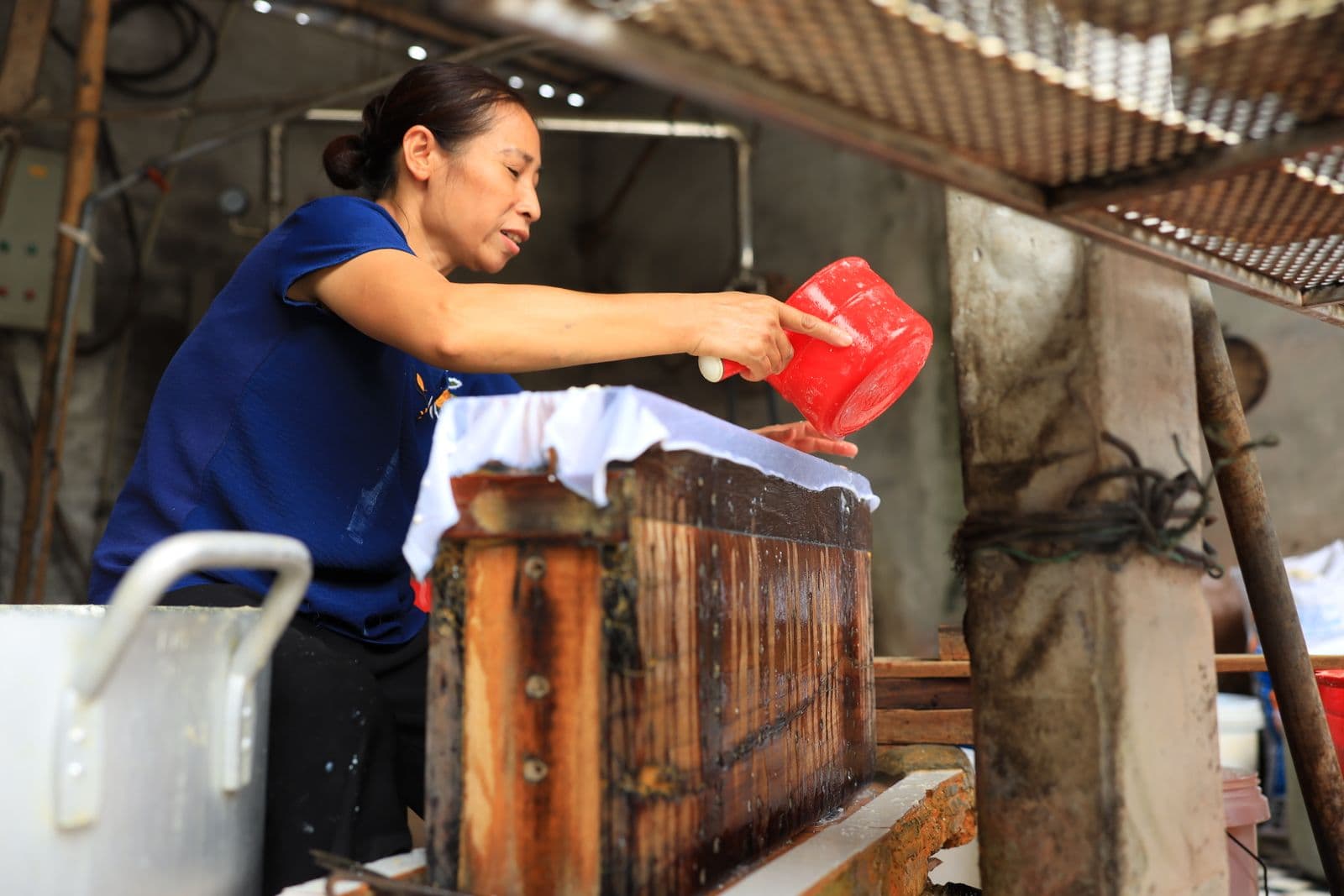
Banana stems left after the harvest are cut, pulped, pressed and set on screen plates into sheets of paper. The paper goes into journals, notebooks, lamps, art and sketching sheets; the report says it can be made from 30 to 380 GSM.
Capacity: Rated output not printed; the report plans 50% use in year 1 rising to 70% in year 5 (year-1 sales ₹49.88 L).
§2Is it right for you?
Who it is for
Someone in a banana-growing area who can also sell to craft, stationery and gift buyers.
Who it is not for
Someone far from banana farms or who expects a ready mass market.
Advantages
- Raw material is farm waste that banana growers want cleared
- Eco-friendly paper sells to gift and stationery buyers
- Small machine set (about ₹12 L)
- Simple process that local workers can learn
Drawbacks
- Needs a steady stem supply, so works only near banana farms
- Handmade paper is a niche market; you must find buyers yourself
- Raw stems rot fast if not processed quickly
- Uses a lot of water
Skills you need
- Pulping and sheet-forming
- Quality grading by GSM
- Craft and gift-trade selling
- Stem collection from farmers
Why difficulty 3/5: The process is simple; finding steady buyers for handmade paper is the hard part.
§3Market
Who buys
- Stationery and notebook makers
- Gift and craft shops
- Artists and lamp makers
How it sells
- Direct sale to craft and gift buyers
- Stationery wholesalers
- Online craft stores
Good to know
- The report lists use in lights, artwork, sketching, journals and notebooks.
- It says the paper is screen-print and inkjet friendly.
§4Raw material & machinery
| Item | Qty | Cost |
|---|---|---|
| Stem cutter | 2 | ₹1.50 lakh |
| Pulp beater | 1 | ₹3.00 lakh |
| Hydraulic press | 1 | ₹4.15 lakh |
| Screen plate | 1 | ₹2.50 lakh |
| Other equipment | — | ₹0.85 lakh |
From: PMEGP sample project report — Banana Paper (prepared by Udyami/Samadhan)
- Banana stemsmain raw material, collected from banana farms
- Oily solventlisted as a major raw material in the report
From: PMEGP sample project report — Banana Paper (prepared by Udyami/Samadhan)
§5Licences & registration
- Udyam
- GST
- Pollution control board consent (NOC)
- BIS certification (listed in the report)
§6Schemes & subsidies
- PMEGPCentralActive15–35% subsidy
- MudraCentralActiveLoan up to ₹20 lakh, no collateral
- CGTMSECentralActiveNo collateral, up to ₹10 crore
The report is a PMEGP sample; MUDRA and CGTMSE can cover the loan.
§7Money
How the investment is worked out: Samadhan sample report: machinery ₹12.00 L, furniture ₹0.75 L, other assets ₹0.50 L, working capital ₹3.22 L = ₹16.47 L. Premises rented (about ₹15,000 a month).
Working capital: Working capital ₹3.22 L, of which a bank loan of ₹2.90 L.
Year not printed on the report — check current machinery prices.
§8Export potential
Confirm the HS code in the DGFT ITC(HS) lookup before you export
Export council / board: DGFT (IEC needed)
- Handmade eco-paper is sold abroad through craft and gift buyers.
§9Risks — where people fail
- Irregular stem supply
- Slow sales in a niche market
- Water and effluent handling
- Price competition from ordinary handmade paper
§1030 / 60 / 90-day plan
A general plan that applies to any business. A plan for this business will be added after research.
- Days 1–30: Visit a working banana paper making unit unit, ask 10 buyers about price and quantity, and get quotations from 3 suppliers.
- Days 31–60: Udyam and the licences you need (Udyam, GST), a project report (DPR), and the scheme or loan file.
- Days 61–90: Space and machines, trial production, and first deliveries to 10 customers.
§11Who to connect with
Associations, clusters and training institutes — the directory is being built. Connect
§12Watch
There is no episode on this business yet. Shows are coming soon on the Podcast page.
Want to start Banana Paper Making Unit?
DPR, loan file or registration — ask us on WhatsApp.
¶Sources
Data review: 6 October 2026. Spotted a mistake? Report it. For information only — not legal or financial advice.