

§1What this business is
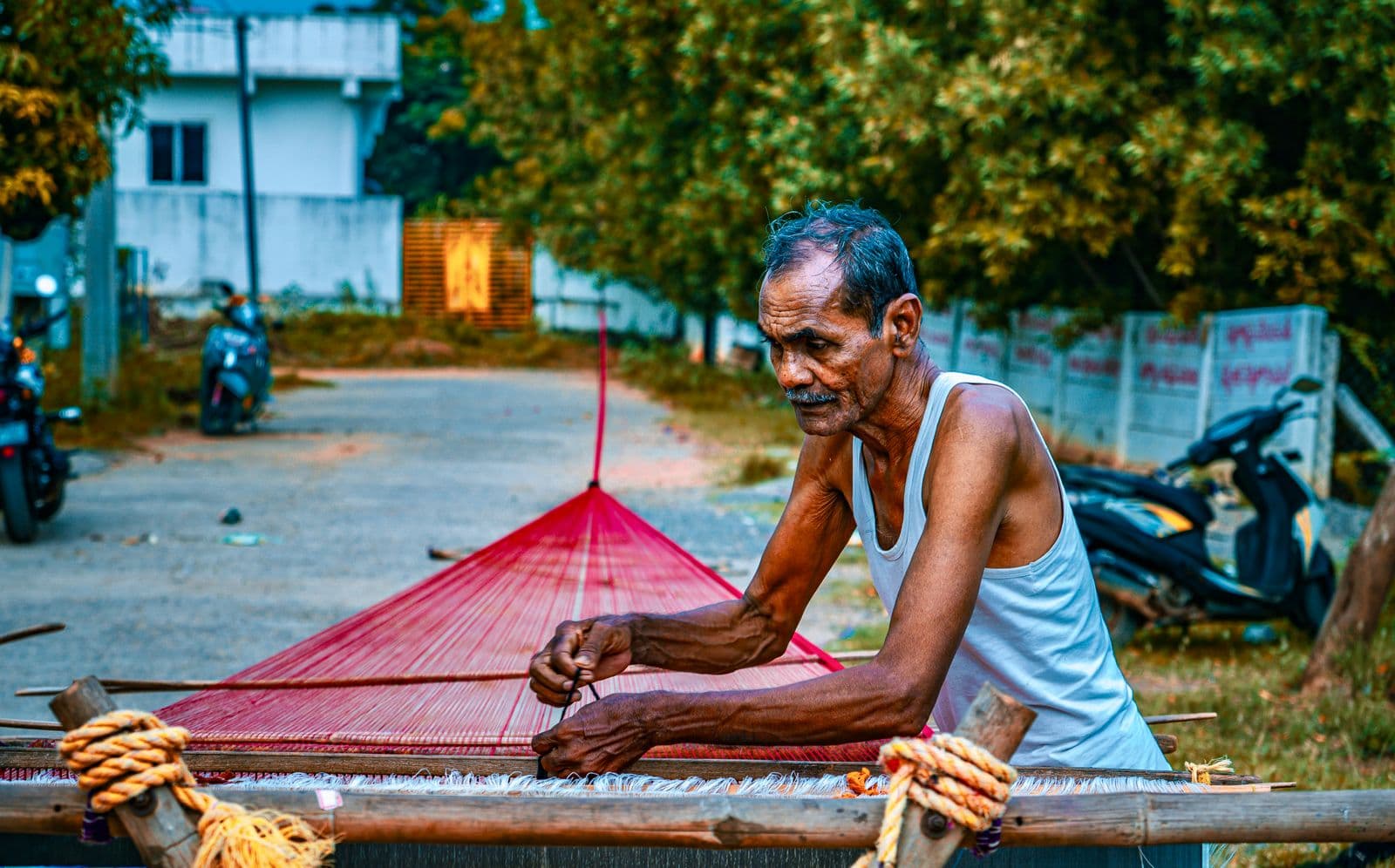
The design is drawn on graph paper and punched into jacquard cards; dyed silk yarn is warped and woven with gold and silver zari on handlooms. The report plans a 1,500–2,000 sq ft karkhana with 13 people making about 20 sarees a day. Buyers are saree wholesalers and showrooms in Varanasi and other cities.
Capacity: 20 sarees a day (10-hour shift); 60% use in year 1.
§2Is it right for you?
Who it is for
A weaver family or saree trader in the Varanasi cluster who knows designs and buyers.
Who it is not for
Someone who cannot tell real silk and zari from imitations.
Advantages
- Steady wedding and festival demand for Banarasi sarees
- Varanasi has a large pool of weavers, dyers and designers
- Modest machinery cost (₹5.50 L)
- New designs need only new jacquard cards
Drawbacks
- Silk yarn and zari prices move a lot
- Thin margin early on (2.1% net in year 1)
- Powerloom copies undercut handloom prices
- Wholesalers often pay late
Skills you need
- Jacquard design and card punching
- Judging silk yarn and zari quality
- Managing weavers' output
- Selling to wholesalers and showrooms
Why difficulty 3/5: The craft is old and known, but margins are thin and yarn prices move.
§3Market
Who buys
- Saree wholesalers and showrooms
- Families buying wedding sarees
- Boutiques and designers
How it sells
- Varanasi wholesale market
- Showrooms in other cities
- Online marketplaces and social media
Good to know
- The report counts about 40,000 active weavers in Banaras.
- Raw silk is sourced from Malda or imported from China, Japan and Central Asia (report).
§4Raw material & machinery
| Item | Qty | Cost |
|---|---|---|
| Jacquard machine (holds the punched cards) | as needed | — |
| Handlooms | as needed | — |
| Warping machine | 1 | — |
| Manual paper (card) cutter | 1 | — |
| Weaving tools (containers, spindles, spinning wheel), pump, bins, punch tools, hammers | LS | — |
| All machinery and tools above, together | 1 set | ₹5.50 lakh (approx., without GST and installation) |
From: PMEGP sample project report — Silk Saree Weaving (prepared by Udyami/Samadhan)
- Silk yarndyed and bought ready in bundles from the market (report)
- Gold and silver thread (zari)main cost driver with the silk
- Dye coloursfor dyeing the yarn
- Card-making material: brown sheet, graph paper, punch cards, nail paint, rubber bands, measuring scaleaverage raw material ₹800–880 per saree (report)
From: PMEGP sample project report — Silk Saree Weaving (prepared by Udyami/Samadhan)
Suppliers in Building Business Bazaar
Bijoypur Silk Khadi Cluster · Murshidabad →Eri Silk Cluster · East Siang →Kaliabor Silk Cluster · Nagaon →Lakhimpur Silk Cluster · Lakhimpur →Majuli Handicraft Endi Silk Diversified Handloom Cluster · Jorhat →Manas Endi Silk Diversified Mini Cluster · Baksa →Psk Silk Khadi Cluster · Kamrup →Silk Handicraft Handloom Cluster · Hoshangabad →ODOP CFC — UP Town Welfare Foundation →Central Silk Technological Research Institute (CSTRI), Bengaluru · Bengaluru →Hi-Tech Silk Weaving Cluster, Varanasi · Varanasi →
In our raw material database
Viscose filament yarn (VFY) →Raw silk — mulberry →Raw silk — tasar (tussar) →Zari and metallic yarn →
§5Licences & registration
- Udyam registration
- GST registration
- Silk Mark and Handloom Mark labels (optional, build buyer trust)
- Authorised-user registration under the 'Banaras Brocades and Sarees' GI (optional)
§6Schemes & subsidies
- PMEGPCentralActive15–35% subsidy
- MudraCentralActiveLoan up to ₹20 lakh, no collateral
- CGTMSECentralActiveNo collateral, up to ₹10 crore
- Stand-Up IndiaCentralClosed₹10 lakh – ₹1 crore loan
PMEGP (the report is a PMEGP sample), MUDRA up to ₹20 lakh, CGTMSE for a loan without collateral; Stand-Up India for SC/ST or women founders (project above ₹10 lakh).
§7Money
How the investment is worked out: Samadhan report: plant & machinery ₹5.50 L (jacquard, handlooms, warping machine, card cutter, tools), furniture ₹1.50 L, working capital ₹5.00 L = ₹12.00 L; land 2,000 sq ft own or rented. Finance: term loan ₹6.30 L, cash credit ₹4.50 L, own money ₹1.20 L.
Working capital: Working capital ₹5.00 L (bank cash credit ₹4.50 L); 15 days of raw material and finished stock.
Year not printed on the report — check current machinery and material prices.
§8Export potential
Confirm the HS code in the DGFT ITC(HS) lookup before you export
Export council / board: Indian Silk Export Promotion Council (ISEPC)
- Get an Import Export Code (IEC) from DGFT before exporting.
- Silk Mark labels help overseas buyers trust the silk content.
§9Risks — where people fail
- Yarn and zari price swings
- Changing fashion and designs
- Cheap powerloom and imitation sarees
- Money stuck in credit sales
§1030 / 60 / 90-day plan
A general plan that applies to any business. A plan for this business will be added after research.
- Days 1–30: Visit a working banarasi silk saree weaving unit, ask 10 buyers about price and quantity, and get quotations from 3 suppliers.
- Days 31–60: Udyam and the licences you need (Udyam registration, GST registration), a project report (DPR), and the scheme or loan file.
- Days 61–90: Space and machines, trial production, and first deliveries to 10 customers.
§11Who to connect with
Associations, clusters and training institutes — the directory is being built. Connect
§12Watch
There is no episode on this business yet. Shows are coming soon on the Podcast page.
Want to start Banarasi Silk Saree Weaving?
DPR, loan file or registration — ask us on WhatsApp.
¶Sources
Data review: 6 October 2026. Spotted a mistake? Report it. For information only — not legal or financial advice.