

§1What this business is
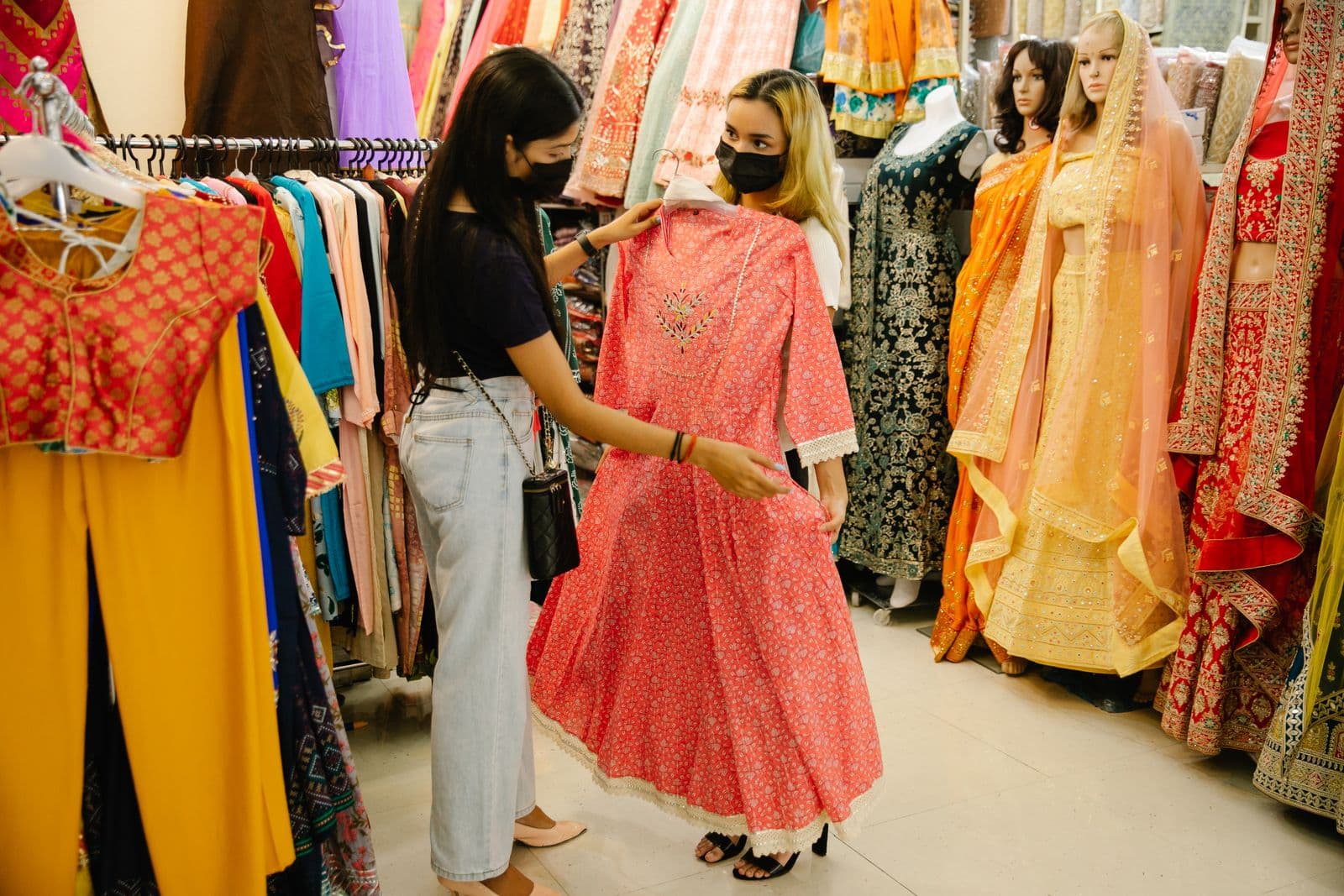
A designer creates about 300 designs a year, of which around 280 are chosen. Fabric is bought, patterns made, cut, stitched, embroidered and finished, then shown in a boutique in a posh or semi-posh city area. The report plans 6 single-needle machines, 2 overlock machines and 1 embroidery machine making 6,000 dresses a year: 4,480 ready-made and 1,520 made-to-measure. Target buyers are women aged 14 and above from middle and upper-middle income families.
Capacity: 20 dresses a day, 6,000 a year at full capacity (8 hours, 300 days); 60% in year 1.
§2Is it right for you?
Who it is for
A fashion graduate or experienced tailor-designer with a following in the city.
Who it is not for
Someone without design sense or a good shop location.
Advantages
- Machinery is cheap (₹6.68 lakh)
- Design skill lets you charge more than ready-made brands
- Made-to-measure orders bring loyal customers
- Demand has spread from metros to small cities, as the report notes
Drawbacks
- Fabric is about 70% of sales; unsold stock locks money
- Designs are copied quickly
- Prime-location rent is high
- Depends on skilled tailors who may leave
Skills you need
- Fashion design and pattern making
- Managing tailors and quality
- Buying fabric and trims well
- Social-media marketing and customer service
Why difficulty 3/5: Low machinery cost, but design, location and stock control decide success.
§3Market
Who buys
- Women aged 14 and above from middle and upper-middle income families
- Brides and families buying for weddings and festivals
- Indian expatriates in the USA, UAE, UK and Canada, as the report notes
How it sells
- Own boutique outlet
- Exhibitions and fashion shows
- Social media and online orders
- Catalogues, hoardings and local cable ads
Good to know
- The report sells every dress at ₹3,600.
- Of 6,000 dresses a year, 4,480 are ready-made (280 designs × 4 sizes × 4 pieces) and 1,520 made-to-measure.
§4Raw material & machinery
| Item | Qty | Cost |
|---|---|---|
| Single-needle lock-stitch machine | 6 | ₹3,60,000 (₹60,000 each) |
| Overlock machine | 2 | ₹90,000 (₹45,000 each) |
| Embroidery machine | 1 | ₹75,000 |
| Generator for workshop, 6 KW | 1 | ₹75,000 |
| Generator for outlet, 2.5 KVA | 1 | ₹40,000 |
| Scissors | 12 | ₹12,000 |
| Embroidery frame set (4–5 pieces) | 1 | ₹10,000 |
| Chalk packs and cutting/measuring scales | — | ₹6,000 |
From: PMEGP sample project report — Boutique (prepared by Udyami/Samadhan)
- Fabric, accessories and packaging₹2,500 a dress; ₹150 lakh a year at full capacity
From: PMEGP sample project report — Boutique (prepared by Udyami/Samadhan)
§5Licences & registration
- Shop and establishment registration
- Udyam registration
- GST
- Trade licence
- Trademark for the label (if needed)
§6Schemes & subsidies
- PMEGPCentralActive15–35% subsidy
- MudraCentralActiveLoan up to ₹20 lakh, no collateral
- CGTMSECentralActiveNo collateral, up to ₹10 crore
- Stand-Up IndiaCentralClosed₹10 lakh – ₹1 crore loan
The report is a PMEGP sample (own share 10% general, 5% special category). MUDRA and CGTMSE can back the loan; Stand-Up India suits women and SC/ST founders.
§7Money
How the investment is worked out: Itemised cost: building & civil work (2,500 sq ft) ₹4.00 lakh + plant & machinery ₹6.68 lakh + furniture ₹1.50 lakh + pre-operative ₹0.68 lakh + working capital ₹7.08 lakh = ₹19.94 lakh. The summary page of the same report states ₹25.00 lakh.
Working capital: Working capital ₹7.08 lakh, of which bank finance ₹6.35–6.37 lakh; fabric and accessories cost ₹2,500 a dress.
Year not printed on the report — check current machinery prices.
§8Export potential
Confirm the HS code in the DGFT ITC(HS) lookup before you export
Export council / board: AEPC (Apparel Export Promotion Council)
- Small boutiques usually start exporting through online orders and courier under e-commerce export rules.
§9Risks — where people fail
- Unsold stock as fashion changes
- Design piracy
- Loss of key tailors
- High rent at a poor location
§1030 / 60 / 90-day plan
A general plan that applies to any business. A plan for this business will be added after research.
- Days 1–30: Visit a working boutique (women's designer wear) unit, ask 10 buyers about price and quantity, and get quotations from 3 suppliers.
- Days 31–60: Udyam and the licences you need (Shop and establishment registration, Udyam registration), a project report (DPR), and the scheme or loan file.
- Days 61–90: Space and machines, trial production, and first deliveries to 10 customers.
§11Who to connect with
Associations, clusters and training institutes — the directory is being built. Connect
§12Watch
There is no episode on this business yet. Shows are coming soon on the Podcast page.
Want to start Boutique (Women's Designer Wear)?
DPR, loan file or registration — ask us on WhatsApp.
¶Sources
Data review: 6 October 2026. Spotted a mistake? Report it. For information only — not legal or financial advice.