

§1What this business is
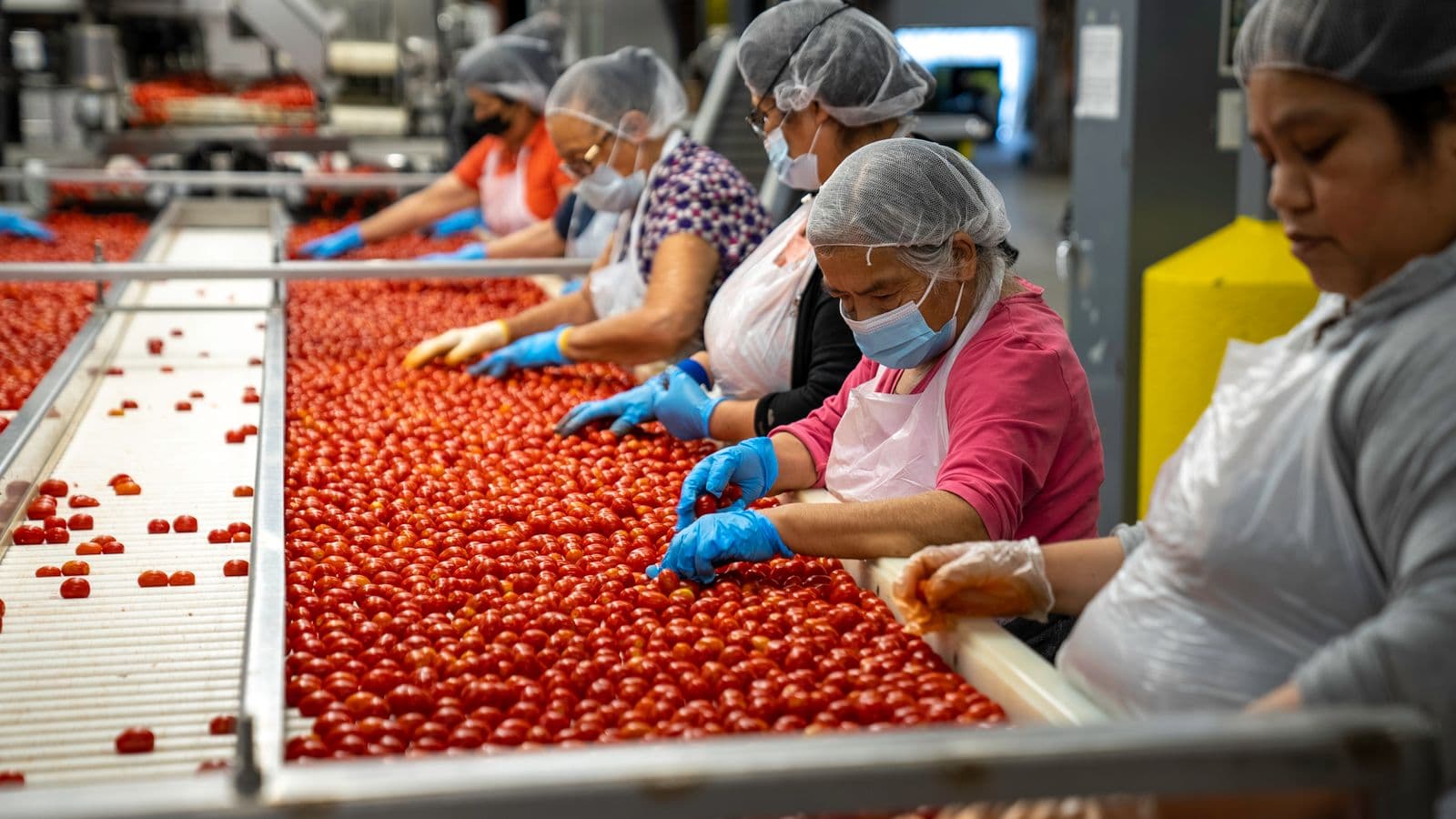
Button mushrooms are graded, washed, blanched, filled into A-2½ cans with hot brine (2% salt, 1% sugar, 0.05% citric acid), exhausted, double-seamed and sterilised at 15 psi, then cooled and stored. The report plans it as a 100% export-oriented unit and suggests canning other fruits and vegetables on the same line when mushrooms are not available.
Capacity: 9,00,000 cans of A-2½ size a year (440 g drained weight each), single shift, 300 days.
§2Is it right for you?
Who it is for
A mushroom grower or a group of growers who want to process their own crop and can run food-safety systems.
Who it is not for
Someone without an assured mushroom supply or export contacts.
Advantages
- Canning turns a crop that spoils in days into a product that keeps
- The same line can can other fruits and vegetables
- Stems and cuttings can be made into mushroom pickle
- There is export demand for canned button mushrooms
Drawbacks
- Needs a steady supply of good button mushrooms
- The real fixed cost in the report is about twice the ₹20 L portal figure
- Strict hygiene and sterilisation — a bad batch swells or leaks
- Competes with large exporters from China, Taiwan and Indonesia
Skills you need
- Thermal processing and canning
- Food safety and lab testing
- Planning supply with growers
- Export paperwork
Why difficulty 4/5: Canning needs exact sterilisation, food-safety control and an assured mushroom supply.
§3Market
Who buys
- Importers abroad (the report plans 100% export)
- Hotels and caterers (prefer A-2½ cans)
- Retailers (prefer A-1 tall cans)
How it sells
- Export through importers and trading houses
- Hotel and catering suppliers
Good to know
- The report says over 50% of world mushroom output is sold fresh and about half of the processed share is canned.
- China, Taiwan and Indonesia are named as the main producers of mushroom products.
§4Raw material & machinery
| Item | Qty | Cost |
|---|---|---|
| Stainless steel tables 6 × 3 ft | 2 | ₹26,800 |
| Rotary rod washer with spray and collection tank | 1 | ₹66,000 |
| Blanching equipment (three SS tanks with trays and steam coil) | 1 | ₹57,700 |
| SS tilting-type exhaust box | 1 | ₹70,000 |
| Canning retorts 810 × 915 mm with thermometer, gauge and safety valve | 2 | ₹98,400 (₹49,200 each) |
| Crates for retorts | 8 | ₹52,800 (₹6,600 each) |
| Can reformer | 1 | ₹50,500 |
| Flanger with one change part | 1 | ₹53,800 |
| Flange rectifier | 1 | ₹20,800 |
| Semi-automatic can seamer (plus change part ₹14,500) | 1 | ₹85,000 |
| Can end embossing machine (plus change part ₹18,000) | 1 | ₹1,06,500 |
| Plastic water storage tank, 15 KL | 1 | ₹50,000 |
| Tile-lined concrete tank 8 × 8 × 3.5 ft | 1 | ₹20,000 |
| Oil-fired steam boiler, 500 kg/hour | 1 | ₹3,00,000 |
| Wide-mouth plastic containers, 50 kg | 100 | ₹15,000 (₹150 each) |
| Cold store, 2 tonnes (1,500 cu ft) | 1 | ₹1,50,000 |
| Pneumatic can tester | 1 | ₹1,50,000 |
| Miscellaneous tools (buckets, knives, balance, trays) | lot | ₹23,000 |
| Laboratory equipment | lot | ₹1,00,000 |
| Pollution control (water treatment tanks) | lot | ₹35,000 |
| Machinery & equipment total | — | ₹15.26 lakh |
From: PMEGP sample project report — Canned Mushroom (prepared by Udyami/Samadhan)
- Fresh white button mushroomscanned yield taken as 60% of fresh weight
- A-2½ size tin cans440 g drained weight per can
- Salt, sugar and citric acidbrine of 2% salt, 1% sugar, 0.05% citric acid
From: PMEGP sample project report — Canned Mushroom (prepared by Udyami/Samadhan)
Suppliers in Building Business Bazaar
B. Sen Berry and Company · Delhi →Poysha Industries Co. Ltd · Delhi →T. Alimohammed and Co · Mumbai →Devendra Cottage Industries · Chandigarh →Mather and Platt (India) Ltd · Delhi →Narang Corporation · Delhi →Raylons Metal Works · Mumbai →S.B. Mehta and Associates · Mumbai →Citurgla Bio-Chemical Limited · Mumbai →Cowel Can Ltd · Barotiwala →Divecha Glass Industries · Mumbai →K.S.J. Foods and Services (P) Ltd · Mumbai →
In our raw material database
§5Licences & registration
- FSSAI licence
- Udyam
- GST
- Pollution Control Board consent (wash and blanch water)
- IEC for export
- APEDA registration for export
§6Schemes & subsidies
- PMFMECentralUnclear35% subsidy, up to ₹10 lakh
- PMEGPCentralActive15–35% subsidy
- CGTMSECentralActiveNo collateral, up to ₹10 crore
- Stand-Up IndiaCentralClosed₹10 lakh – ₹1 crore loan
PMFME suits micro food processing units; PMEGP subsidy applies up to ₹50 L project cost; CGTMSE for a loan without collateral.
§7Money
How the investment is worked out: The PMEGP portal lists this report at ₹20.00 L. Inside, the report prints a total fixed investment of ₹40.07 L: land 1,000 sq m ₹2.50 L, building 700 sq m ₹17.50 L, machinery & equipment ₹15.26 L + packing and forwarding ₹1.53 L + erection and electrification ₹1.53 L + office equipment ₹1.00 L (= ₹19.32 L), pre-operative ₹0.75 L. Its working capital page is blank.
Working capital: The working capital figures are not printed; total recurring expenditure is ₹388.68 L a year, so plan bank limits carefully.
Year not printed on the report — check current machinery prices.
§8Export potential
Confirm the HS code in the DGFT ITC(HS) lookup before you export
Export council / board: APEDA
- Confirm the 8-digit ITC-HS code on the DGFT site.
§9Risks — where people fail
- Raw material shortage in the off-season
- Spoiled cans (swelling, leaks)
- Rise in tin-can prices
- Export price competition
§1030 / 60 / 90-day plan
A general plan that applies to any business. A plan for this business will be added after research.
- Days 1–30: Visit a working canned mushroom unit unit, ask 10 buyers about price and quantity, and get quotations from 3 suppliers.
- Days 31–60: Udyam and the licences you need (FSSAI licence, Udyam), a project report (DPR), and the scheme or loan file.
- Days 61–90: Space and machines, trial production, and first deliveries to 10 customers.
§11Who to connect with
Associations, clusters and training institutes — the directory is being built. Connect
§12Watch
There is no episode on this business yet. Shows are coming soon on the Podcast page.
Want to start Canned Mushroom Unit?
DPR, loan file or registration — ask us on WhatsApp.
¶Sources
Data review: 6 October 2026. Spotted a mistake? Report it. For information only — not legal or financial advice.