

§1What this business is
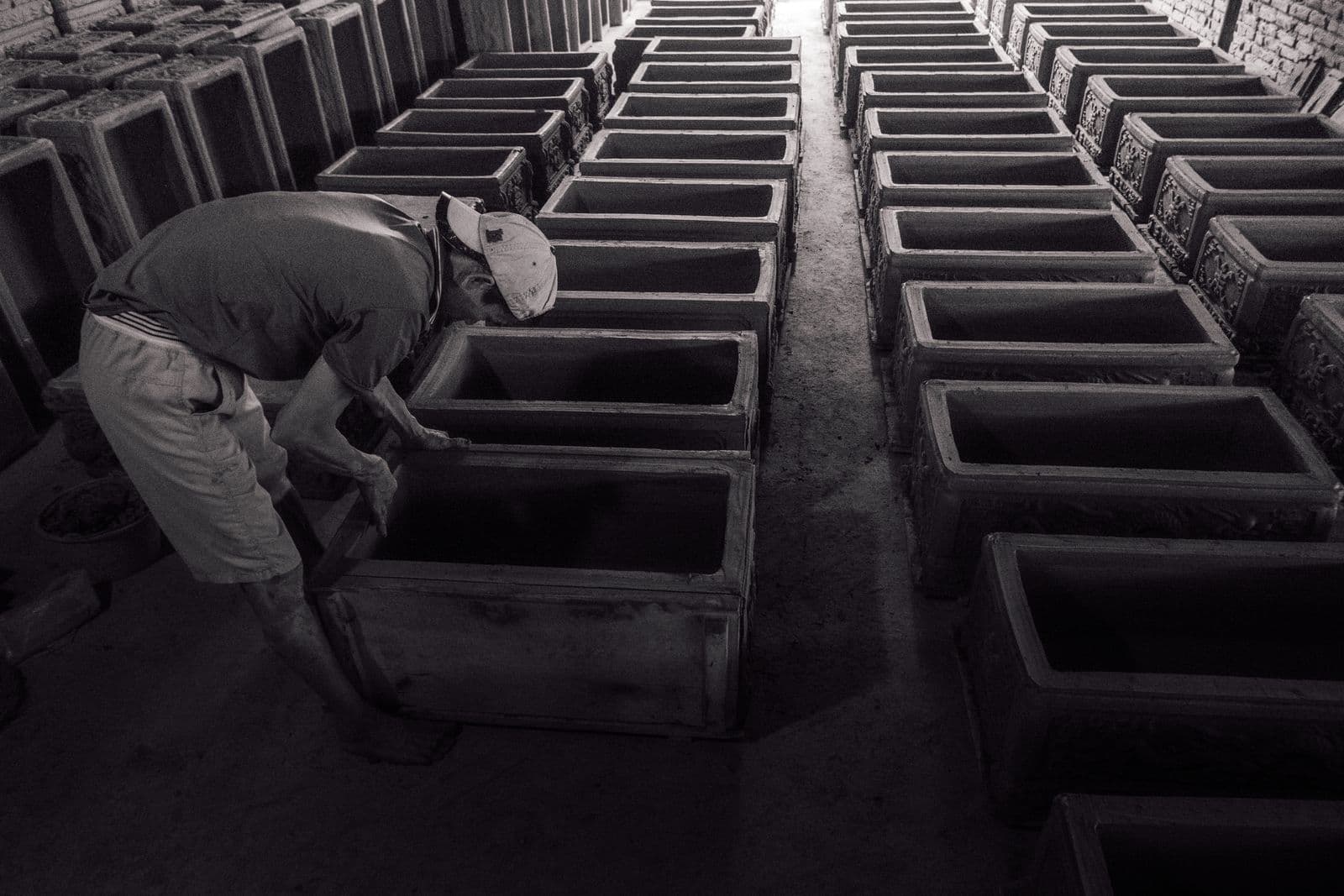
Clay, quartz and feldspar are ground in a ball mill into a slip, shaped by pressing, casting, throwing or jigger-and-jolly, dried, sponged clean, glazed, decorated under or over the glaze and fired in an oil- or gas-fired kiln. Products include soup bowls, flower vases, napkin holders, nut bowls, pen stands, name plates and bird and animal figures for city homes and offices.
Capacity: 60 quintals a year.
§2Is it right for you?
Who it is for
A ceramic artisan or designer with access to city gift and décor markets.
Who it is not for
Someone without ceramic training.
Advantages
- Décor and gift demand in cities
- Good design earns a better price
- Clays are widely available
- Craft skills can be trained
Drawbacks
- Thin surplus in the profile
- Breakage in firing and transport
- Cheap imports compete
- Kiln fuel is costly
Skills you need
- Preparing clay body and glaze
- Shaping and decoration
- Kiln firing
- Design and marketing
Why difficulty 3/5: Needs craft skill, kiln control and a design-led market.
§3Market
Who buys
- Urban households
- Offices
- Gift buyers
How it sells
- Gift and home-décor shops
- Craft fairs and exhibitions
Good to know
- The profile says decorated ceramic ware is in good demand in cities, where people decorate homes and offices.
§4Raw material & machinery
| Item | Qty | Cost |
|---|---|---|
| Clay grinder | 1 | — |
| Wet ball mill | 1 | — |
| Concentration unit | 2 | — |
| Drying chamber | 1 | — |
| Oil-fired kiln | 1 | — |
| Others | — | — |
| Equipment total | — | ₹10,00,000 |
From: KVIC Project Profile — Ceramic Art Wares (PMEGP)
- Clay, quartz and feldsparraw material ₹25.00 lakh a year at full capacity
- Ceramic glazes and colours
- Packing material₹30,000 a year
From: KVIC Project Profile — Ceramic Art Wares (PMEGP)
In our raw material database
§5Licences & registration
- Udyam
- GST
- Pollution Control Board consent (kiln)
- Trade licence
- Fire safety
§6Schemes & subsidies
- PMEGPCentralActive15–35% subsidy
- MudraCentralActiveLoan up to ₹20 lakh, no collateral
- CGTMSECentralActiveNo collateral, up to ₹10 crore
PMEGP (a KVIC village industry) and MUDRA fit; CGTMSE for a loan without collateral.
§7Money
How the investment is worked out: Work shed 600 sq ft ₹1,20,000 + equipment ₹10,00,000 (clay grinder, wet ball mill, concentration units, drying chamber, oil-fired kiln, others) + working capital ₹6,50,000 = ₹17,70,000. The PMEGP list shows ₹17.00 L; the profile prints ₹17.70 L.
Working capital: Working capital ₹6.50 L.
Year not printed on the KVIC profile — check current machinery prices.
§8Export potential
Confirm the HS code in the DGFT ITC(HS) lookup before you export
Export council / board: EPCH (Export Promotion Council for Handicrafts)
- Confirm the 8-digit ITC-HS code on the DGFT site.
§9Risks — where people fail
- Losses in firing
- Fuel price
- Designs being copied
- Slow-moving stock
§1030 / 60 / 90-day plan
A general plan that applies to any business. A plan for this business will be added after research.
- Days 1–30: Visit a working ceramic art ware unit, ask 10 buyers about price and quantity, and get quotations from 3 suppliers.
- Days 31–60: Udyam and the licences you need (Udyam, GST), a project report (DPR), and the scheme or loan file.
- Days 61–90: Space and machines, trial production, and first deliveries to 10 customers.
§11Who to connect with
Associations, clusters and training institutes — the directory is being built. Connect
§12Watch
There is no episode on this business yet. Shows are coming soon on the Podcast page.
Want to start Ceramic Art Ware?
DPR, loan file or registration — ask us on WhatsApp.
¶Sources
Data review: 6 October 2026. Spotted a mistake? Report it. For information only — not legal or financial advice.