

§1What this business is
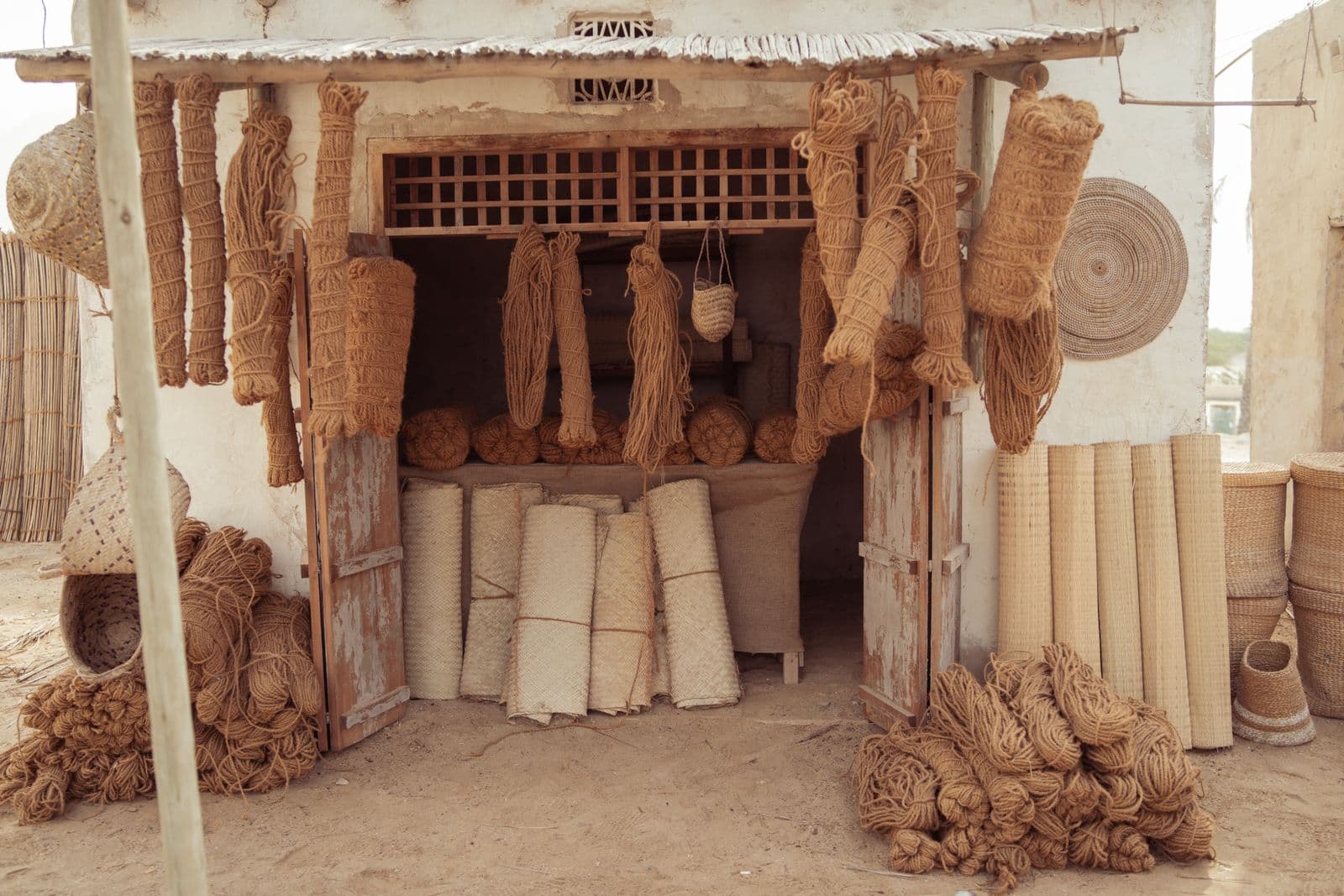
Country hanks of coir yarn are only 15–25 m long, but weaving needs long continuous yarn. Hanks are bought, spliced into longer lengths and wound onto spools (1,500–2,500 yards each) in the quantity and colour pattern the final product needs, using spool stands and flyers.
Capacity: 1,800 tons a year with 3 spooling machines (300 days); 1% yield loss. Sale ₹50,000 and yarn ₹45,500 a ton.
§2Is it right for you?
Who it is for
Someone in a coir weaving cluster who supplies weavers regularly.
Who it is not for
Anyone outside a weaving cluster.
Advantages
- Every mat weaver needs spooled yarn
- Simple machines
- Very low waste (1%)
Drawbacks
- Only ₹4,500 a ton of value added
- High break-even (61–80%)
- Large yarn purchases need cash
Skills you need
- Yarn splicing
- Colour pattern planning
- Stock and cash control
Why difficulty 3/5: Easy work, but thin margins and high break-even need volume.
§3Market
Who buys
- Coir mat, matting and mourzouk weavers
- Mat exporters' production units
How it sells
- Direct supply to weaving units
Good to know
- Splicing and spooling are usually done together.
§4Raw material & machinery
| Item | Qty | Cost |
|---|---|---|
| Spooling machine, 4 head, 5 HP | 3 | ₹10,50,000 |
| Other equipment | — | ₹1,50,000 |
From: PMEGP project profile — Coir Yarn Spooling Unit (prepared by Coir Board, Ministry of MSME) (2018)
- Country hanks of coir yarn₹45,500 a ton; 15–25 m a hank
From: PMEGP project profile — Coir Yarn Spooling Unit (prepared by Coir Board, Ministry of MSME) (2018)
§5Licences & registration
- Udyam registration
- GST registration
- Registration with the Coir Board (needed to export; also opens Coir Board schemes)
- Factory licence if 10 or more workers use power
§6Schemes & subsidies
- PMEGPCentralActive15–35% subsidy
- MudraCentralActiveLoan up to ₹20 lakh, no collateral
- CGTMSECentralActiveNo collateral, up to ₹10 crore
- Stand-Up IndiaCentralClosed₹10 lakh – ₹1 crore loan
PMEGP (this profile was made for it), MUDRA loans up to ₹20 lakh and CGTMSE cover fit; Stand-Up India suits women and SC/ST founders.
§7Money
How the investment is worked out: Coir Board profile: building ₹7.00 lakh + machinery ₹12.00 lakh + working capital ₹6.00 lakh = ₹25.00 lakh.
Working capital: Working capital ₹6.00 lakh (bank ₹5.70 lakh).
Prices from June 2018 — machinery costs will be higher now.
§8Export potential
Confirm the HS code in the DGFT ITC(HS) lookup before you export
Export council / board: Coir Board
- Coir exporters register with the Coir Board and take its registration-cum-membership certificate.
- Confirm the exact 8-digit code in the DGFT ITC-HS schedule before you ship.
§9Risks — where people fail
- Thin margin
- Weaver demand drop
- Yarn price rise
- Credit to weavers
§1030 / 60 / 90-day plan
A general plan that applies to any business. A plan for this business will be added after research.
- Days 1–30: Visit a working coir yarn spooling unit, ask 10 buyers about price and quantity, and get quotations from 3 suppliers.
- Days 31–60: Udyam and the licences you need (Udyam registration, GST registration), a project report (DPR), and the scheme or loan file.
- Days 61–90: Space and machines, trial production, and first deliveries to 10 customers.
§11Who to connect with
Associations, clusters and training institutes — the directory is being built. Connect
§12Watch
There is no episode on this business yet. Shows are coming soon on the Podcast page.
Want to start Coir Yarn Spooling?
DPR, loan file or registration — ask us on WhatsApp.
¶Sources
Data review: 6 October 2026. Spotted a mistake? Report it. For information only — not legal or financial advice.