

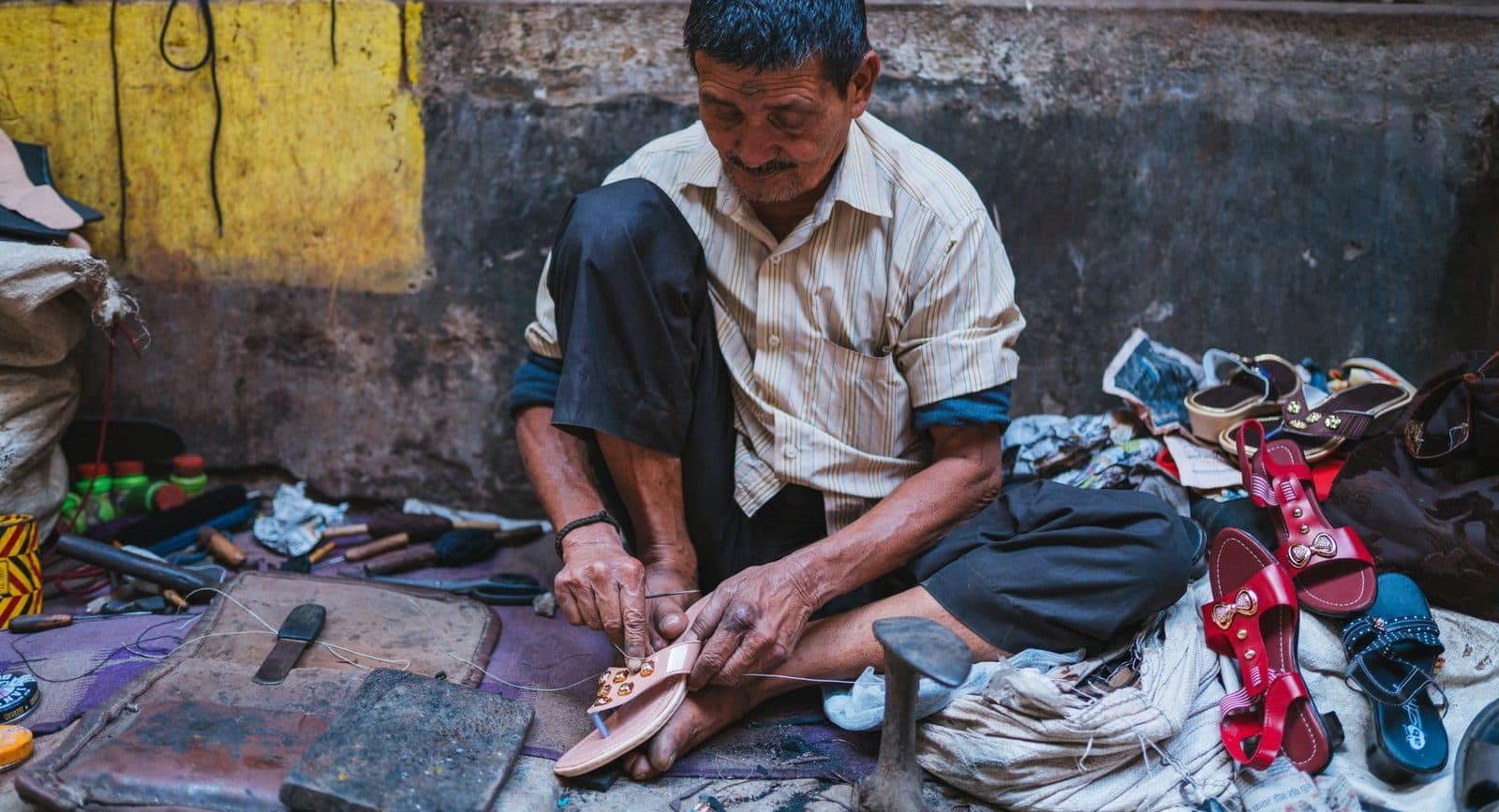
§1What this business is
Uppers of breathable fabric are cut and stitched, insoles and EVA or rubber soles are cut and shaped, and the shoe is lasted and heat-press bonded. The range covers daily walkers, anti-slip trek walkers, formal comfort shoes, soft shoes for older people and water-resistant shoes for the hills. Sales are through your own shop, online, distributors, institutions and trekking tie-ups.
Capacity: 60 pairs a day for 300 days (18,000 pairs a year at full use); year 1 planned at 60% (10,800 pairs).
§2Is it right for you?
Who it is for
Someone from the footwear trade, or with a shoe-making partner, who can also build a retail and online brand.
Who it is not for
A founder who only wants to sell to wholesalers at the lowest price — the plan depends on branded sales.
Advantages
- Everyone needs comfortable shoes; hill towns, pilgrims and trekkers add steady demand
- The report shows break-even inside the first year (10,000 pairs against 10,800 planned)
- Stitching and finishing give jobs to local workers, including women
- Your own shop and online sales keep a larger margin
Drawbacks
- Big shoe brands and cheap imports compete on price
- Building a new brand needs years of marketing spend
- Sizes, colours and models multiply stock
- Seasonal sales — trekking demand peaks in a few months
Skills you need
- Pattern making and size grading
- Stitching, lasting and sole bonding
- Quality checks for grip and sole adhesion
- Retail and online brand building
Why difficulty 3/5: Manufacturing is manageable, but selling a new shoe brand is the hard part.
§3Market
Who buys
- Students and office commuters
- Tourists, pilgrims and trekkers
- Professionals and government staff
- Older people needing soft, cushioned shoes
How it sells
- Own retail outlet
- Online marketplaces
- Distributor network
- Institutional sales
- Tie-ups with trekking agencies
Good to know
- The report rates own-shop and online sales as high-margin, distributors as medium.
- Year-1 revenue in the report is ₹162 L at 60% capacity.
§4Raw material & machinery
| Item | Qty | Cost |
|---|---|---|
| Sole cutting machine | — | — |
| Stitching machines (upper assembly) | — | — |
| Lasting machine | — | — |
| Heat press for bonding | — | — |
| Finishing (polishing) equipment | — | — |
| Testing tools for durability | — | — |
From: Uttarakhand DUY project profile — Long Walker Shoes
- EVA sheetsfor cushioned soles and insoles
- Rubber solesanti-slip soles for trek models
- Breathable fabrics and meshfor uppers
§5Licences & registration
- Udyam registration
- GST registration
- BIS certification where the footwear Quality Control Order covers your product — check with BIS
- State Pollution Control Board consent where the state requires it (adhesives and solvents)
- Trade licence from the local body
- Trademark for your brand (optional but useful)
§6Schemes & subsidies
- PMEGPCentralActive15–35% subsidy
- MudraCentralActiveLoan up to ₹20 lakh, no collateral
- CGTMSECentralActiveNo collateral, up to ₹10 crore
- Stand-Up IndiaCentralClosed₹10 lakh – ₹1 crore loan
PMEGP fits (project ₹36–45 L, under the ₹50 L manufacturing limit); MUDRA up to ₹20 L; CGTMSE for a loan without collateral; Stand-Up India for SC/ST and women founders.
§7Money
How the investment is worked out: Land & shed ₹8–10 L + machinery ₹15–18 L + utilities ₹3–4 L + marketing ₹2–3 L + working capital ₹8–10 L = ₹36–45 L.
Working capital: Working capital ₹8–10 L is inside the project cost. Finance: promoter 25–30%, bank loan 60–65%, subsidy 10–15%.
Year not printed on the profile — check current machinery and material prices.
§8Export potential
Confirm the HS code in the DGFT ITC(HS) lookup before you export
Export council / board: Council for Leather Exports (also covers non-leather footwear)
- Confirm the 8-digit ITC(HS) line with DGFT or your customs broker before shipping.
- You need an Import Export Code (IEC) from DGFT before the first shipment.
§9Risks — where people fail
- Soles coming off — returns hurt a new brand fast
- Unsold stock in slow sizes and styles
- Price war with established brands
- Raw material prices rising (the report assumes 5% a year)
§1030 / 60 / 90-day plan
A general plan that applies to any business. A plan for this business will be added after research.
- Days 1–30: Visit a working comfort walking shoes unit, ask 10 buyers about price and quantity, and get quotations from 3 suppliers.
- Days 31–60: Udyam and the licences you need (Udyam registration, GST registration), a project report (DPR), and the scheme or loan file.
- Days 61–90: Space and machines, trial production, and first deliveries to 10 customers.
§11Who to connect with
Associations, clusters and training institutes — the directory is being built. Connect
§12Watch
There is no episode on this business yet. Shows are coming soon on the Podcast page.
Want to start Comfort Walking Shoes?
DPR, loan file or registration — ask us on WhatsApp.
¶Sources
Data review: 6 October 2026. Spotted a mistake? Report it. For information only — not legal or financial advice.