

§1What this business is
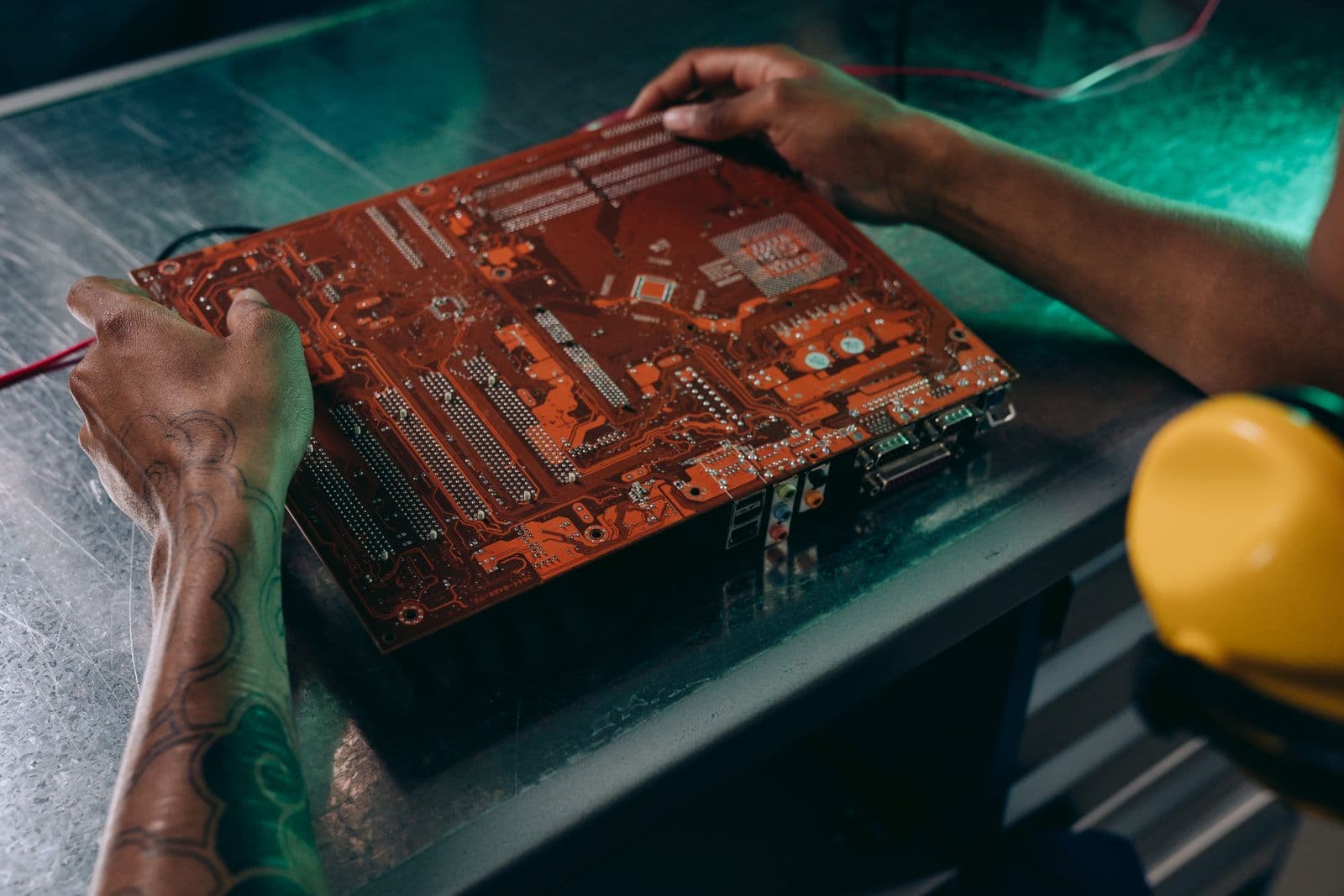
Add-on cards plug into a computer to add functions such as data logging, process control, energy management, product testing and laboratory or medical instrument links. A small unit buys components, assembles and tests the cards and sells them to system integrators and institutions.
Capacity: Cost of production ₹11.06 L and projected sales ₹13.50 L a year at full capacity.
§2Is it right for you?
Who it is for
An electronics diploma or engineering graduate who can design, assemble and test circuit boards.
Who it is not for
Someone without electronics skills looking for a simple trading business.
Advantages
- Very small investment — ₹4.5 lakh
- Works from a small room; no heavy machinery
- Sells to industry, laboratories and institutions, not only home users
- Skilled electronics work builds a repeat customer base
Drawbacks
- Raw material (components) is the biggest cost — ₹5 lakh a year in the profile
- Large brands and imports set the price
- Technology changes quickly; designs date fast
- The profile is old and indicative only
Skills you need
- Circuit board assembly and soldering
- Testing and fault-finding
- Component buying
- Selling to integrators and institutions
Why difficulty 3/5: Small money, but needs real electronics design and testing skill.
§3Market
Who buys
- Industries using data logging and process control
- Laboratories and medical instrument users
- Energy management and product testing users
How it sells
- System integrators
- Direct supply to institutions
Good to know
- The profile lists I/O, A/D–D/A conversion and real-time application cards as the popular types.
§4Raw material & machinery
| Item | Qty | Cost |
|---|---|---|
| Assembly and testing equipment (total) | — | ₹2,50,000 |
From: KVIC Project Profile — Add-On Cards for Computer (PMEGP)
- Electronic components and boards₹5,00,000 a year in the profile
- Packing material₹25,000 a year in the profile
From: KVIC Project Profile — Add-On Cards for Computer (PMEGP)
§5Licences & registration
- Udyam
- GST
- Trade licence
- BIS registration if the product falls under a compulsory registration order
§6Schemes & subsidies
- PMEGPCentralActive15–35% subsidy
- MudraCentralActiveLoan up to ₹20 lakh, no collateral
- CGTMSECentralActiveNo collateral, up to ₹10 crore
PMEGP (this is a KVIC model profile); at ₹4.5 L it also fits a MUDRA Kishore loan; CGTMSE for collateral-free cover.
§7Money
How the investment is worked out: Equipment ₹2,50,000 + working capital ₹2,00,000 = ₹4,50,000. Land own; no workshed cost.
Working capital: Working capital ₹2,00,000; the profile works out ₹1,84,333 per cycle (fixed cost ₹2.07 L, variable cost ₹8.99 L a year).
Year not printed on the KVIC profile — check current machinery prices.
§8Export potential
Export council / board: ESC (Electronics and Computer Software Export Promotion Council)
- The profile prints no HS code; confirm the ITC(HS) line with DGFT before exporting.
§9Risks — where people fail
- Component price and supply swings
- Products going out of date
- Competition from imported cards
- Slow payment from institutional buyers
§1030 / 60 / 90-day plan
A general plan that applies to any business. A plan for this business will be added after research.
- Days 1–30: Visit a working computer add-on cards unit, ask 10 buyers about price and quantity, and get quotations from 3 suppliers.
- Days 31–60: Udyam and the licences you need (Udyam, GST), a project report (DPR), and the scheme or loan file.
- Days 61–90: Space and machines, trial production, and first deliveries to 10 customers.
§11Who to connect with
Associations, clusters and training institutes — the directory is being built. Connect
§12Watch
There is no episode on this business yet. Shows are coming soon on the Podcast page.
Want to start Computer Add-On Cards?
DPR, loan file or registration — ask us on WhatsApp.
¶Sources
Data review: 6 October 2026. Spotted a mistake? Report it. For information only — not legal or financial advice.