

§1What this business is
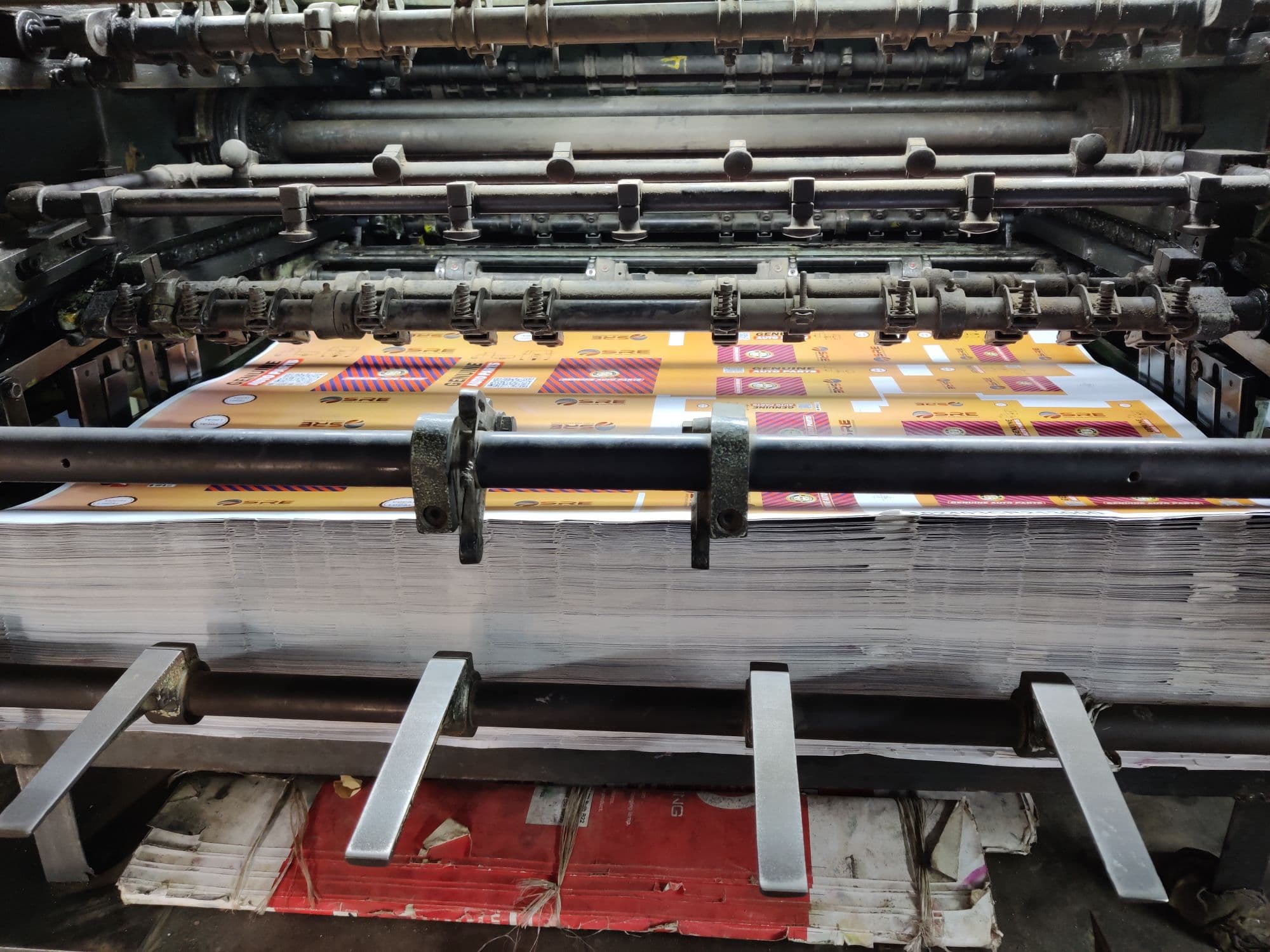
You corrugate kraft paper, then cut, print and stitch/glue it into 3-ply and 5-ply boxes. Buyers are local factories, sweet and namkeen makers, electronics firms, e-commerce sellers and fruit and vegetable traders. Size and print are made to order.
§2Is it right for you?
Who it is for
Someone near an industrial area with ties to factories and traders.
Who it is not for
Someone whose area has no factories or traders.
Advantages
- Demand from both industry and e-commerce
- Made to order — little dead stock
- Once a factory customer joins, orders repeat every month
- Machinery is made in India, so service is easy
Drawbacks
- Kraft paper prices change fast
- Large customers take 60–90 days of credit
- Low margin, needs volume
- Damp in the godown spoils stock
Skills you need
- Box design and costing (GSM, ply)
- Machine operation
- B2B sales
- Credit control
Why difficulty 3/5: B2B selling and credit management take hard work.
§3Market
Who buys
- Makers of crockery, glassware, electronic items and refrigerators, coolers and fans
- Automobile component makers
- Pharmaceutical, soap and cosmetics companies
- Biscuit, cigarette, hosiery, toy and rubber-goods makers
- Rural packers of fruit, vegetables and eggs
How it sells
- Direct B2B supply to nearby factories on repeat orders
- Packaging traders
Good to know
- Demand rises with industrial production every year.
- Raw material is the largest cost (₹36 lakh of ₹61.56 lakh sales in year 1 of the UP report).
§4Raw material & machinery
- Kraft paper for flutingthe wavy middle layer that gives strength
- Liner paper / boardthe smooth outer sheets
From: UP MSME 1-Connect (Govt of UP, RAMP) – Project Report: Corrugated Boxes (2024)
Suppliers in Building Business Bazaar
AHMEDABAD TEXTILE INDUSTRY'S RESEARCH ASSOCIATION (ATIRA) · Ahmedabad →KANHA TESTING LABS PVT. LTD. · Gurgaon →UL INDIA PRIVATE LIMITED · Gurgaon →ROSS LIFESCIENCE LIMITED · Pune →PULP AND PAPER RESEARCH INSTITUTE (PAPRI) · Rayagada →TRUSTIN ANALYTICAL SOLUTIONS PRIVATE LIMITED · Chennai →Indian Institute of Packaging, Mumbai (head office) · Mumbai →Indian Institute of Packaging, Delhi centre · Delhi →Indian Institute of Packaging, Kolkata centre · Kolkata →Indian Institute of Packaging, Chennai centre · Chennai →Indian Institute of Packaging, Hyderabad centre · Hyderabad →Indian Institute of Packaging, Ahmedabad centre · Ahmedabad →
In our raw material database
Kraft paper →Waste paper (recovered paper) →Corrugated sheets and boxes →Adhesives and glues →
§5Licences & registration
- Udyam
- GST
- UPPCB consent (check the category based on printing ink/gum)
- Factory licence if 10+ workers
§6Schemes & subsidies
- PMEGPCentralActive15–35% subsidy
- MudraCentralActiveLoan up to ₹20 lakh, no collateral
- CGTMSECentralActiveNo collateral, up to ₹10 crore
- Stand-Up IndiaCentralClosed₹10 lakh – ₹1 crore loan
~₹25 L manufacturing: PMEGP, CGTMSE, MUDRA (up to ₹20 L), and Stand-Up India for SC/ST/women.
§7Money
How the investment is worked out: Min = gross fixed assets ₹16.15 L. Max = start funds: share capital ₹2.48 L + term loan ₹14.99 L + cash credit ₹7.37 L (summed from report cash-flow statement).
Working capital: Cash credit ₹7.37 L — for kraft paper stock and 30–60 days of credit to factory customers.
Report 2024.
§8Export potential
Confirm the HS code in the DGFT ITC(HS) lookup before you export
Export council / board: CAPEXIL
- CAPEXIL has a separate panel for paper, paperboard and paper products.
- Confirm the 8-digit ITC(HS) line with DGFT or your customs broker.
§9Risks — where people fail
- Paper price
- Receivables
- Customer concentration
- Moisture damage
§1030 / 60 / 90-day plan
A general plan that applies to any business. A plan for this business will be added after research.
- Days 1–30: Visit a working corrugated box unit unit, ask 10 buyers about price and quantity, and get quotations from 3 suppliers.
- Days 31–60: Udyam and the licences you need (Udyam, GST), a project report (DPR), and the scheme or loan file.
- Days 61–90: Space and machines, trial production, and first deliveries to 10 customers.
§11Who to connect with
Associations, clusters and training institutes — the directory is being built. Connect
§12Watch
There is no episode on this business yet. Shows are coming soon on the Podcast page.
Want to start Corrugated Box Unit?
DPR, loan file or registration — ask us on WhatsApp.
¶Sources
Data review: 6 October 2026. Spotted a mistake? Report it. For information only — not legal or financial advice.