

§1What this business is
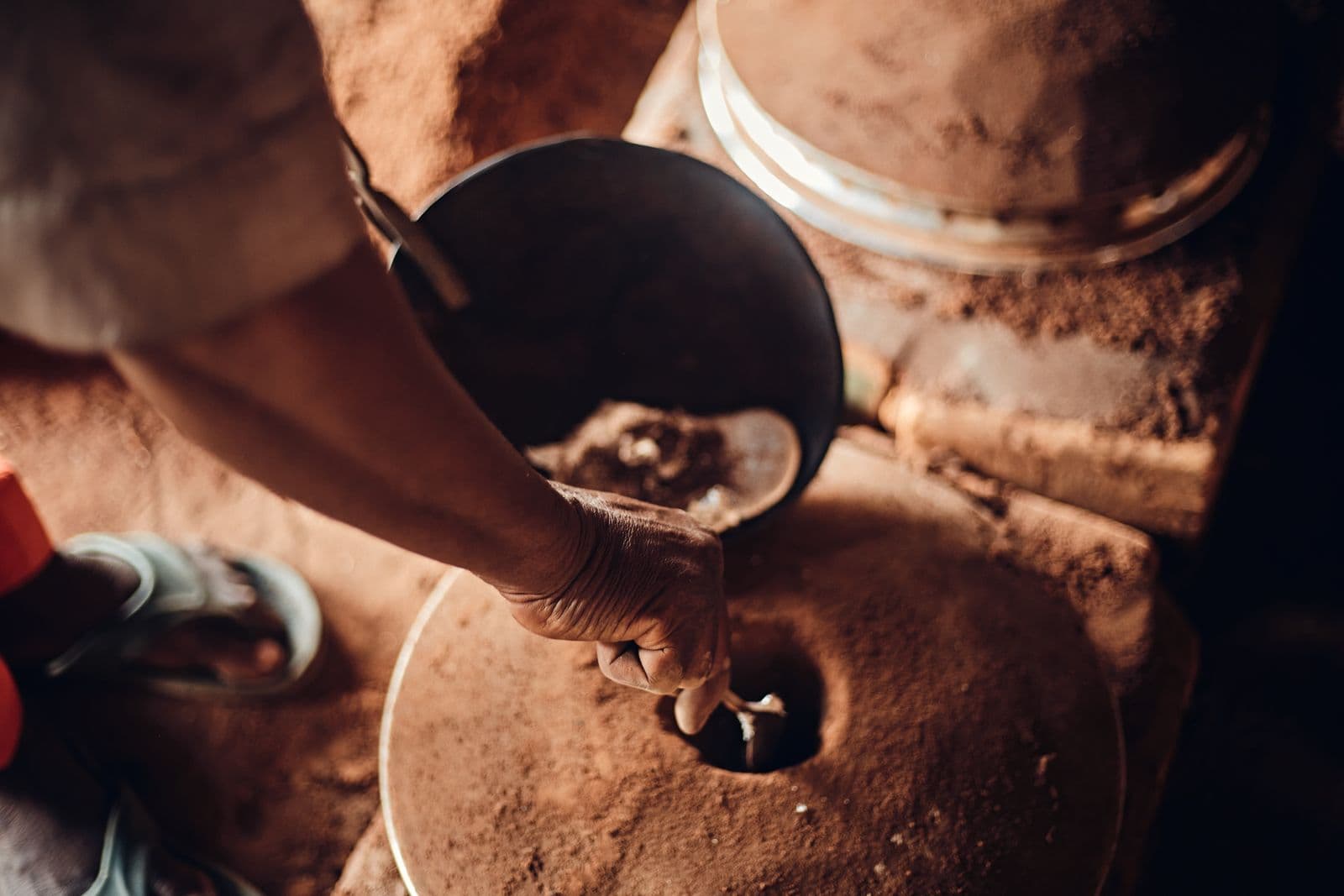
A domestic flour mill is a household appliance that grinds wheat, rice, millet, corn and rava into flour at home. Sheet-metal parts are shaped, the 1 HP single-phase motor, grinding chamber, squeezing blade, micro sieve, cooling blades, push buttons and regulator are fitted into a wooden cabinet and wired, and every unit is tested and packed. The profile's model grinds about 10 kg of wheat an hour on 230 V.
Capacity: 2,400 domestic flour mills a year (200 a month), worth ₹1.44 crore at ₹6,000 each.
§2Is it right for you?
Who it is for
An appliance assembler or dealer who can build a sales and service network.
Who it is not for
Someone who cannot run after-sales service; households expect home repairs.
Advantages
- Families want fresh, pure flour at home
- Assembly from bought parts; small machines
- Popular in Gujarat and Maharashtra and spreading north and east (profile)
- Service and spare-parts income after sale
Drawbacks
- Thin margin (4.82%) in the profile
- Known brands already sell in the same range
- High break-even (61.81%)
- Must offer after-sales service wherever you sell
Skills you need
- Motor and appliance wiring
- Sheet-metal and cabinet work
- Safety testing (HV, insulation)
- Dealer network and after-sales service
Why difficulty 3/5: Assembly is simple, but margins are thin and you need a service network.
§3Market
Who buys
- Households, especially in Gujarat and Maharashtra (profile)
- Families in north and east India, where use is growing
How it sells
- Home-appliance dealers
- Exhibitions and direct demonstration
- Online appliance stores
Good to know
- The profile says models then sold at ₹8,000 to ₹14,000 depending on capacity and features.
- The profile notes good export potential.
§4Raw material & machinery
| Item | Qty | Cost |
|---|---|---|
| Drill machine, ½" | 2 | ₹15,000 |
| Brazing equipment | 1 | ₹10,000 |
| Ball press No. 2 | 1 | ₹8,000 |
| Hand shearing machine, 36" blade | 1 | ₹8,000 |
| Bench grinder | 1 | ₹4,000 |
| Bench vice, 6" jaw | 4 | ₹2,000 |
| Testing panel (ammeter, voltmeter, frequency meter, wattmeter, variac 0–270 V) | 1 | ₹15,000 |
| HV tester 0–3 kV, megger, clamp tester, 2 digital multimeters | 1 lot | ₹14,000 |
| Dies and moulds; tools, jigs and fixtures | 1 lot | ₹40,000 |
From: DC-MSME project profile — Domestic Flour Mill (2003)
- Motor, 1 HP, 230 V single phase200 a month at ₹2,000 = ₹4.00 L
- Teak-wood cabinet200 a month at ₹1,000 = ₹2.00 L
- Squeezing blade200 a month at ₹450 = ₹90,000
- Micro sieve200 a month at ₹200 = ₹40,000
- SS sheet 18 SWG and GI sheet 18 SWG₹1.10 L a month
- Push buttons, magnetic regulator, cooling blades, grinding chamber, storage chamber and other parts200 sets at ₹800 = ₹1.60 L a month
From: DC-MSME project profile — Domestic Flour Mill (2003)
Suppliers in Building Business Bazaar
Crompton Greaves Co · Delhi →Essma Electricals · Delhi →Gama Instrument (P) Ltd · Delhi →Hindustan Motors Manuf. Co · Delhi →
§5Licences & registration
- Udyam registration
- GST
- BIS certification if a Quality Control Order covers this appliance (check before launch)
- Trade licence from the local body
§6Schemes & subsidies
- PMEGPCentralActive15–35% subsidy
- CGTMSECentralActiveNo collateral, up to ₹10 crore
- Stand-Up IndiaCentralClosed₹10 lakh – ₹1 crore loan
- MudraCentralActiveLoan up to ₹20 lakh, no collateral
The ₹34.70 L project fits PMEGP (up to ₹50 L), CGTMSE and Stand-Up India; MUDRA covers a smaller start.
§7Money
How the investment is worked out: DC-MSME profile: production and testing equipment ₹76,000 (2 drills ₹15,000, brazing set ₹10,000, ball press, hand shear, bench grinder, vices; testing panel ₹15,000, HV tester, megger, multimeters) + dies and moulds ₹30,000 + jigs ₹10,000 + electrification ₹7,600 + office furniture ₹60,000 + pre-operative ₹10,000 = fixed capital ₹1.94 L; working capital for 3 months ₹32.76 L; total ₹34.70 L (say ₹34.69 L). Building rented.
Working capital: Working capital for 3 months ₹32.76 L; monthly spend ₹10.92 L, of which parts for 200 mills ₹10.00 L (motor ₹2,000, teak cabinet ₹1,000 each).
Prices from 2002–03 — machinery, material and wage costs will be much higher now.
§8Export potential
Confirm the HS code in the DGFT ITC(HS) lookup before you export
Export council / board: EEPC India
- Confirm the 8-digit ITC(HS) line with DGFT or your customs broker before shipping.
- You need an Import Export Code (IEC) from DGFT before the first shipment.
§9Risks — where people fail
- Brand competition
- Motor price rise
- Warranty and service costs
- Consumer safety claims
§1030 / 60 / 90-day plan
A general plan that applies to any business. A plan for this business will be added after research.
- Days 1–30: Visit a working domestic flour mill (home atta chakki) manufacturing unit, ask 10 buyers about price and quantity, and get quotations from 3 suppliers.
- Days 31–60: Udyam and the licences you need (Udyam registration, GST), a project report (DPR), and the scheme or loan file.
- Days 61–90: Space and machines, trial production, and first deliveries to 10 customers.
§11Who to connect with
Associations, clusters and training institutes — the directory is being built. Connect
§12Watch
There is no episode on this business yet. Shows are coming soon on the Podcast page.
Want to start Domestic Flour Mill (Home Atta Chakki) Manufacturing?
DPR, loan file or registration — ask us on WhatsApp.
¶Sources
Data review: 6 October 2026. Spotted a mistake? Report it. For information only — not legal or financial advice.