

§1What this business is
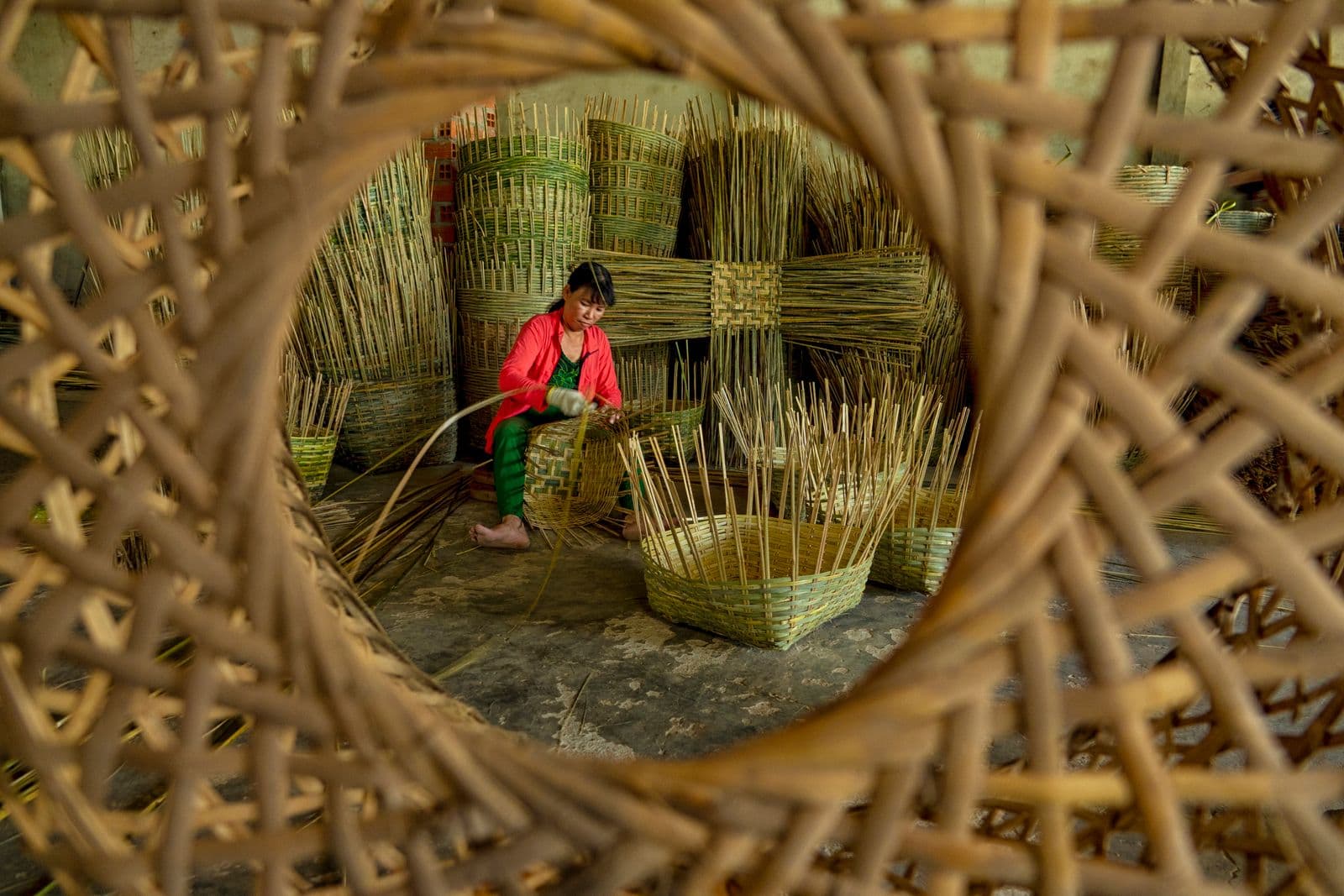
The unit brings several natural materials under one roof. Clay items are shaped on potter's wheels and in moulds and fired in kilns; bamboo sheets are cut and shaped; wood is carved with rural motifs on a CNC machine; and leaf sheaths are pressed into plates on a hot press. Pieces are trimmed, sanded, hand-painted with natural dyes, given a food-safe coating, inspected and packed in biodegradable packaging. The range of plates, bowls, cups, trays, spoons, glasses and serving platters is sold as Himalayan eco-crockery to boutique hotels, eco-resorts, restaurants and households.
§2Is it right for you?
Who it is for
A designer or craft entrepreneur who can work with potters, bamboo workers and wood carvers.
Who it is not for
A beginner who has never handled a kiln or a craft team.
Advantages
- Hotels and resorts want plastic-free tableware
- Local materials and local artisans
- Hand-painted hill designs set the product apart
- Seconds can be sold at a discount
Drawbacks
- Four different materials mean four different skills and machines
- Costs more than mass-made ceramic or melamine
- Long break-even of 26–30 months
Skills you need
- Pottery and kiln firing
- Bamboo and wood working
- Food-safe coating and testing
- Selling to hotels and lifestyle stores
Why difficulty 4/5: Several materials and processes in one unit, with a slow payback.
§3Market
Who buys
- Boutique hotels and eco-resorts
- Restaurants, cafés and canteens
- Urban households and gift buyers
How it sells
- Direct tie-ups with hospitality chains
- Eco-lifestyle stores and showrooms in tourist towns
- Online sales
Good to know
- The profile suggests Haldwani, Kashipur, Rudrapur and Dehradun for the main unit, with showrooms in Nainital, Mussoorie and Rishikesh.
§4Raw material & machinery
| Item | Qty | Cost |
|---|---|---|
| Potter's wheels and clay moulds | 5 | — |
| Bamboo cutting and shaping machines | 3 | — |
| CNC wood carving machine | — | — |
| Leaf fibre hot press moulding machine | 2 | — |
| Drying oven or kiln | 2 | — |
| Trimming, sanding and polishing tools | 5 sets | — |
| Food-safe coating and painting booth | 1 | — |
| All machinery, kilns and tools together | — | ₹18,00,000 |
- Clay and terracottafrom local pottery clusters
- Bamboo fibre, wooden planks and leaf sheathsfrom bamboo clusters and forest produce suppliers
- Natural resins and plant-based dyesfor coating and painting
§5Licences & registration
- Udyam registration
- GST registration
- Trade licence from the local body
- Pollution control consent for kilns
- Food-contact safety testing of coatings and glazes as per BIS standards
- IEC from DGFT for export
Start it in your state
Pick your state: today’s cost, central + state subsidy, raw material, land and help, on one page.
§6Schemes & subsidies
At ₹46,00,000 the unit is just inside the PMEGP manufacturing ceiling of ₹50 lakh, and the profile names PMEGP; CGTMSE can cover the bank loan. Artisans can train under PM Vishwakarma.
§7Money
How the investment is worked out: Land and shed set-up ₹10,00,000 + machinery, kilns and tools ₹18,00,000 + initial raw material ₹3,00,000 + training ₹2,00,000 + branding and marketing ₹3,00,000 + salaries and wages for 1 year ₹6,00,000 + utilities and overheads ₹2,00,000 + contingency ₹2,00,000 = ₹46,00,000.
Working capital: The project cost includes initial raw material ₹3,00,000, one year of salaries ₹6,00,000 and utilities ₹2,00,000 in place of a separate working capital line.
Year not printed on the DUY profile — check current prices before you buy equipment.
§8Export potential
No HS code is given here — the profile prints none. Confirm the ITC(HS) line with DGFT or a customs broker.
§9Risks — where people fail
- Breakage in firing and in transport
- Buyers doubting durability and food safety
- Uneven supply of bamboo, clay and leaf
- Cheap mass-produced crockery
§1030 / 60 / 90-day plan
A general plan that applies to any business. A plan for this business will be added after research.
- Days 1–30: Visit a working eco-crockery with rural designs (clay, bamboo, wood and leaf) unit, ask 10 buyers about price and quantity, and get quotations from 3 suppliers.
- Days 31–60: Udyam and the licences you need (Udyam registration, GST registration), a project report (DPR), and the scheme or loan file.
- Days 61–90: Space and machines, trial production, and first deliveries to 10 customers.
§11Who to connect with
§12Watch
There is no episode on this business yet. Shows are coming soon on the Podcast page.
Want to start Eco-Crockery with Rural Designs (Clay, Bamboo, Wood and Leaf)?
DPR, loan file or registration — ask us on WhatsApp.
¶Sources
Data review: 6 October 2026. Spotted a mistake? Report it. For information only — not legal or financial advice.