

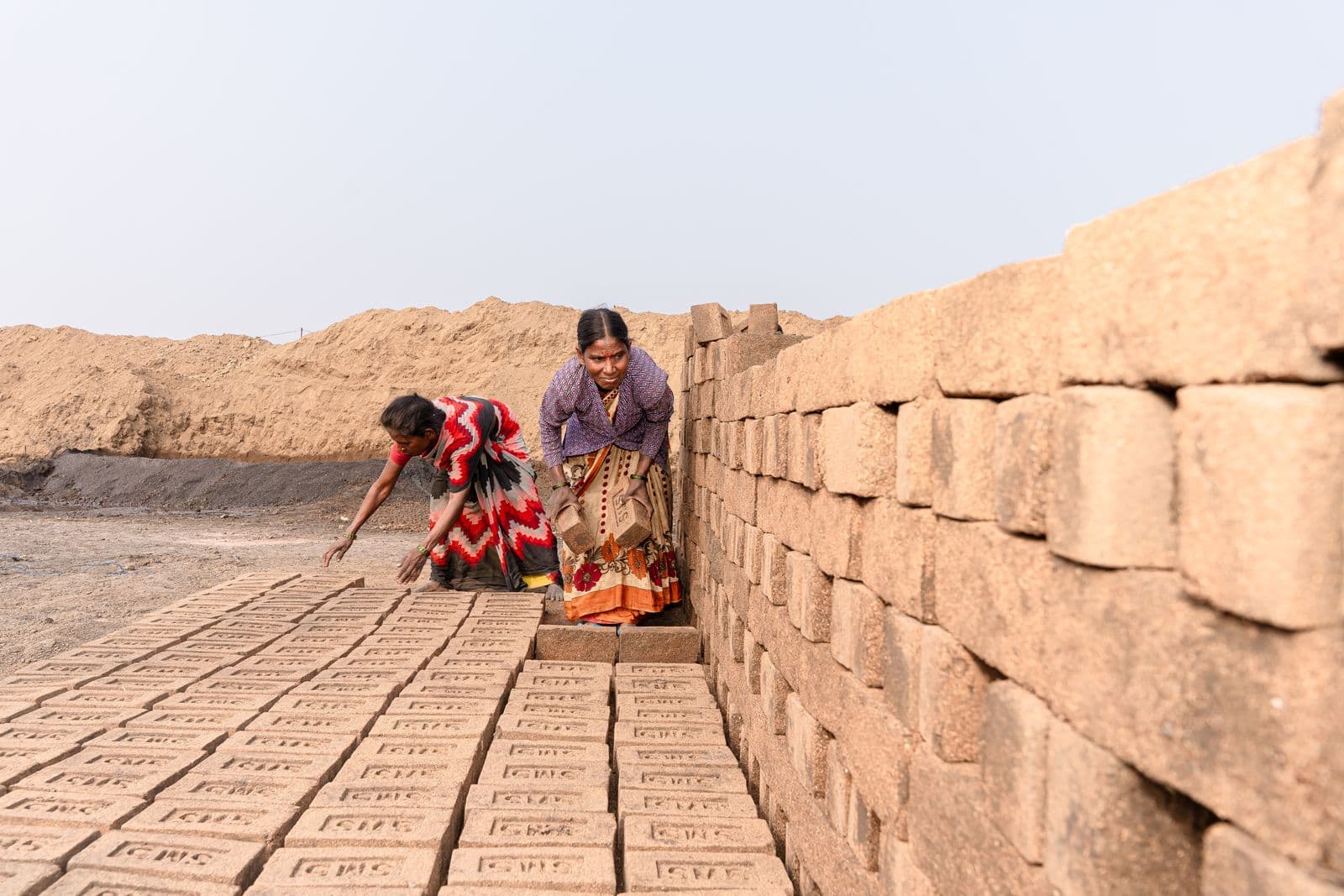
§1What this business is
Plastic and non-plastic fire clays, grog (broken fire bricks) and minerals such as kyanite, sillimanite and bauxite are screened, mixed in a muller and pressed on a friction screw press (bricks) or rammed with pneumatic rammers (blocks and special shapes). They are dried and fired at 1,350–1,400°C in an oil-fired kiln. The profile covers medium- and high-heat-duty grades with under 40% alumina. Steel plants use about three-quarters of all refractories, followed by cement, glass, ceramics, sugar and petrochemicals.
Capacity: 5,50,000 bricks and blocks a year (pressing in 3 shifts), valued at ₹1.48 crore.
§2Is it right for you?
Who it is for
Someone near clay deposits and industrial clusters (steel, foundries, cement) with refractory experience.
Who it is not for
Someone without access to steel or foundry buyers.
Advantages
- Every industry with a furnace needs refractories
- Indian fire clays and minerals are the raw material
- Bricks are consumed and replaced at every furnace relining
- Both standard bricks and special shapes can be made
Drawbacks
- Demand depends on the steel industry
- Fuel cost for the kiln is high
- Buyers test cold crushing strength and refractoriness under load
- Large steel buyers often use approved-vendor lists
Skills you need
- Batch formulation and grading of grog
- Pressing and ramming
- Kiln firing at 1,350–1,400°C
- Refractory testing (CCS, RUL)
Why difficulty 4/5: High-temperature kiln, testing standards and dependence on steel buyers.
§3Market
Who buys
- Iron and steel plants and foundries
- Cement, glass and ceramic factories
- Sugar mills and boiler users
- Petrochemical and non-ferrous metal plants
How it sells
- Direct supply against tenders and purchase orders
- Refractory contractors who reline furnaces
- Dealers in industrial supplies
Good to know
- The profile says iron and steel take 75% of refractory consumption, so demand follows steel output.
- Bricks follow IS 1526 sizes and blocks IS 5459, as printed in the profile.
§4Raw material & machinery
| Item | Qty | Cost |
|---|---|---|
| Friction screw press, 150 tonnes, 20 HP | 1 | ₹5,00,000 |
| Oil-fired kiln, 45–50 cubic metres, with chimney, oil tank and 4–6 burners | 1 | ₹10,00,000 |
| Muller mixer, 6 ft pan, 10 HP | 1 | ₹75,000 |
| Double-shaft U-mixer, 2 tonnes per shift, 10 HP | 1 | ₹75,000 |
| Pneumatic rammers | 4 | ₹1,00,000 |
| Vibrating screen, 3 HP | 1 | ₹25,000 |
| Testing equipment (CCS machine, RUL machine, muffle furnace, oven, sieves) | 1 lot | ₹4,50,000 |
From: DC-MSME project profile — Fire Clay Bricks and Blocks (2003)
- Fire clays150 tonnes a month at ₹750 a tonne
- High-alumina grog60 tonnes a month at ₹1,500 a tonne
- Kyanite or sillimanite40 tonnes a month at ₹6,000 a tonne
- Furnace oil or LDO20 kL a month
From: DC-MSME project profile — Fire Clay Bricks and Blocks (2003)
Suppliers in Building Business Bazaar
Refractory Bricks Cluster, Kulti - Salanpur Area, Burdwan · Burdwan →Amic Industries (P) Ltd · Kolkata →Cerakiln Consultants · Bengaluru →Hindustan Company · Kolkata →Industrial Minerals and Refractors · Bengaluru →Maruthi Enterprises · Bengaluru →Mineral Processing Industry · Bengaluru →Mysore Minerals Ltd · Bengaluru →Simplicity Engineers · Delhi →Southern Enterprises · Bengaluru →Wesman Thermal Engg Process Pvt. Ltd. · Bengaluru →
In our raw material database
Non-coking (thermal) coal →Bauxite →Dolomite →Fire clay and refractory clays →Magnesite →
§5Licences & registration
- Udyam
- GST
- State Pollution Control Board consent (kiln and dust)
- Factory licence
- BIS standards for fire clay refractories as buyers specify
§6Schemes & subsidies
- CGTMSECentralActiveNo collateral, up to ₹10 crore
- Stand-Up IndiaCentralClosed₹10 lakh – ₹1 crore loan
Above PMEGP's ₹50 lakh limit; CGTMSE (collateral-free guarantee) and Stand-Up India (₹10 lakh–₹1 crore for SC/ST and women) fit.
§7Money
How the investment is worked out: DC-MSME profile: land and building ₹14.50 L + machinery and testing equipment ₹24.48 L (oil-fired kiln ₹10.00 L, 150-tonne screw press ₹5.00 L) + moulds ₹2.00 L + office equipment ₹2.00 L + pre-operative ₹0.60 L = fixed capital ₹43.58 L; working capital for 3 months ₹26.31 L; total ₹69.89 L.
Working capital: ₹26.31 L for 3 months; kiln fuel at ₹2.80 L a month is the largest monthly cost.
Prices from 2003 — machinery, land and raw-material costs will be much higher now.
§8Export potential
Confirm the HS code in the DGFT ITC(HS) lookup before you export
Export council / board: CAPEXIL
- Refractories are sold abroad mainly against buyer specifications and test certificates.
- Confirm the 8-digit ITC(HS) line with DGFT or your customs broker before shipping.
§9Risks — where people fail
- Slowdown in steel
- Fuel price rise
- Failed lots under buyer tests
- Long payment cycles from big plants
§1030 / 60 / 90-day plan
A general plan that applies to any business. A plan for this business will be added after research.
- Days 1–30: Visit a working fire clay refractory bricks and blocks unit, ask 10 buyers about price and quantity, and get quotations from 3 suppliers.
- Days 31–60: Udyam and the licences you need (Udyam, GST), a project report (DPR), and the scheme or loan file.
- Days 61–90: Space and machines, trial production, and first deliveries to 10 customers.
§11Who to connect with
Associations, clusters and training institutes — the directory is being built. Connect
§12Watch
There is no episode on this business yet. Shows are coming soon on the Podcast page.
Want to start Fire Clay Refractory Bricks and Blocks?
DPR, loan file or registration — ask us on WhatsApp.
¶Sources
Data review: 6 October 2026. Spotted a mistake? Report it. For information only — not legal or financial advice.