

§1What this business is
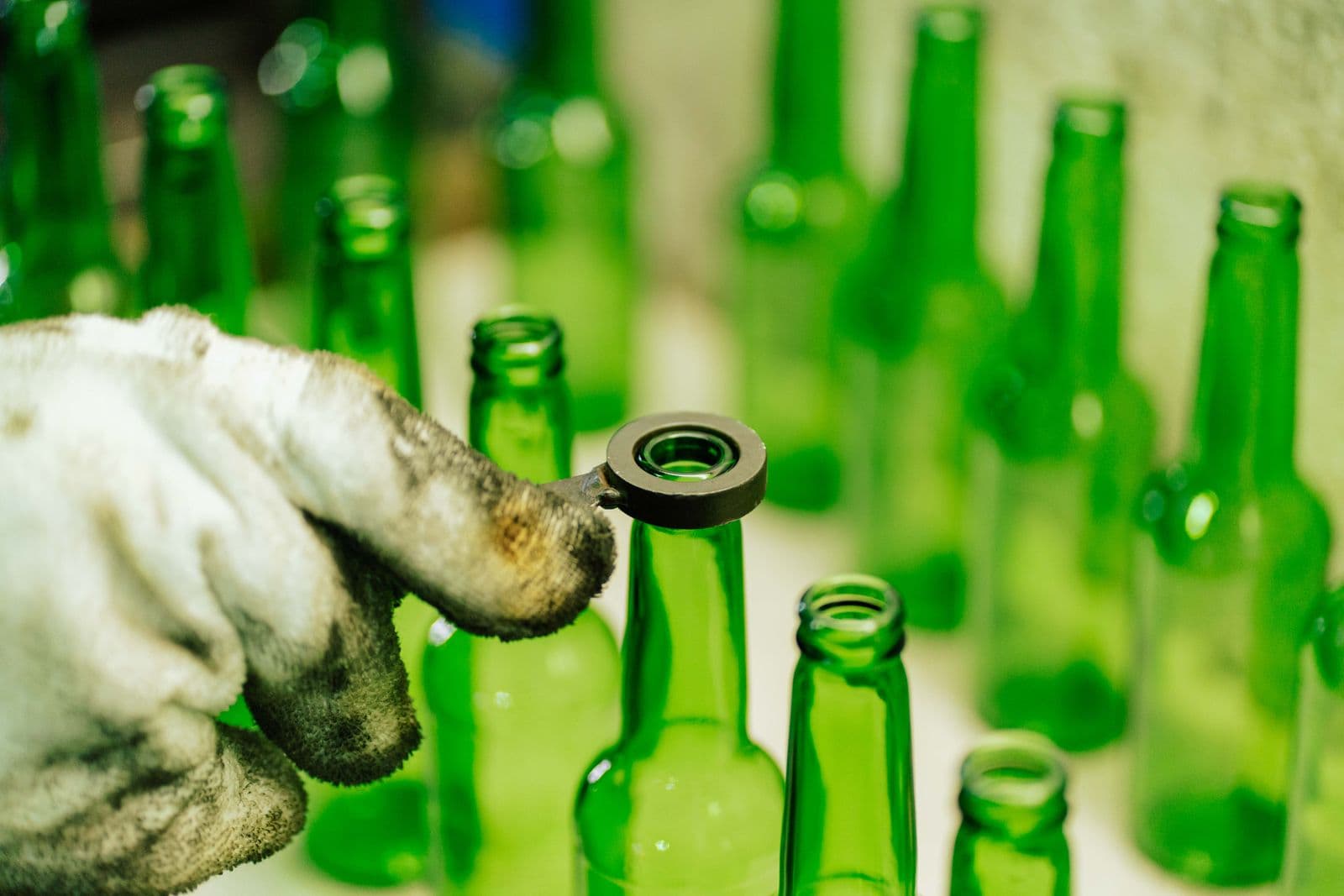
Soda-lime silica glass (or lead glass) is melted in a tank furnace at about 1,450°C and formed into bowls on a press-and-blow machine, then annealed and packed. Bowls go to households, hotels and restaurants through crockery dealers.
Capacity: 140 bowls a day; 50% in year 1; 10-hour shift.
§2Is it right for you?
Who it is for
Someone in a glassware cluster with furnace experience and crockery-trade contacts.
Who it is not for
A newcomer with no glass-making background.
Advantages
- Hotels, restaurants and homes all use glass bowls
- Glass is non-porous and hygienic (report)
- Only two main machines
- Firozabad-type clusters have skills and suppliers
Drawbacks
- Furnace runs on costly fuel
- Big brands and imports compete
- Breakage in production and transport
- Thin margin in early years
Skills you need
- Glass melting and forming
- Annealing and quality checks
- Mould and design selection
- Selling to crockery dealers and HoReCa
Why difficulty 3/5: Furnace operation and competition make it moderately hard.
§3Market
Who buys
- Households
- Hotels, restaurants and caterers
- Cafeterias and beverage bars
How it sells
- Crockery wholesalers and retailers
- Direct supply to HoReCa
- Online kitchenware sellers
Good to know
- The report links demand to premium homeware buying, growth of hotels and catering, and eating out.
§4Raw material & machinery
| Item | Qty | Cost |
|---|---|---|
| Tank furnace | 1 | ₹5,25,000 |
| Press-and-blow machine | 1 | ₹3,25,000 |
From: PMEGP sample project report — Glass Bowl DPR (prepared by Udyami/Samadhan)
- Soda-lime silica glasssoda ash 33%, silica sand 66%, chemicals 1%
- Lead glass (soft glass)about 24% lead; most products use soda-lime glass
From: PMEGP sample project report — Glass Bowl DPR (prepared by Udyami/Samadhan)
In our raw material database
Soda ash (sodium carbonate) →Quartz and silica sand →Glass cullet (broken glass for remelting) →
§5Licences & registration
- Udyam registration
- GST registration
- State Pollution Control Board consent (furnace)
- Factory licence
- BIS where a quality control order applies to the product
§6Schemes & subsidies
- PMEGPCentralActive15–35% subsidy
- MudraCentralActiveLoan up to ₹20 lakh, no collateral
- CGTMSECentralActiveNo collateral, up to ₹10 crore
PMEGP fits; MUDRA and CGTMSE for credit.
§7Money
How the investment is worked out: Samadhan report: plant & machinery ₹8.50 L, furniture ₹1.50 L, working capital ₹5.10 L = ₹15.10 L. Land own or rented.
Working capital: Working capital ₹5.10 L (bank ₹4.59 L); 15 days' stock and 15 days' credit.
Year not printed on the report — check current machinery prices.
§8Export potential
Confirm the HS code in the DGFT ITC(HS) lookup before you export
Export council / board: CAPEXIL
- HS codes are from the WCO HS 2022 list; confirm the 8-digit ITC(HS) line with DGFT or your customs broker.
- You need an Import Export Code (IEC) from DGFT before the first shipment.
§9Risks — where people fail
- Fuel price rises
- Breakage and rejection
- Price war with branded glassware
- Pollution compliance costs
§1030 / 60 / 90-day plan
A general plan that applies to any business. A plan for this business will be added after research.
- Days 1–30: Visit a working glass bowl making unit, ask 10 buyers about price and quantity, and get quotations from 3 suppliers.
- Days 31–60: Udyam and the licences you need (Udyam registration, GST registration), a project report (DPR), and the scheme or loan file.
- Days 61–90: Space and machines, trial production, and first deliveries to 10 customers.
§11Who to connect with
Associations, clusters and training institutes — the directory is being built. Connect
§12Watch
There is no episode on this business yet. Shows are coming soon on the Podcast page.
Want to start Glass Bowl Making?
DPR, loan file or registration — ask us on WhatsApp.
¶Sources
Data review: 6 October 2026. Spotted a mistake? Report it. For information only — not legal or financial advice.