

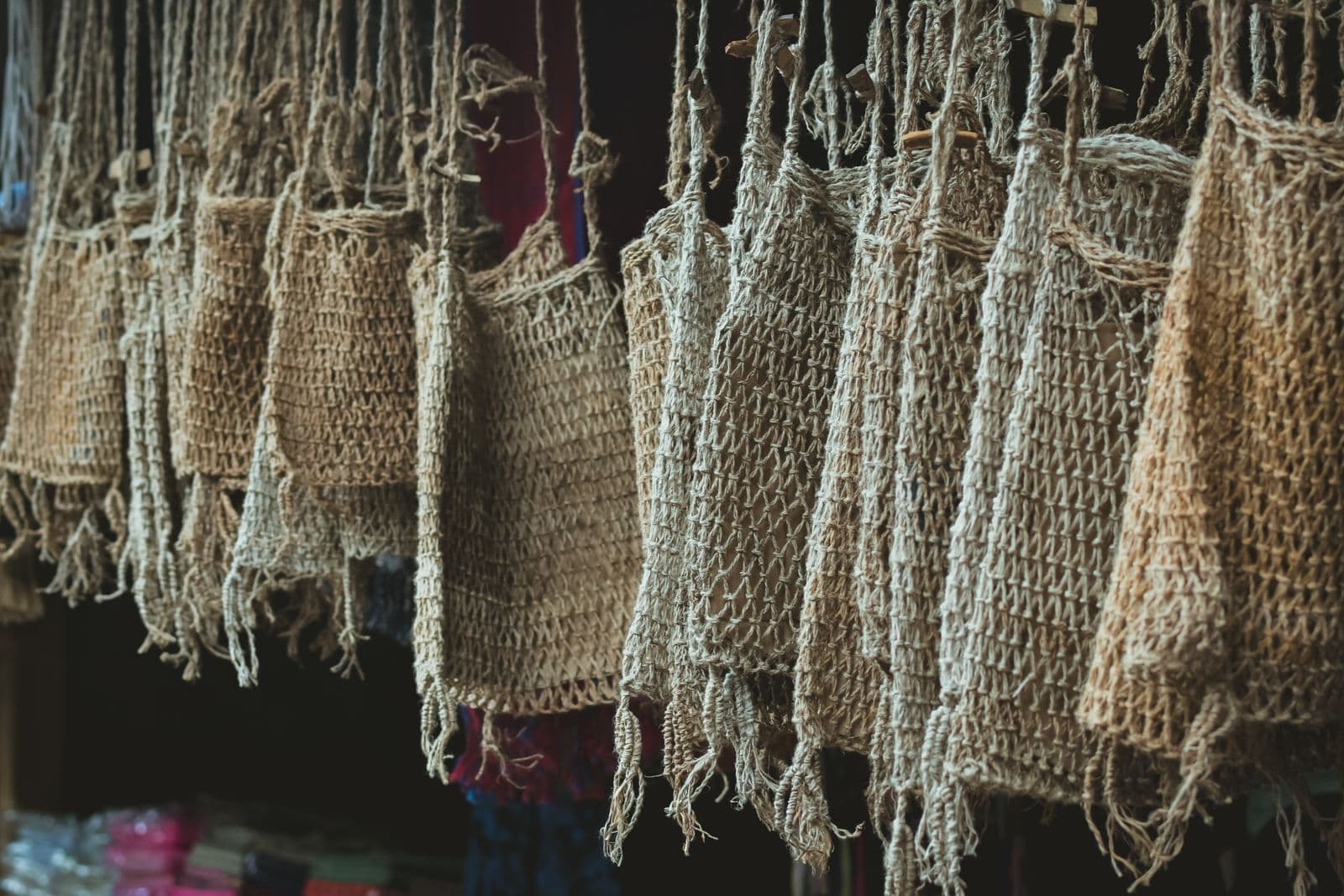
§1What this business is
Jute fibre (or ready jute twine) is carded, spun and woven into a strip the length of a bag; bags are cut, stitched on a heavy sewing machine, printed with the buyer's logo and tied in bundles of 100. Gunny bags carry 50–100 kg of wheat, rice, sugar, onions, potatoes, cement and fertiliser.
Capacity: Report B: 1,500 bags a day, 30% capacity in year 1. Report A: capacity use 45% in year 1 rising to 65%; bag count not printed.
§2Is it right for you?
Who it is for
Someone near jute areas or big grain, sugar or cement buyers, with contacts in agri trading.
Who it is not for
Someone without bulk buyers — this is a low-margin volume business.
Advantages
- Biodegradable bags are back in demand
- Mandatory jute packaging for some foodgrain and sugar keeps demand steady
- Buyers are big and repeat (mills, FCI agents, cement and fertiliser firms)
- Printing adds value
Drawbacks
- Raw jute is mostly from West Bengal, Bihar and Assam — freight adds cost
- Raw material is over 85% of production cost (Report A) — thin margins
- Plastic (HDPE/PP) sacks compete on price
- The ₹10 L printing machine is most of the machinery cost
Skills you need
- Jute and twine buying
- Running weaving and stitching machines
- Meeting buyer bag specifications
- Selling to mills and traders
Why difficulty 3/5: Simple machines, but very thin margins and bulk-buyer dependence.
§3Market
Who buys
- Grain, rice and flour mills
- Sugar mills
- Cement and fertiliser companies
- Potato and onion traders
How it sells
- Direct bulk supply to mills and companies
- Agri-trade wholesalers
- Export (mainly Europe, per report B)
Good to know
- The reports say the jute industry supports nearly 4 million farm families and about 2.6 lakh industrial workers.
- Report B cites a global jute bag market of USD 1.9 billion in 2020.
§4Raw material & machinery
| Item | Qty | Cost |
|---|---|---|
| Gunny bag making machine (carding, spinning, weaving, cutting) | 1 | ₹4,30,000 |
| Printing machine (single or multi-colour) | 1 | ₹10,00,000 |
| Heavy-duty sewing machine | 1 | ₹45,000 |
From: PMEGP sample project report — gunny bags (prepared by Udyami/Samadhan)
- Raw jute or ready jute twine (sutli)Report A raw material ₹135.00 L in year 1
- Stitching thread
- Printing inkfor logos
From: PMEGP sample project report — gunny bags (prepared by Udyami/Samadhan)
In our raw material database
§5Licences & registration
- Udyam registration
- GST registration
- NOC from fire safety and the Pollution Control Board (named in report A)
- Trade licence
- Factory licence (optional, per report)
- BIS where buyers or government orders require IS-marked jute sacks
§6Schemes & subsidies
- PMEGPCentralActive15–35% subsidy
- MudraCentralActiveLoan up to ₹20 lakh, no collateral
- CGTMSECentralActiveNo collateral, up to ₹10 crore
PMEGP fits; MUDRA and CGTMSE for credit.
§7Money
How the investment is worked out: Two Samadhan reports with the same machinery (₹14.75 L: gunny-bag machine ₹4.30 L, printing machine ₹10.00 L, sewing machine ₹0.45 L). Report A: + other assets ₹1.00 L + working capital ₹6.47 L = ₹22.22 L. Report B: + furniture ₹0.50 L + working capital ₹8.80 L = ₹24.05 L.
Working capital: Report A: ₹6.47 L (bank ₹5.82 L). Report B: ₹8.80 L (bank ₹7.92 L), 15 days' stock and 14 days' credit.
Year not printed on either report — check current machinery and jute prices.
§8Export potential
Confirm the HS code in the DGFT ITC(HS) lookup before you export
Export council / board: Jute Products Development and Export Promotion Council (JPDEPC)
- HS codes are from the WCO HS 2022 list; confirm the 8-digit ITC(HS) line with DGFT or your customs broker.
- You need an Import Export Code (IEC) from DGFT before the first shipment.
§9Risks — where people fail
- Raw jute price spikes
- Losing a bulk buyer
- Plastic sack competition
- Changes to jute packaging rules
§1030 / 60 / 90-day plan
A general plan that applies to any business. A plan for this business will be added after research.
- Days 1–30: Visit a working gunny (jute) bag making unit, ask 10 buyers about price and quantity, and get quotations from 3 suppliers.
- Days 31–60: Udyam and the licences you need (Udyam registration, GST registration), a project report (DPR), and the scheme or loan file.
- Days 61–90: Space and machines, trial production, and first deliveries to 10 customers.
§11Who to connect with
Associations, clusters and training institutes — the directory is being built. Connect
§12Watch
There is no episode on this business yet. Shows are coming soon on the Podcast page.
Want to start Gunny (Jute) Bag Making?
DPR, loan file or registration — ask us on WhatsApp.
¶Sources
- PMEGP sample project report — gunny bags (prepared by Udyami/Samadhan)
- PMEGP sample project report — Gunny Bag (prepared by Udyami/Samadhan)
Data review: 6 October 2026. Spotted a mistake? Report it. For information only — not legal or financial advice.