

§1What this business is
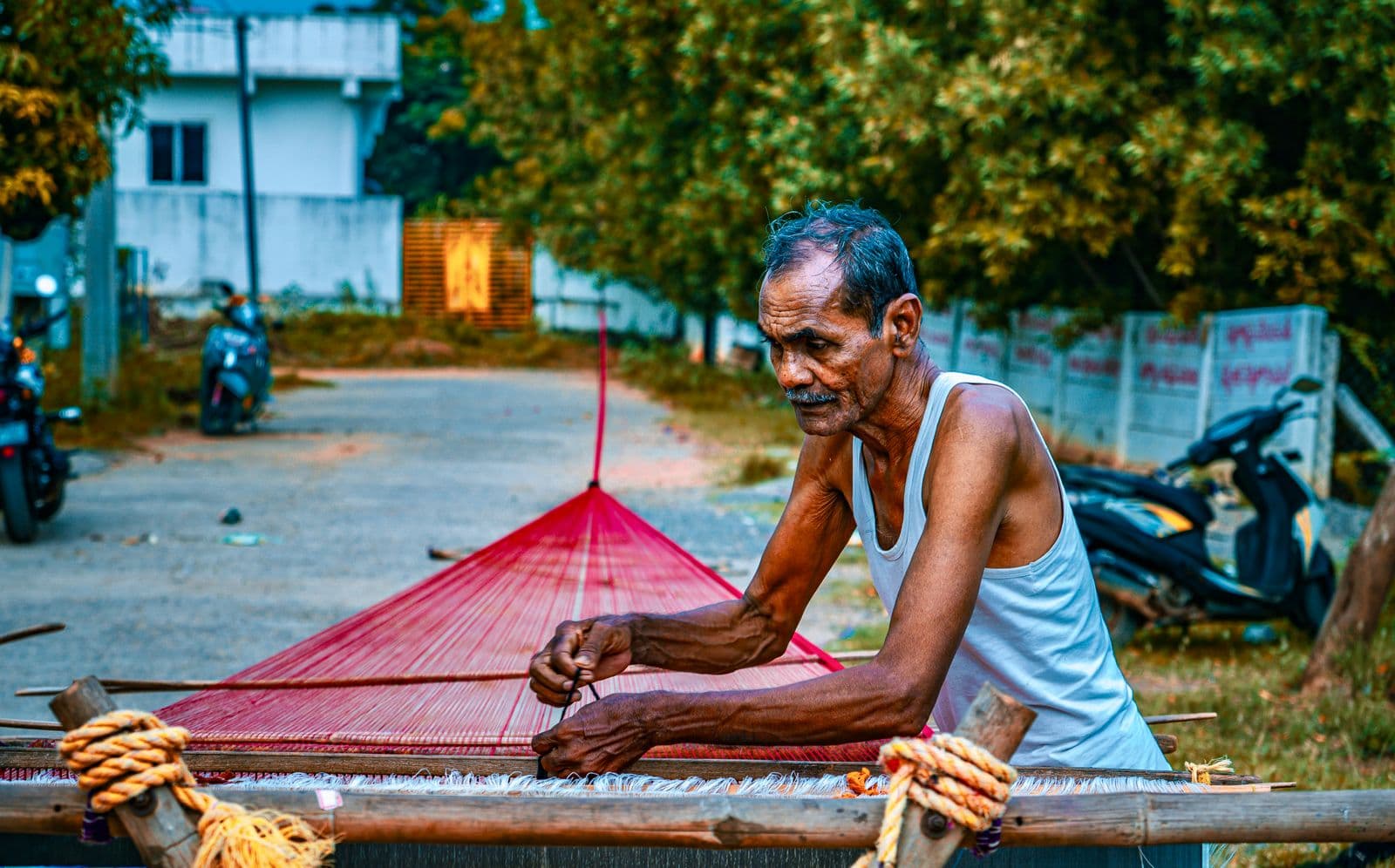
Cotton yarn is dyed (vat and naphthol dyes), starched with rice starch, warped onto a beam and woven on traditional handlooms with a flying shuttle into thin, checked cotton towels. Gamchas sell to men for daily and religious use through cloth shops, village markets, temple towns and wholesalers. It is labour-based work with very little power.
Capacity: 250 pieces a day; year 1 at 50%.
§2Is it right for you?
Who it is for
A weaver family or cluster group that wants to formalise and sell in volume.
Who it is not for
Someone expecting factory-scale profit from a handloom unit.
Advantages
- Very low machine cost and power need
- Steady everyday and religious demand
- Keeps traditional weaving skills in work
- Handloom schemes and marks help branding
Drawbacks
- Thin margins and slow weaving output
- Power-loom and mill gamchas are cheaper
- Depends on skilled weavers
- Yarn price swings
Skills you need
- Handloom weaving
- Yarn dyeing and starching
- Design of checks and borders
- Wholesale and market selling
Why difficulty 2/5: Simple tools; the limits are weaving speed and price competition.
§3Market
Who buys
- Cloth shops and village markets
- Temple-town and pilgrimage shops
- Wholesalers
- Government and handloom emporiums
How it sells
- Wholesale supply
- Weekly haats and fairs
- Handloom expos and emporiums
Good to know
- The report says India makes about 85% of the world's handloom output and handloom adds 14.6% of the country's cloth production.
- It cites 23.8 lakh weaving looms and 6.9 billion sq m handloom output in 2010-11.
§4Raw material & machinery
| Item | Qty | Cost |
|---|---|---|
| Traditional handloom | 1 | ₹40,000 |
| Warping beam | 1 | ₹10,000 |
| Local-made spools | 1 lot | ₹4,500 |
| Brushes made of cereal-root fibre | 1 lot | ₹10,000 |
| Flying shuttle | 1 | ₹4,000 |
| Pirns and bobbins | 1 lot | ₹11,500 |
From: PMEGP sample project report — Handloom Loin Cloth/Gamcha (prepared by Udyami/Samadhan)
- Cotton yarn / thread bundlesmain input; raw material ₹30.75 lakh in year 1
- Vat and naphthol dyes, acetic acid, crystal salt, mordantfor dyeing
- Rice starch and coconut oilfor sizing the yarn
From: PMEGP sample project report — Handloom Loin Cloth/Gamcha (prepared by Udyami/Samadhan)
Suppliers in Building Business Bazaar
Amarchinta Handloom Cluster · Wanaparthy →Athamalik Handloom Cluster · Anugul →Barabanki Handloom Cluster · Barabanki →Berhampur Handloom Cluster · Ganjam →Binjhua Tussar Handloom Cluster · Mayurbhanj →Ghaziabad Handloom Cluster · Ghaziabad →Gorchiga Traditional Handloom Cluster · Lakhimpur →Handicrafts Handloom And Embroidery Cluster · Imphal West →Handloom & Traditional Dress Making Cluster · Lower Subansiri →Handlooms And Handicrafts Cluster · Dhar →Impa Handloom & Handicraft Cluster · Tamenglong →Maheshpur Handloom & Handicraft Cluster · Malda →
In our raw material database
§5Licences & registration
- Udyam registration
- GST
- Handloom Mark registration (optional)
- Trade licence from the local body
§6Schemes & subsidies
- PMEGPCentralActive15–35% subsidy
- MudraCentralActiveLoan up to ₹20 lakh, no collateral
- CGTMSECentralActiveNo collateral, up to ₹10 crore
- Stand-Up IndiaCentralClosed₹10 lakh – ₹1 crore loan
PMEGP fits; MUDRA covers loans up to ₹20 L; CGTMSE; Stand-Up India for SC/ST or women founders.
§7Money
How the investment is worked out: Samadhan report: civil work ₹5.00 L, furniture and fixtures ₹1.50 L, working capital ₹3.75 L = ₹10.25 L. Tools and equipment are listed separately at ₹80,000 (warping beam, spools, brushes, flying shuttle, pirns and bobbins, traditional handloom).
Working capital: Yarn and dyes are the main cost (₹30.75 L in year 1); working capital ₹3.75 L (bank ₹3.37 L).
Year not printed on the report — check current machinery prices.
§8Export potential
Confirm the HS code in the DGFT ITC(HS) lookup before you export
Export council / board: Handloom Export Promotion Council (HEPC)
- Confirm the 8-digit ITC(HS) line with DGFT or your customs broker.
- You need an Import Export Code (IEC) from DGFT before the first shipment.
§9Risks — where people fail
- Competition from power looms
- Yarn price rise
- Weaver shortage
- Low price realisation
§1030 / 60 / 90-day plan
A general plan that applies to any business. A plan for this business will be added after research.
- Days 1–30: Visit a working handloom gamcha (loin cloth) unit, ask 10 buyers about price and quantity, and get quotations from 3 suppliers.
- Days 31–60: Udyam and the licences you need (Udyam registration, GST), a project report (DPR), and the scheme or loan file.
- Days 61–90: Space and machines, trial production, and first deliveries to 10 customers.
§11Who to connect with
Associations, clusters and training institutes — the directory is being built. Connect
§12Watch
There is no episode on this business yet. Shows are coming soon on the Podcast page.
Want to start Handloom Gamcha (Loin Cloth)?
DPR, loan file or registration — ask us on WhatsApp.
¶Sources
Data review: 6 October 2026. Spotted a mistake? Report it. For information only — not legal or financial advice.