

§1What this business is
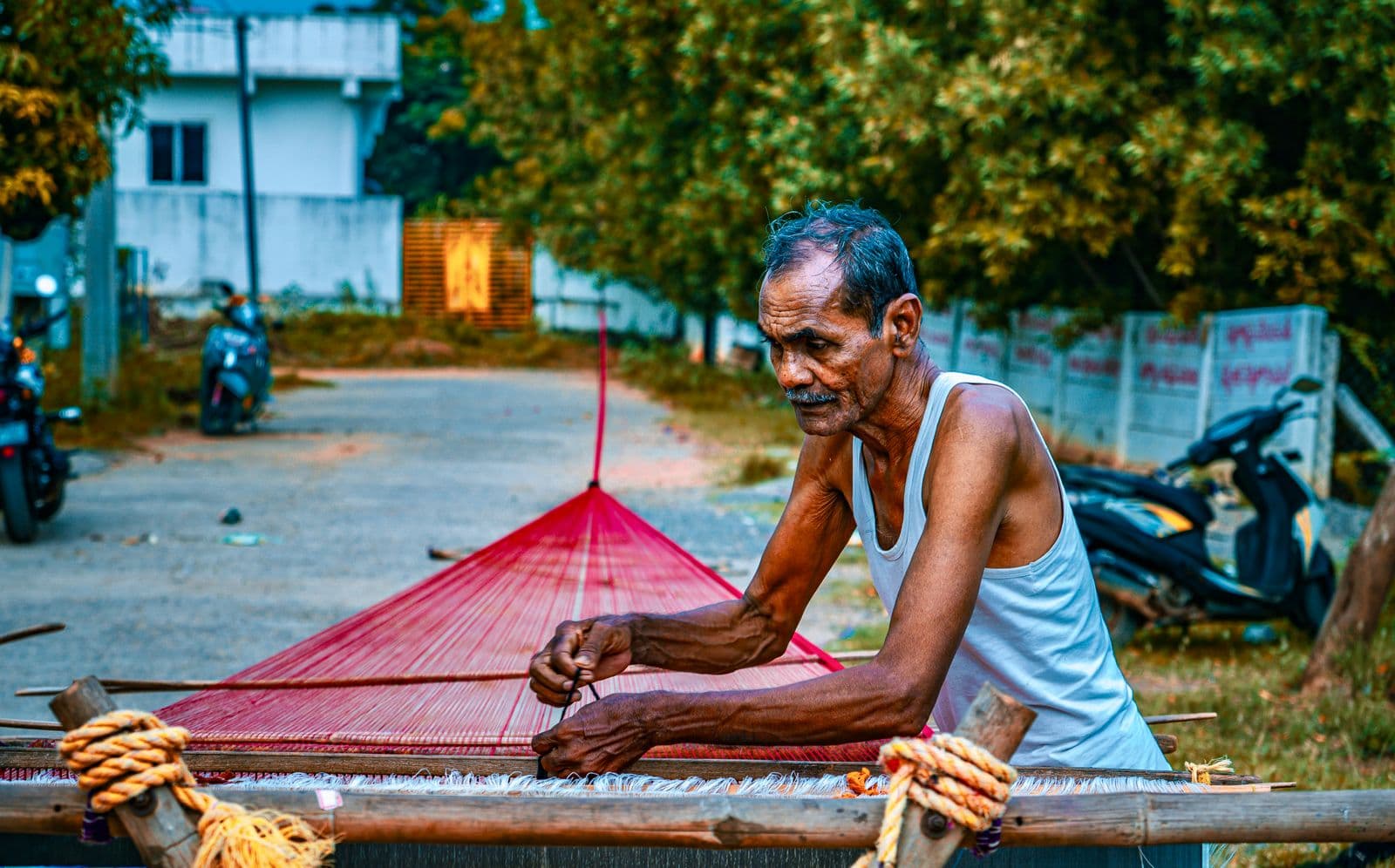
Wool is washed, carded, spun, dyed and then knotted or tufted by hand on a wooden loom following a design drawn by a naksha-maker; the carpet is then washed, clipped and finished. There is no big machinery — only looms and hand tools. Most Indian hand-made carpets are exported; buyers are exporters, carpet traders and furnishing shops.
Capacity: 80 sq ft of carpet a day on a 10-hour shift; year 1 at 60%.
§2Is it right for you?
Who it is for
A weaver family or trader in a carpet cluster with links to exporters.
Who it is not for
Someone far from a carpet cluster with no weavers or buyers.
Advantages
- Very low machinery cost — wooden looms and hand tools
- Strong export market; UP carpets carry the Bhadohi GI tag
- Uses local weaving skills and gives rural jobs
- Low power need (3 HP)
Drawbacks
- Slow, labour-heavy work
- Depends on exporters and foreign demand
- Raw material is the main cost (₹150–180 a sq ft)
- Child-labour rules and buyer audits must be followed strictly
Skills you need
- Carpet design and knotting
- Wool dyeing and colour matching
- Labour management
- Dealing with exporters
Why difficulty 2/5: Low cost and simple tools, but it needs skilled weavers and export buyers.
§3Market
Who buys
- Carpet exporters
- Carpet traders and furnishing shops
- Hotels and interior designers
How it sells
- Job-work or supply to exporters in the cluster
- Wholesale traders
- Direct export with IEC
Good to know
- The report says about 80% of carpets made in India are exported.
- Carpets from nine districts around Bhadohi carry the GI tag 'Handmade Carpet of Bhadohi' (2010).
- It puts the domestic market at about ₹200 crore.
§4Raw material & machinery
| Item | Qty | Cost |
|---|---|---|
| Wooden carpet loom | — | — |
| Hand tools: spatula, knife, comb-like beater, shears, tufting gun | set | — |
| Stores and spares including hand tools (total) | — | ₹20,000–22,000 |
From: PMEGP sample project report — Handmade Carpet (prepared by Udyami/Samadhan)
- Woollen yarnfrom local spinning units or from Bikaner and Surat through dealers
- Dyesfor colouring the wool
- Finishing chemicalsfrom dealers in the cluster
- All raw material togetherabout ₹150–180 per sq ft of carpet (report)
From: PMEGP sample project report — Handmade Carpet (prepared by Udyami/Samadhan)
Suppliers in Building Business Bazaar
Carpet And Durrie Making Cluster · Sitapur →Carpet Cluster Hatwa · Sidhi →Carpet, Durry And Home Furnishing Cluster · Jind →Embroidery And Carpet Making Cluster · Hoshangabad →Hand Knotted Carpet Cluster · Aurangabad →Mirzapur Carpet Weaving Cluster · Varanasi →ODOP CFC — Biswan Bunkar Welfare Society →ODOP CFC — Vindhya Spinners and Rugs Association (Section 8 Company) →ODOP CFC — Bhadohi Woolen Association (Section 8 Company) →Modern Carpet Backing Plant for Tufted Carpets Cluster, Bhadohi · Bhadohi →Okhrey Carpet Making Cluster, West Sikkim · West Sikkim →
In our raw material database
§5Licences & registration
- Udyam
- GST
- Artisan card / registration with the Development Commissioner (Handicrafts)
- CEPC membership and IEC if exporting directly
- Carpet-label or social-compliance certification when buyers ask
§6Schemes & subsidies
- PMEGPCentralActive15–35% subsidy
- MudraCentralActiveLoan up to ₹20 lakh, no collateral
- CGTMSECentralActiveNo collateral, up to ₹10 crore
- CM YUVAUPActiveUp to ₹5 lakh, interest-free
₹7.28 L project fits PMEGP, MUDRA and CGTMSE; a smaller unit can come under CM-YUVA in UP (up to ₹5 L).
§7Money
How the investment is worked out: Report cost of project ₹7.28 L: building/shed 1,200 sq ft ₹4.00 L, furniture ₹0.50 L, working capital ₹2.78 L (looms and hand tools come under stores and spares, ₹20,000–22,000). Finance: term loan ₹4.05 L, own ₹0.73 L, working-capital loan ₹2.50 L. The PMEGP portal lists this report at ₹10.97 L; the report itself prints ₹7.28 L.
Working capital: Working capital ₹2.78 L (bank ₹2.50 L) — 10 days of yarn and 15 days of finished carpets; buyers get 15 days' credit.
Year not printed on the report — check current machinery prices.
§8Export potential
Confirm the HS code in the DGFT ITC(HS) lookup before you export
Export council / board: CEPC (Carpet Export Promotion Council)
- Exporters register with CEPC and need an IEC; check the 8-digit code in the DGFT ITC-HS list.
§9Risks — where people fail
- Fall in export orders
- Rejection for quality or colour faults
- Wool and dye price swings
- Compliance audits by foreign buyers
§1030 / 60 / 90-day plan
A general plan that applies to any business. A plan for this business will be added after research.
- Days 1–30: Visit a working handmade carpet weaving unit unit, ask 10 buyers about price and quantity, and get quotations from 3 suppliers.
- Days 31–60: Udyam and the licences you need (Udyam, GST), a project report (DPR), and the scheme or loan file.
- Days 61–90: Space and machines, trial production, and first deliveries to 10 customers.
§11Who to connect with
Associations, clusters and training institutes — the directory is being built. Connect
§12Watch
There is no episode on this business yet. Shows are coming soon on the Podcast page.
Want to start Handmade Carpet Weaving Unit?
DPR, loan file or registration — ask us on WhatsApp.
¶Sources
Data review: 6 October 2026. Spotted a mistake? Report it. For information only — not legal or financial advice.