

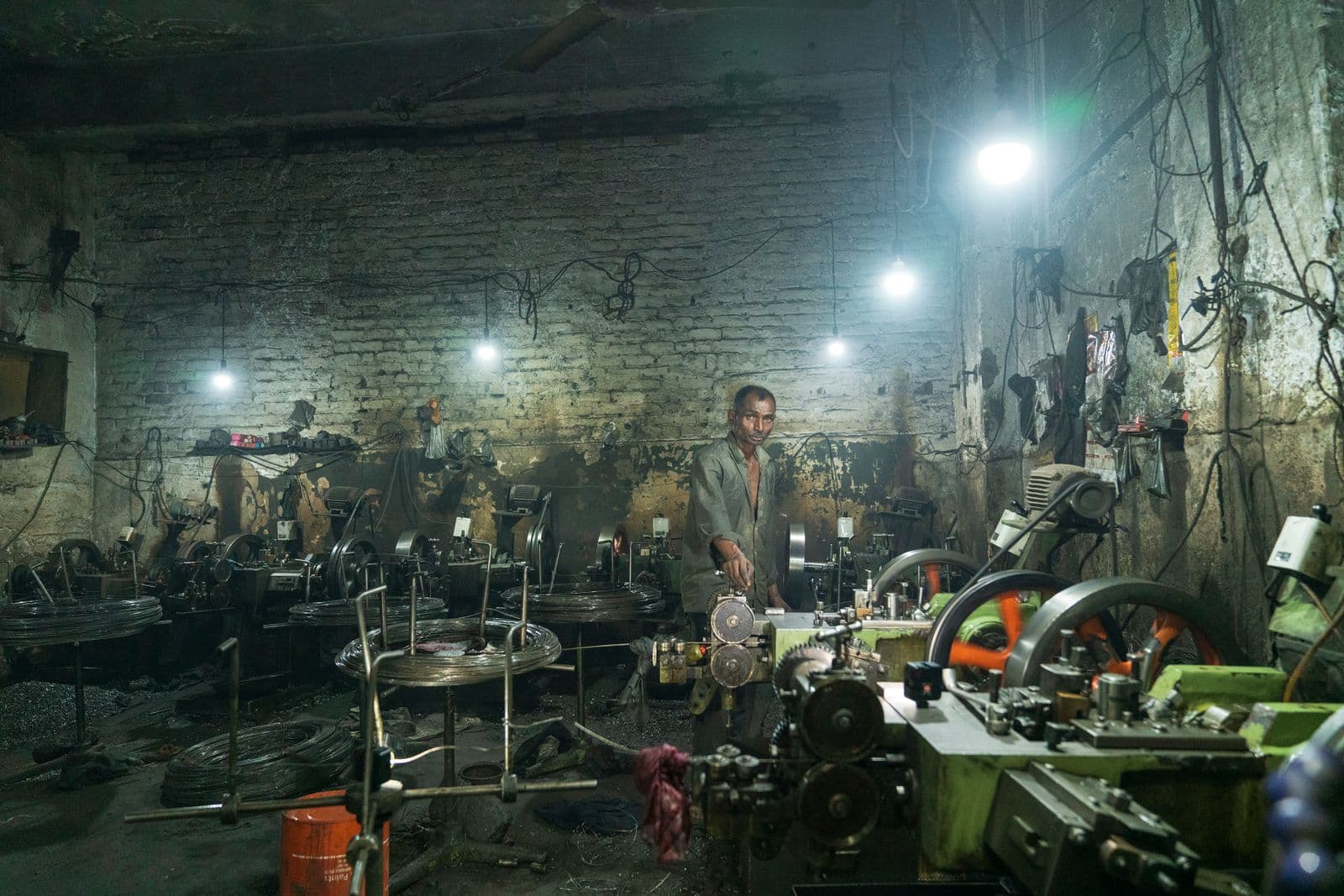
§1What this business is
Parts are heated in an electric muffle furnace or a salt bath furnace to a set temperature, held there, and quenched in water, oil or air; then they are tempered at a lower temperature to remove stresses. Case hardening is done in a cyanide salt bath. Parts are checked for hardness (Rockwell and Brinell), cracks and grain structure. Small engineering units send gears, shafts, cutting tools, fasteners and bearing parts because they cannot afford their own heat treatment shop.
Capacity: 65 MT of jobs a year worth ₹12.30 L: 15 MT direct hardening, 30 MT case hardening, 5 MT annealing/normalising and 15 MT special steels.
§2Is it right for you?
Who it is for
A metallurgist or experienced heat-treatment hand in an engineering or auto-parts cluster.
Who it is not for
Someone without metallurgy training — wrong temperatures ruin customers' costly parts.
Advantages
- High margin — the profile shows over a third of income as profit
- Little raw material to buy; you sell a service
- Every engineering cluster needs heat treatment
- Can start in a small rented space
Drawbacks
- Cyanide salt is poisonous and needs strict handling and disposal
- Furnace oil smoke and salt waste need pollution control
- You carry the blame if a customer's part cracks
- Work comes in uneven batches
Skills you need
- Steel grades and heat-treatment cycles
- Furnace and salt bath operation
- Hardness testing
- Safe handling of cyanide and quench oils
Why difficulty 3/5: Small investment, but it needs real metallurgy skill and strict safety with cyanide.
§3Market
Who buys
- Defence and railway suppliers
- Automobile part makers
- Ball and roller bearing makers
- Fastener and hardware makers
- Machine tool and general engineering units
How it sells
- Job work collected from nearby engineering units
- Regular contracts with tool rooms and auto-part vendors
Good to know
- The profile says most small engineering units send heat treatment out because they lack capital for their own section.
- It prices jobs 1% below market rates to win work and allow credit.
§4Raw material & machinery
| Item | Qty | Cost |
|---|---|---|
| Electric muffle furnace, 600 × 300 × 300 mm, 24 KW, up to 1,000°C | 1 | ₹56,500 |
| Air-circulating tempering furnace, 18 KW | 1 | ₹1,11,000 |
| Oil-fired salt bath furnace, pot 450 × 600 mm, up to 1,000°C | 1 | ₹2,08,000 |
| Pre-heating chamber for the salt bath furnace | 1 | ₹65,000 |
| Hardness testing machine (Rockwell A, B, C), 150 kg load | 1 | ₹21,000 |
| Quenching tanks, 1 × 0.75 × 1 m | 4 | ₹24,000 |
| Chain pulley block, 1 MT, with tripod | 1 | ₹8,000 |
| Platform weighing machine, 200 kg | 1 | ₹8,000 |
From: DC-MSME project profile — Heat Treatment Servicing Unit (2002)
- Cyanide salt150 kg at ₹65 a kg for the first filling in the profile
- Neutral salt100 kg at ₹15 a kg in the profile
- Barium carbonate50 kg at ₹12 a kg in the profile
- Quenching oil4 barrels at ₹8,000 each in the profile
- Furnace oil or light diesel oil for the salt bath
From: DC-MSME project profile — Heat Treatment Servicing Unit (2002)
Suppliers in Building Business Bazaar
Indo German Tool Room, Aurangabad · Chhatrapati Sambhajinagar →Central Tool Room, Ludhiana · Ludhiana →Indo Danish Tool Room, Jamshedpur · Jamshedpur →Central Institute of Hand Tools, Jalandhar · Jalandhar →MSME Technology Centre, Bhiwadi · Bhiwadi →MSME Technology Centre, Sitarganj · Sitarganj →Heat Treatment and Engineering Cluster · Hubli Dharwad →Hindustan Furnaces Pvt. Ltd · Thrissur →Inspection Instruments Corpn · Mumbai →Amur Instrumentation · Thrissur →Blue Steel Engineers Pvt Ltd · Mumbai →Fuel Instruments and Engineers Pvt. Ltd · Kolhapur →
§5Licences & registration
- Udyam registration
- GST
- State Pollution Control Board consent and hazardous waste authorisation (cyanide salt and spent oil)
- Factory licence under the Factories Act
- Fire safety NOC (oil-fired furnace and quench oil)
§6Schemes & subsidies
- PMEGPCentralActive15–35% subsidy
- MudraCentralActiveLoan up to ₹20 lakh, no collateral
- CGTMSECentralActiveNo collateral, up to ₹10 crore
PMEGP covers service units up to its service-project limit; MUDRA covers loans up to ₹20 L; CGTMSE for loans without collateral.
§7Money
How the investment is worked out: DC-MSME profile (SISI Thrissur, Dec 2002): fixed capital ₹6.04 L (machinery ₹5.31 L, furniture ₹0.18 L, erection ₹0.30 L, pre-operative ₹0.25 L) + working capital ₹1.87 L (3 months plus one-time salt and oil filling) = ₹7.90 L (the profile rounds to ₹8 L). Space of 400 sq ft rented at ₹10,000 a month.
Working capital: Working capital is small (₹1.87 L) — salts and quenching oil are a one-time fill (₹43,850), then monthly costs are mainly wages and rent.
Prices from 2002 — machinery, raw material and wage costs will be much higher now.
§8Export potential
Export council / board: Not applicable
- A local job-work service; there is no goods export.
§9Risks — where people fail
- Damage claims for cracked or soft parts
- Cyanide accident or pollution violation
- Losing customers to bigger heat-treatment shops
- Power cuts during a heat cycle
§1030 / 60 / 90-day plan
A general plan that applies to any business. A plan for this business will be added after research.
- Days 1–30: Visit a working heat treatment job-work unit unit, ask 10 buyers about price and quantity, and get quotations from 3 suppliers.
- Days 31–60: Udyam and the licences you need (Udyam registration, GST), a project report (DPR), and the scheme or loan file.
- Days 61–90: Space and machines, trial production, and first deliveries to 10 customers.
§11Who to connect with
Associations, clusters and training institutes — the directory is being built. Connect
§12Watch
There is no episode on this business yet. Shows are coming soon on the Podcast page.
Want to start Heat Treatment Job-Work Unit?
DPR, loan file or registration — ask us on WhatsApp.
¶Sources
Data review: 6 October 2026. Spotted a mistake? Report it. For information only — not legal or financial advice.