

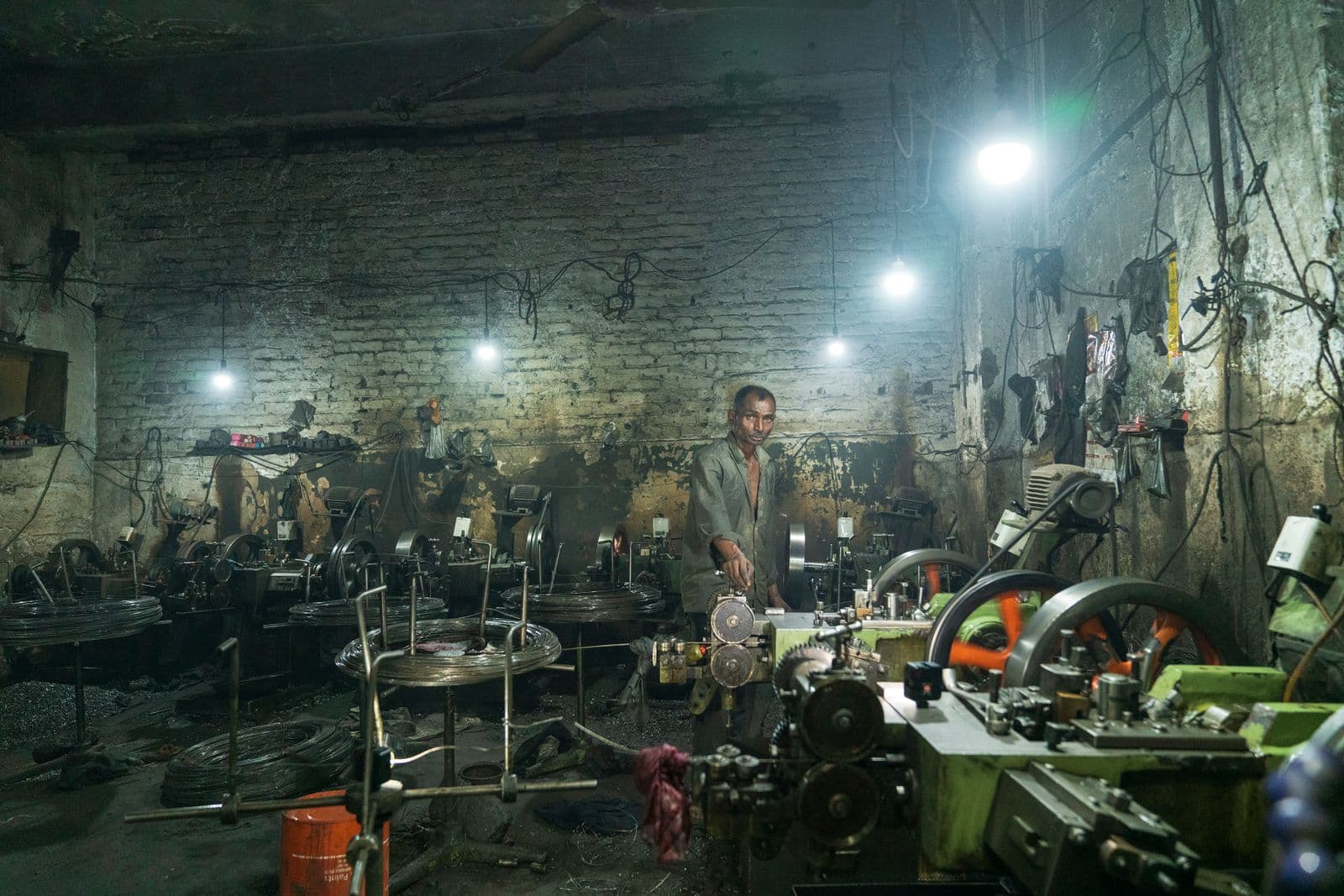
§1What this business is
Dried herbs are sorted, milled to a coarse powder and soaked in water or solvents (methanol, ethanol and others) in steel extractors. The liquid is filtered, the solvent is recovered, and the extract is concentrated and dried in tray, vacuum or spray dryers, then ground and packed. Buyers are ayurvedic and pharma companies, supplement and cosmetic makers, and exporters. Both profiles are large units with a testing lab.
Capacity: Profile 1: 22 MT of extract a year (two shifts, 330 days). Profile 2: 30 tonnes a year.
§2Is it right for you?
Who it is for
A science graduate (profile 1 asks for M.Sc. or MBA) with links to ayurvedic, pharma or cosmetic buyers.
Who it is not for
Someone without a testing lab or quality background — extracts are sold on purity and active content.
Advantages
- Pharma, supplement and cosmetic makers buy extracts in bulk
- Adds value to herbs that are otherwise sold raw
- Export buyers in the USA, Europe, Japan and CIS countries (profile 1)
- One plant can run many herbs by changing solvent and settings
Drawbacks
- Very high working capital — herbs and solvents are bought in bulk
- Flammable solvents need safe storage and a recovery system
- Buyers want lab-tested, standardised extracts
- Profile 2 shows a tiny first-year profit (₹0.82 L)
Skills you need
- Identifying and grading herbs
- Solvent extraction and recovery
- Lab testing (HPTLC, moisture, microbes)
- Selling to pharma and export buyers
Why difficulty 4/5: Large working capital, solvent handling and strict quality testing.
§3Market
Who buys
- Ayurvedic and pharma companies
- Supplement and nutraceutical makers
- Cosmetic and personal-care makers
- Food flavour users
How it sells
- Direct supply to manufacturers
- Exporters and overseas buyers
Good to know
- Profile 1 names export markets in the USA, Canada, Europe, Japan and CIS countries.
- Overseas buyers may need product registration with their food and drug authority (profile 1).
§4Raw material & machinery
| Item | Qty | Cost |
|---|---|---|
| Hammer mill with dust extraction, 100 kg/hr, 5 HP | 1 | — |
| SS vertical extractor, 5,000 litres, 5 HP | 1 | — |
| Horizontal extractor, 5,000 litres, 5 HP | 1 | — |
| Nutsche filter, 2 HP | 1 | — |
| SS cylindrical storage tanks | set | — |
| Mechanical sifter, 22-inch, 2 HP | 1 | — |
| Portable dehumidifier, 2 HP | 1 | — |
| Lab equipment (HPTLC, microscope, refractometer, pH meter) | set | — |
| Process pump sets, 2 HP | set | — |
| DM water plant, 1,000 LPH | 1 | — |
| Boiler, 300 kg/hr | 1 | — |
| Tray dryer and vacuum dryer (32 trays each) | 1 each | — |
| Digital balance, 100 kg | 1 | — |
| Plant & machinery, profile 2 (extraction, crushing, distillation, drying, utilities) | 1 set | ₹35.00 lakh |
From: SIDBI Stand-Up Mitra project profile — Medicinal Herbs Extraction Unit (2018) — private guide — confirm locally · SIDBI Stand-Up Mitra project profile — Herbal Extraction Plant (2018) — private guide — confirm locally
- Dried herbs (profile example: guggal, onion, cardamom)₹21.20 lakh a month in profile 1; Gujarat herbs come via the Forest Corporation or traders
- Solvents (methanol, ethanol, toluene) and chemicals₹2.67 lakh a month; recovered and reused
- Dextrin, activated charcoal, ammonia, glacial acetic acidsmall monthly quantities
From: SIDBI Stand-Up Mitra project profile — Medicinal Herbs Extraction Unit (2018) — private guide — confirm locally
In our raw material database
§5Licences & registration
- Udyam registration
- GST
- State drug (AYUSH) licence if you make ayurvedic medicine; FSSAI if sold as a food ingredient
- State Pollution Control Board consent
- IEC and export council registration for exports (profile 1 names CHEMEXCIL)
§6Schemes & subsidies
- Stand-Up IndiaCentralClosed₹10 lakh – ₹1 crore loan
- CGTMSECentralActiveNo collateral, up to ₹10 crore
Stand-Up India for SC/ST and women founders (loans ₹10 L–₹1 crore); CGTMSE for a loan without collateral. Both profiles are above the PMEGP ₹50 L limit.
§7Money
How the investment is worked out: Profile 1 (medicinal herbs extraction): machinery ₹43.46 L + one month's herbs, chemicals, rent and utilities = ₹69.96 L, premises rented (the same profile prints ₹1,28,07,980 if three months' working capital is kept). Profile 2 (herbal extraction plant): land ₹10 L + building ₹15 L + plant & machinery ₹35 L + furniture ₹3 L + preliminary ₹3.50 L + working-capital margin ₹67.50 L = ₹134 L.
Working capital: Profile 1 keeps one month of herbs (₹21.20 L) and chemicals in its ₹69.96 L total. Profile 2: working capital ₹67.50 L — inventories ₹33.75 L, receivables ₹16.88 L, overheads ₹16.88 L; bank share ₹37.97 L.
Stand-Up Mitra profile from 2018 — machinery and material prices will be higher now.
§8Export potential
Confirm the HS code in the DGFT ITC(HS) lookup before you export
Export council / board: CHEMEXCIL (named in profile 1)
- Confirm the 8-digit ITC(HS) line with DGFT or your customs broker before shipping.
- You need an Import Export Code (IEC) from DGFT before the first shipment.
§9Risks — where people fail
- Adulterated or wrongly identified herbs
- Fire from solvents
- Price swings in wild-collected herbs
- Rejection for pesticide or heavy-metal residue
§1030 / 60 / 90-day plan
A general plan that applies to any business. A plan for this business will be added after research.
- Days 1–30: Visit a working herbal extraction unit unit, ask 10 buyers about price and quantity, and get quotations from 3 suppliers.
- Days 31–60: Udyam and the licences you need (Udyam registration, GST), a project report (DPR), and the scheme or loan file.
- Days 61–90: Space and machines, trial production, and first deliveries to 10 customers.
§11Who to connect with
Associations, clusters and training institutes — the directory is being built. Connect
§12Watch
There is no episode on this business yet. Shows are coming soon on the Podcast page.
Want to start Herbal Extraction Unit?
DPR, loan file or registration — ask us on WhatsApp.
¶Sources
- SIDBI Stand-Up Mitra project profile — Medicinal Herbs Extraction Unit (2018)
- SIDBI Stand-Up Mitra project profile — Herbal Extraction Plant (2018)
Data review: 6 October 2026. Spotted a mistake? Report it. For information only — not legal or financial advice.