

§1What this business is
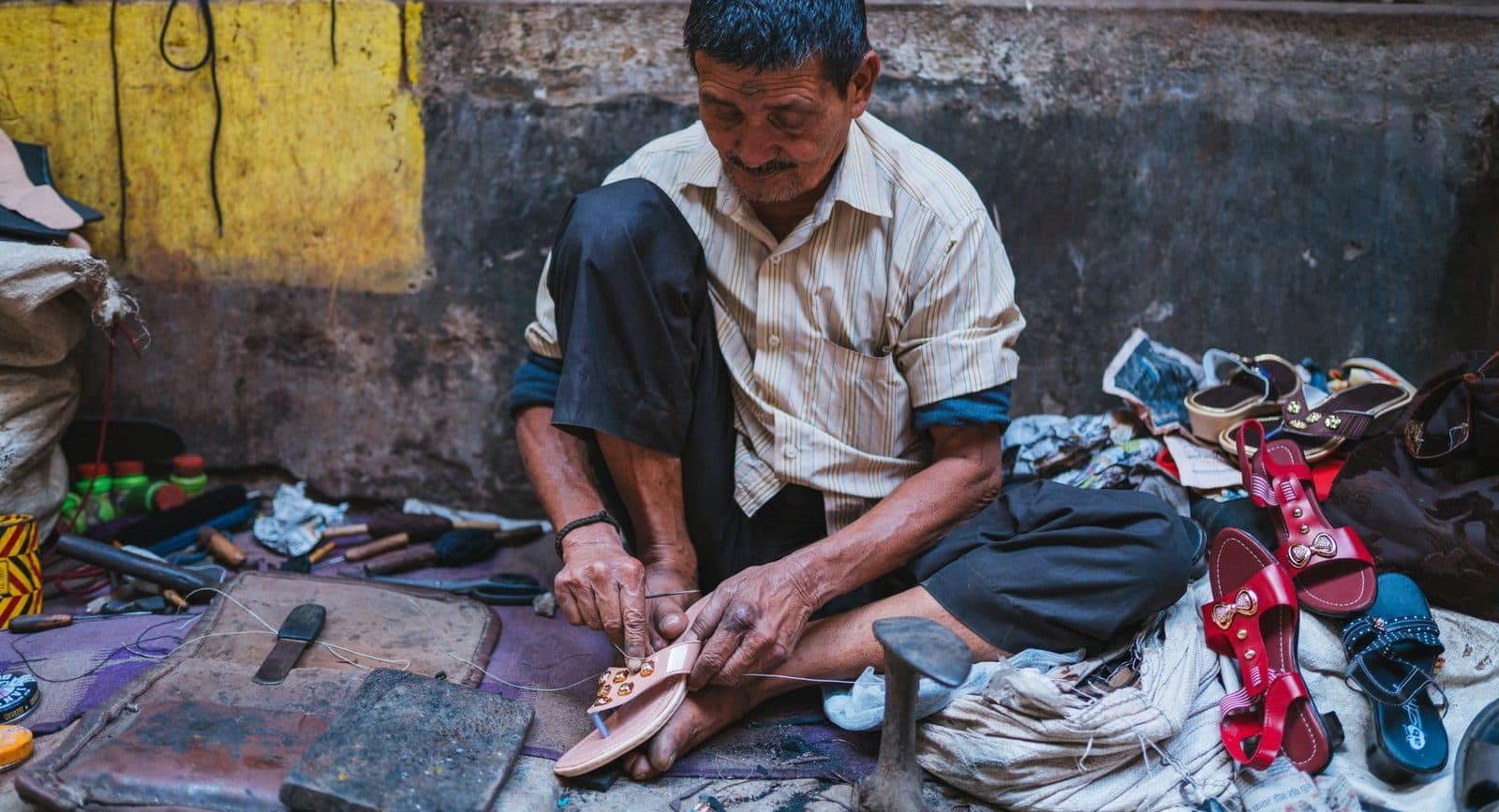
Hurraichi chappals and sandals are casual summer slippers made largely by hand. Uppers and straps are skived, cut and stitched; soles are cut on a press, split and rolled. The KVIC profile calls it a craft-based trade with raw material and labour easily available in India.
Capacity: 1,20,000 units a year at a cost of ₹63 each — cost of production ₹75.42 L; projected sales ₹85.00 L at full capacity.
§2Is it right for you?
Who it is for
A footwear craftsman or trader who knows leather and local retailers.
Who it is not for
Someone without a sales network — ₹12 lakh of stock must keep moving.
Advantages
- Low machinery cost (₹4.20 lakh)
- Steady summer demand
- Raw material and craftsmen easy to find
- Can grow into a local brand
Drawbacks
- Most money goes into raw material stock
- Seasonal sales
- Competes with cheap moulded plastic slippers
- Hand work makes quality uneven
Skills you need
- Cutting and stitching uppers
- Sole cutting and finishing
- Buying leather and sole sheets
- Selling to footwear shops
Why difficulty 2/5: Simple tools; the challenge is selling a large stock each season.
§3Market
Who buys
- Footwear retailers and wholesalers
- Households for summer use
How it sells
- Wholesale markets in footwear towns
- Direct supply to local shops
Good to know
- The profile says the item is made only in India and has export scope.
§4Raw material & machinery
| Item | Qty | Cost |
|---|---|---|
| Upper leather skiving machine | 1 | — |
| Upper strap cutting machine | 1 | — |
| Upper stitching machine | 4 | — |
| Bottom sole cutting press | 1 | — |
| Sole component splitting machine, rolling machine, weighing machine, tools, office equipment and furniture | 1 lot | ₹4,20,000 (all equipment together) |
From: KVIC Project Profile — Hurraichi Chappals & Sandals (PMEGP)
- Leather and strap material, sole sheets, thread and adhesive₹67.00 L a year in the profile; available in India
- Labels and packing material₹25,000 a year
From: KVIC Project Profile — Hurraichi Chappals & Sandals (PMEGP)
§5Licences & registration
- Udyam registration
- GST registration
- Trade licence from the local body
- BIS rules for footwear — check whether a Quality Control Order covers your product
§6Schemes & subsidies
- PMEGPCentralActive15–35% subsidy
- MudraCentralActiveLoan up to ₹20 lakh, no collateral
- CGTMSECentralActiveNo collateral, up to ₹10 crore
This is a KVIC model profile for PMEGP; MUDRA and CGTMSE fit a cost of this size.
§7Money
How the investment is worked out: Equipment ₹4.20 L + working capital ₹12.00 L = ₹16.20 L. Land and work shed are taken as owned (₹0).
Working capital: Working capital ₹12.00 L — the profile works out ₹12.57 L per cycle; raw material alone is ₹67.00 L a year.
Year not printed on the KVIC profile — check current machinery prices.
§8Export potential
Confirm the HS code in the DGFT ITC(HS) lookup before you export
Export council / board: Council for Leather Exports (CLE)
- Use 6403 for leather uppers and 6402 for all-rubber or plastic versions.
§9Risks — where people fail
- Unsold stock after the summer season
- Leather price rise
- Credit sales to retailers
- Design changes in fashion
§1030 / 60 / 90-day plan
A general plan that applies to any business. A plan for this business will be added after research.
- Days 1–30: Visit a working hurraichi chappals and sandals unit, ask 10 buyers about price and quantity, and get quotations from 3 suppliers.
- Days 31–60: Udyam and the licences you need (Udyam registration, GST registration), a project report (DPR), and the scheme or loan file.
- Days 61–90: Space and machines, trial production, and first deliveries to 10 customers.
§11Who to connect with
Associations, clusters and training institutes — the directory is being built. Connect
§12Watch
There is no episode on this business yet. Shows are coming soon on the Podcast page.
Want to start Hurraichi Chappals and Sandals?
DPR, loan file or registration — ask us on WhatsApp.
¶Sources
Data review: 6 October 2026. Spotted a mistake? Report it. For information only — not legal or financial advice.