

§1What this business is
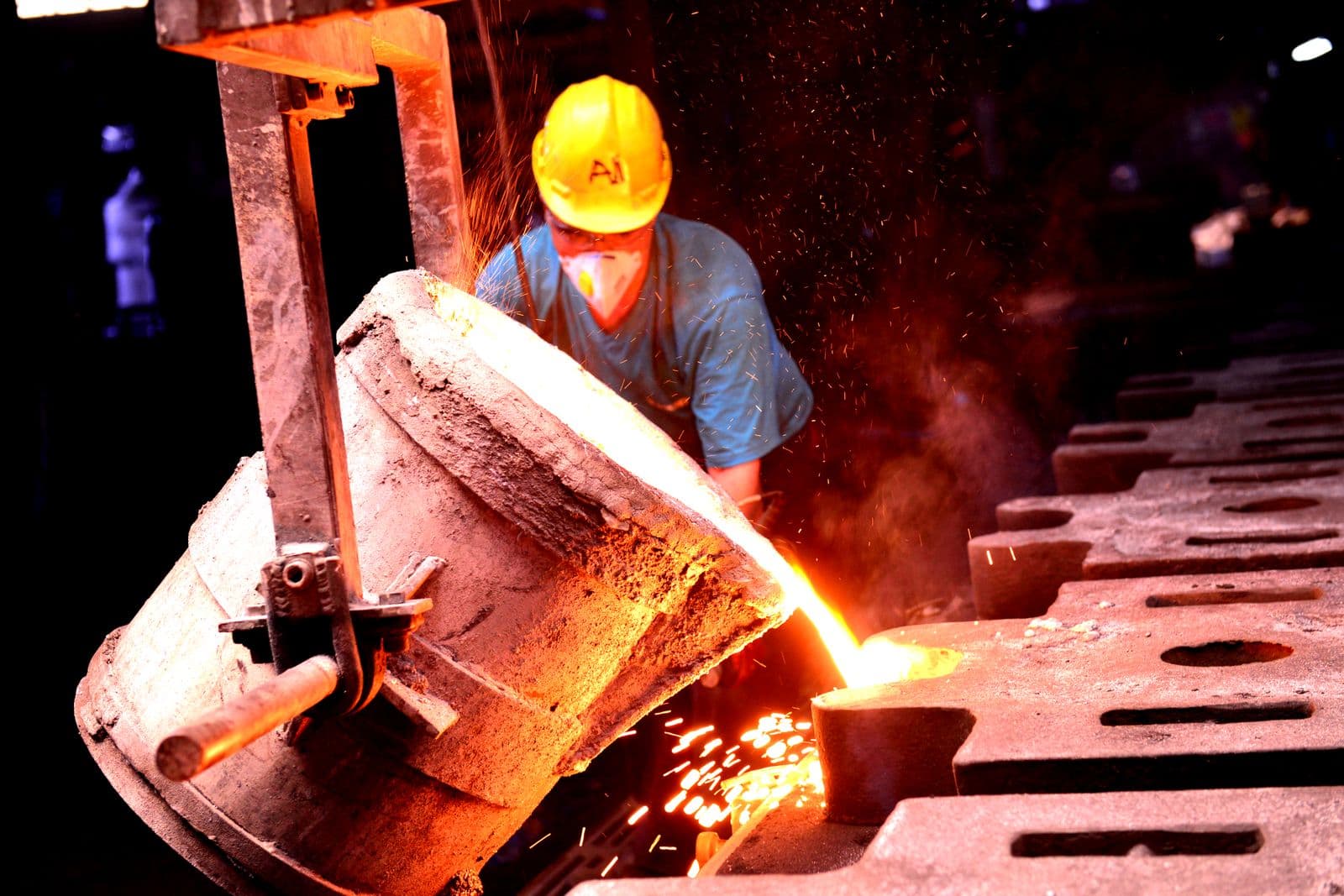
Wax is injected into a metal die to make a pattern of the part; many patterns are joined into a tree, dipped in ceramic slurry and dried into a shell. The wax is melted out, the shell is baked, and metal melted in an induction furnace is poured in. After cooling the shell is broken off, gates are cut and parts are finished, heat-treated and inspected. Parts come out close to final size, so little machining is needed. Buyers are valve, pump, auto, defence, chemical, pharma, dairy and power equipment makers.
Capacity: Stand-Up Mitra: 600 MT of castings a year, run at 40% in year 1 rising to 80% in year 5. DC-MSME: 810 MT a year worth ₹5.90 crore.
§2Is it right for you?
Who it is for
A mechanical or metallurgy graduate with foundry experience, ideally in a cluster such as Rajkot, Kolhapur or Coimbatore.
Who it is not for
A first-time founder without foundry skills or large capital.
Advantages
- Precise parts with little machining — buyers pay more for them
- Works for stainless, tool steel and special alloys that are hard to machine
- Stand-Up Mitra says the industry grew about 10–12% a year over the past decade
- Export demand from valve, pump and auto makers
Drawbacks
- Large project — close to ₹2 crore in both profiles
- Needs a trained metallurgist; the Stand-Up Mitra profile prefers a mechanical or metallurgy graduate
- Every part needs its own wax die
- Heavy power bill from induction melting
Skills you need
- Wax die and pattern making
- Ceramic shell building and baking
- Induction melting and alloy chemistry
- Inspection and heat treatment
Why difficulty 5/5: Large capital, skilled metallurgy and tight quality demands from buyers.
§3Market
Who buys
- Industrial valve and pump makers
- Automobile part makers
- Defence and aerospace suppliers
- Chemical, pharma and dairy equipment makers
- Power generation equipment makers
How it sells
- Direct supply against buyer drawings
- Exports through buyers in the US, Europe and Asia
Good to know
- Stand-Up Mitra: in India about 65% of investment castings go to valves, pumps, impellers and machinery parts, 28% to auto parts and 7% to aerospace and defence.
- It counts about 200 investment casting foundries in India, mostly in Rajkot, Kolhapur and Coimbatore, and puts industry revenue above ₹3,000 crore.
- Selling prices run from ₹150 a kg to ₹1,500 a kg for super alloys and intricate castings.
§4Raw material & machinery
| Item | Qty | Cost |
|---|---|---|
| Medium-frequency induction furnace, 1,000 kg | 1 | ₹45,00,000 |
| Cooling tower, water softening plant and heat exchanger | 1 | ₹8,00,000 |
| Wax melting/holding furnace and moulding machine with wax injector | 1 | ₹1,50,000 |
| Wax tree table with refractory sprayer | 2 | ₹70,000 |
| Ladles with heating system | 2 | ₹70,000 |
| EOT crane | 1 | ₹3,50,000 |
| Shot blasting machine | 1 | ₹80,000 |
| Lathe machines | 2 | ₹2,00,000 |
| Mould boxes and tools | 1 lot | ₹2,50,000 |
| Pollution control: dust precipitators, fume extractor, exhaust fans, hoods | 1 lot | ₹3,00,000 |
From: SIDBI Stand-Up Mitra project profile — Investment Castings (Lost Wax Casting Process) (2018) — private guide — confirm locally · DC-MSME project profile — Investment Casting (2002)
- Stainless, carbon, tool or alloy steel (ingots or graded scrap)Stand-Up Mitra: ₹45 a kg for carbon steel to ₹250–400 a kg for high-grade alloys; DC-MSME: 81 MT of scrap a month at ₹40,000 a tonne
- Pattern wax of different gradesStand-Up Mitra: ₹60 to ₹400 a kg; DC-MSME: 10 MT a month at ₹20,000 a tonne
- Refractory and ceramic shell materialsStand-Up Mitra: ₹10 to ₹250 a kg
- Ferro-alloysDC-MSME: ₹1,50,000 a month
From: SIDBI Stand-Up Mitra project profile — Investment Castings (Lost Wax Casting Process) (2018) — private guide — confirm locally · DC-MSME project profile — Investment Casting (2002)
Suppliers in Building Business Bazaar
Process and Product Development Centre (PPDC), Agra · Agra →MATERIAL TESTING LABORATORY LLP · New Delhi →SHREEJI MATERIALS TESTING LABORATORY LLP · Bhavnagar →METALAB ANALYTICAL PRIVATE LIMITED · Ahmedabad →HTH LABORATORIES PRIVATE LIMITED · Panipat →ATMY ANALYTICAL LABS PVT. LTD. · Faridabad →KANHA TESTING LABS PVT. LTD. · Gurgaon →ALPHA TEST HOUSE PRIVATE LIMITED · Bahadurgarh →STERLING TEST AND RESEARCH CENTRE LLP · Faridabad →ETL TEST HOUSE PRIVATE LIMITED · Jammu →SUN TECH · Ranchi →ADITYAPUR AUTO CLUSTER · Jamshedpur →
§5Licences & registration
- Udyam registration
- GST
- State Pollution Control Board consent to establish and operate (furnace fumes and solid waste)
- Factory licence and factory plan approval under the Factories Act
- Fire safety NOC
- Import Export Code (IEC) from DGFT if you export
§6Schemes & subsidies
- CGTMSECentralActiveNo collateral, up to ₹10 crore
- Stand-Up IndiaCentralClosed₹10 lakh – ₹1 crore loan
The project is above the PMEGP limit for manufacturing; CGTMSE covers loans without collateral, and Stand-Up India suits SC/ST or women founders (the Stand-Up Mitra profile was written for it).
§7Money
How the investment is worked out: Stand-Up Mitra profile (2018): land ₹20.00 L, building ₹35.00 L, plant and machinery ₹69.75 L, fixtures and electrical ₹10.90 L, pre-operative ₹3.50 L, working capital margin ₹52.13 L = ₹191.28 L. DC-MSME profile (SISI Mumbai, Dec 2002): fixed capital ₹70.39 L (incl. ₹40 L induction furnace) + working capital for 3 months ₹122.60 L = ₹192.98 L.
Working capital: Stand-Up Mitra: gross working capital ₹114.32 L, of which the margin is ₹52.13 L and the bank funds ₹62.19 L. DC-MSME: ₹122.60 L for 3 months, mostly 81 MT of stainless/alloy steel scrap a month at ₹40,000 a tonne.
Stand-Up Mitra profile 2018; the DC-MSME profile's prices are from 2002 — check current machinery and metal prices.
§8Export potential
Confirm the HS code in the DGFT ITC(HS) lookup before you export
Export council / board: EEPC India
- Parts made for a valve, pump or vehicle may fall under that product's own heading; confirm the 8-digit ITC(HS) line with DGFT or a customs broker.
- The Stand-Up Mitra profile lists an IEC code among the approvals needed for export.
§9Risks — where people fail
- Alloy and scrap price swings
- Shell cracks and casting defects causing rejections
- Power cost and supply
- Dependence on a few large valve or auto buyers
§1030 / 60 / 90-day plan
A general plan that applies to any business. A plan for this business will be added after research.
- Days 1–30: Visit a working investment casting (lost wax process) unit, ask 10 buyers about price and quantity, and get quotations from 3 suppliers.
- Days 31–60: Udyam and the licences you need (Udyam registration, GST), a project report (DPR), and the scheme or loan file.
- Days 61–90: Space and machines, trial production, and first deliveries to 10 customers.
§11Who to connect with
Associations, clusters and training institutes — the directory is being built. Connect
§12Watch
There is no episode on this business yet. Shows are coming soon on the Podcast page.
Want to start Investment Casting (Lost Wax Process)?
DPR, loan file or registration — ask us on WhatsApp.
¶Sources
- SIDBI Stand-Up Mitra project profile — Investment Castings (Lost Wax Casting Process) (2018)
- DC-MSME project profile — Investment Casting (2002)
Data review: 6 October 2026. Spotted a mistake? Report it. For information only — not legal or financial advice.