

§1What this business is
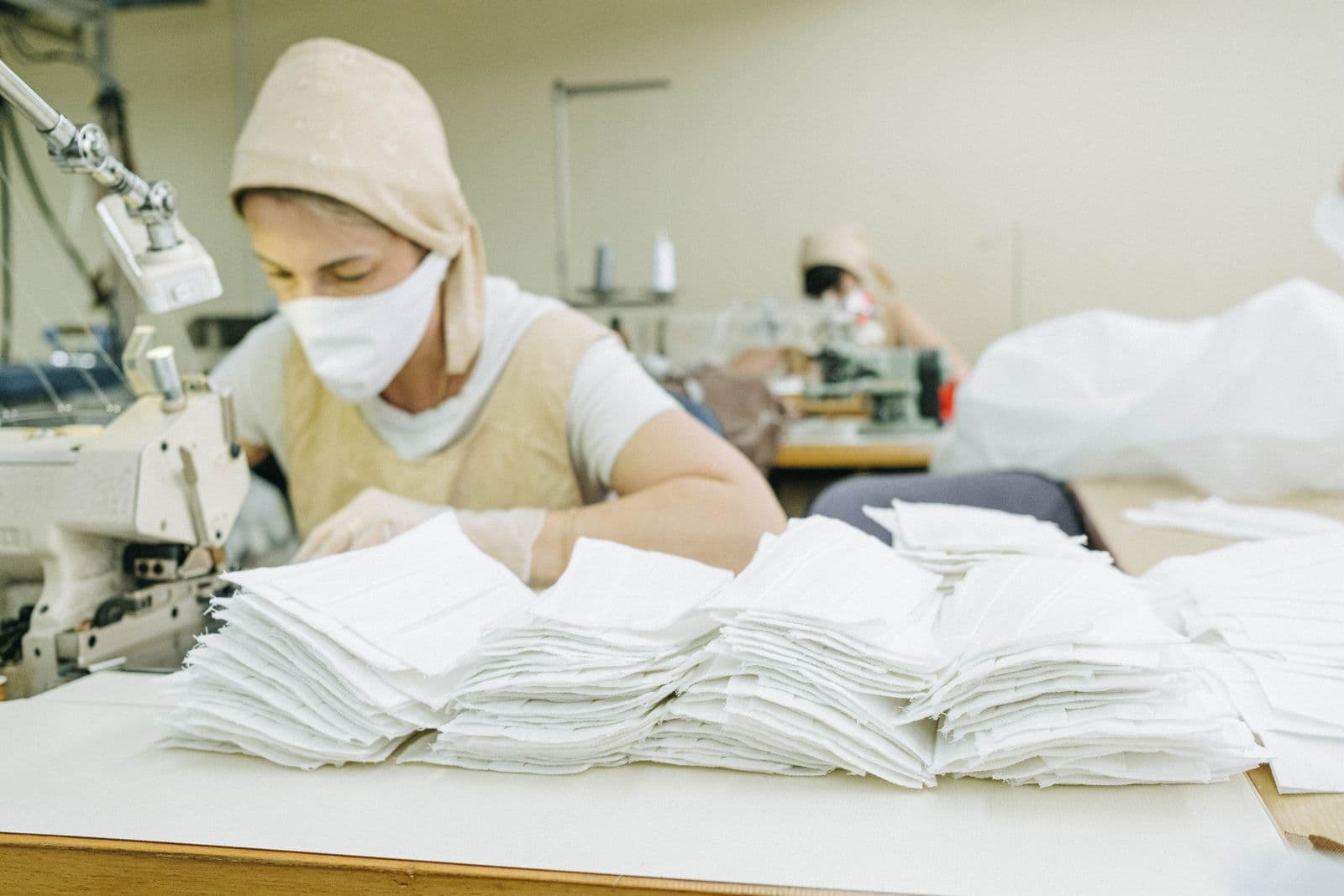
Fabric is cut, sewn and locked, pleats are made, the edges are ribbed (piped), threads are cut and the masks are packed one by one and then in cartons. The report was written in the COVID-19 period, when KVIC promoted khadi masks.
Capacity: 1,500 masks a day, 4,50,000 a year (8 hours, 300 days).
§2Is it right for you?
Who it is for
An existing khadi or garment unit that can add masks as a side line.
Who it is not for
A new founder betting a whole loan on mask demand alone.
Advantages
- Simple stitching; quick to train workers
- Washable, reusable, biodegradable product
- Same machines can make other small khadi items
- Low raw-material cost (₹9 a mask)
Drawbacks
- Demand fell sharply after the pandemic
- Report's market figures are from the COVID period
- Very thin profit in year 1
- Cheap disposable masks compete
Skills you need
- Stitching line management
- Fabric sourcing
- Institutional selling
- Product diversification
Why difficulty 3/5: Easy to make, but post-pandemic demand is the real risk.
§3Market
Who buys
- Hospitals, offices and institutions
- Retail customers
- Khadi outlets
How it sells
- Bulk institutional orders
- Khadi Bhandars and online
Good to know
- The report quotes an Invest India study on khadi masks and KVIC's plan to export them.
§4Raw material & machinery
| Item | Qty | Cost |
|---|---|---|
| Plant & machinery for cutting, stitching, locking and packing (the report gives no item list) | 1 lot | ₹8.61 lakh |
From: PMEGP sample project report — Khadi Mask (prepared by Udyami/Samadhan)
- Khadi fabric, hosiery, threads and elastic₹9 a mask on average
- Packing paper and cartonsindividual packs then cartons
From: PMEGP sample project report — Khadi Mask (prepared by Udyami/Samadhan)
§5Licences & registration
- Udyam registration
- GST registration
- Use the Khadi Mark only for khadi bought from KVIC-certified institutions
- Trademark for your brand name (optional)
§6Schemes & subsidies
- PMEGPCentralActive15–35% subsidy
- MudraCentralActiveLoan up to ₹20 lakh, no collateral
- CGTMSECentralActiveNo collateral, up to ₹10 crore
Prepared for PMEGP; MUDRA and CGTMSE fit ₹15.66 L.
§7Money
How the investment is worked out: Plant & machinery ₹8.61 L + furniture ₹1.50 L + working capital ₹5.55 L = ₹15.66 L. Shed (1,500 sq ft) owned or rented. Term loan ₹9.10 L, working capital ₹5.00 L, own ₹1.57 L.
Working capital: Working capital ₹5.55 L (bank ₹5.00 L): 25–30 days of raw material, 10 days of finished stock.
Year not printed in the report — check current machinery and raw-material prices.
§8Export potential
Confirm the HS code in the DGFT ITC(HS) lookup before you export
Export council / board: AEPC (Apparel Export Promotion Council)
- Export rules for masks changed often in 2020–21; check current DGFT policy.
§9Risks — where people fail
- Demand collapse
- Unsold stock
- Price war with disposables
- Quality claims
§1030 / 60 / 90-day plan
A general plan that applies to any business. A plan for this business will be added after research.
- Days 1–30: Visit a working khadi face mask making unit, ask 10 buyers about price and quantity, and get quotations from 3 suppliers.
- Days 31–60: Udyam and the licences you need (Udyam registration, GST registration), a project report (DPR), and the scheme or loan file.
- Days 61–90: Space and machines, trial production, and first deliveries to 10 customers.
§11Who to connect with
Associations, clusters and training institutes — the directory is being built. Connect
§12Watch
There is no episode on this business yet. Shows are coming soon on the Podcast page.
Want to start Khadi Face Mask Making?
DPR, loan file or registration — ask us on WhatsApp.
¶Sources
Data review: 6 October 2026. Spotted a mistake? Report it. For information only — not legal or financial advice.