

§1What this business is
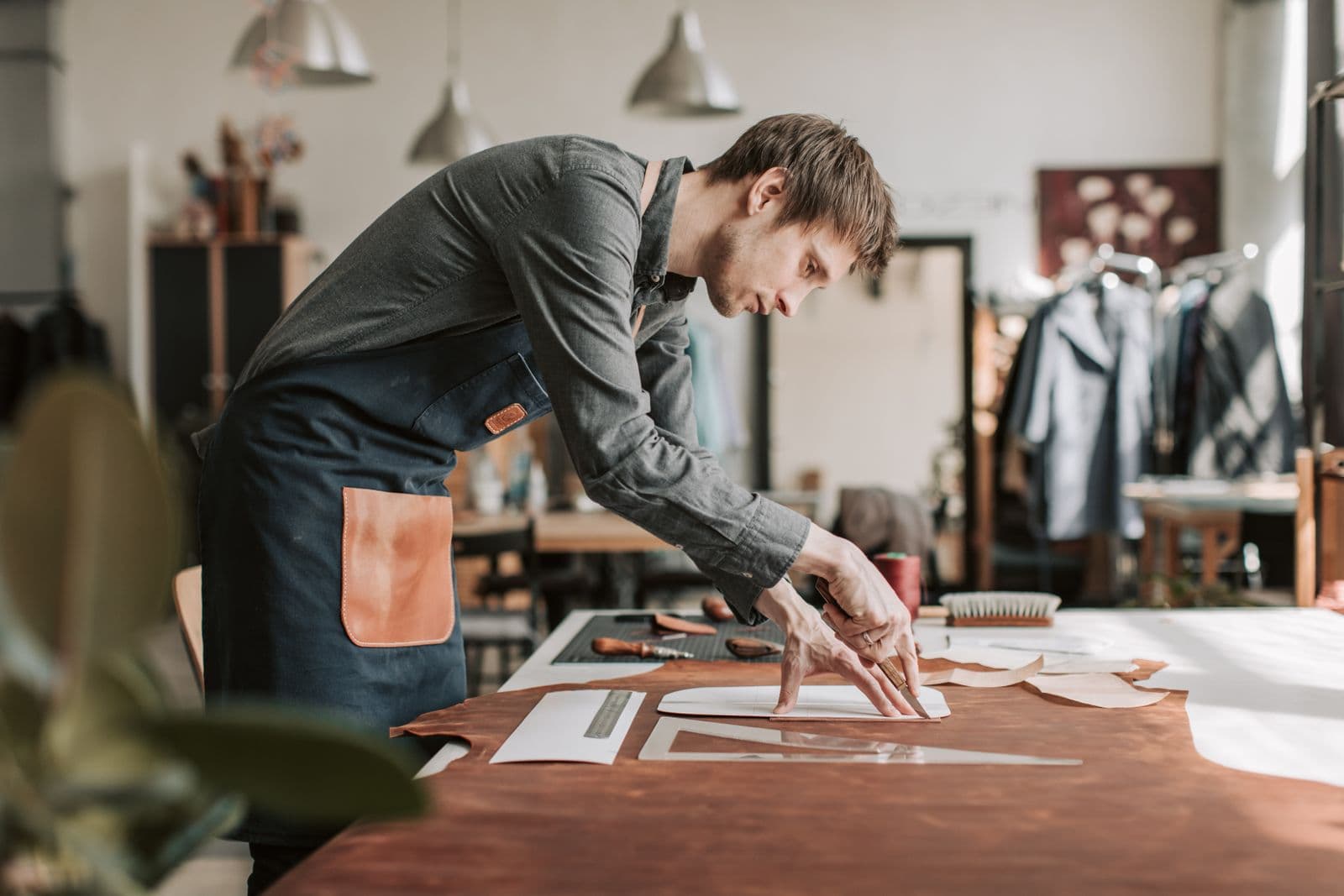
The right piece of leather is chosen, tooled or carved, coloured, lined and strapped, and finished. The report targets ladies' purses. Buyers are bag shops, boutiques, gift shops and exporters.
Capacity: 100 purses a day on a 10-hour shift; year 1 at 50% of capacity.
§2Is it right for you?
Who it is for
An artisan or designer with retail or boutique buyers.
Who it is not for
Someone without design or finishing skill.
Advantages
- Purses and wallets are the largest part of the handbag market (report)
- Very low machinery cost (₹2.50 L)
- Can sell to both home and export buyers
- Leftover leather can become small goods
Drawbacks
- High break-even (40%)
- Thin year-1 margin (2.8%)
- Synthetic purses are cheaper
- Design trends change each season
Skills you need
- Leather tooling and colouring
- Lining and strapping
- Design sampling
- Retail and boutique sales
Why difficulty 2/5: Small set-up; margins depend on design and finish.
§3Market
Who buys
- Women buying purses
- Gift buyers
- Boutiques, wholesalers and exporters
How it sells
- Bag and accessory shops
- Boutiques and exhibitions
- Export orders
Good to know
- Purses and wallets hold 34.8% of handbag revenue and 35.4% of volume (report).
- Main export markets named: USA, Japan, UK, Brazil, Canada, Italy.
§4Raw material & machinery
| Item | Qty | Cost |
|---|---|---|
| Sewing machine | 3 | ₹1,11,000 |
| Stainless-steel edge paddle | 3 | ₹72,000 |
| Pressing tool machine | 3 | ₹50,000 |
| Cutting tools and other tools and equipment | 1 lot | ₹17,000 |
From: PMEGP sample project report — Leather Purse Manufacturing Unit (prepared by Udyami/Samadhan)
- Tan leatherthe main material
- 2 mm lacing, linen or waxed thread, lacing and stitching needlesfor stitching
- Leather dyes and acrylic paintsfor colour
- Hardware (rivets, buckles, keepers, closures) and contact adhesivefittings
From: PMEGP sample project report — Leather Purse Manufacturing Unit (prepared by Udyami/Samadhan)
§5Licences & registration
- Udyam registration
- GST
- Trade licence
- IEC for export
- Trademark for your brand (optional)
§6Schemes & subsidies
- PMEGPCentralActive15–35% subsidy
- MudraCentralActiveLoan up to ₹20 lakh, no collateral
- CGTMSECentralActiveNo collateral, up to ₹10 crore
- Stand-Up IndiaCentralClosed₹10 lakh – ₹1 crore loan
PMEGP fits; MUDRA up to ₹20 L; CGTMSE for collateral-free loans; Stand-Up India for SC/ST or women owners.
§7Money
How the investment is worked out: Samadhan report: building/shed 1,200 sq ft ₹5.00 L, plant & machinery ₹2.50 L, furniture ₹1.20 L, working capital ₹3.33 L = ₹12.03 L.
Working capital: Working capital ₹3.33 L (bank ₹3.00 L); 10 days of stock, 10 days' credit to buyers.
Year not printed on the report — check current machinery prices.
§8Export potential
Confirm the HS code in the DGFT ITC(HS) lookup before you export
Export council / board: CLE
- CLE (Council for Leather Exports) covers leather goods.
- Exports need an IEC from DGFT.
§9Risks — where people fail
- Unsold designs
- Leather price rises
- Finish defects
- Dependence on a few buyers
§1030 / 60 / 90-day plan
A general plan that applies to any business. A plan for this business will be added after research.
- Days 1–30: Visit a working leather purse making unit, ask 10 buyers about price and quantity, and get quotations from 3 suppliers.
- Days 31–60: Udyam and the licences you need (Udyam registration, GST), a project report (DPR), and the scheme or loan file.
- Days 61–90: Space and machines, trial production, and first deliveries to 10 customers.
§11Who to connect with
Associations, clusters and training institutes — the directory is being built. Connect
§12Watch
There is no episode on this business yet. Shows are coming soon on the Podcast page.
Want to start Leather Purse Making?
DPR, loan file or registration — ask us on WhatsApp.
¶Sources
Data review: 6 October 2026. Spotted a mistake? Report it. For information only — not legal or financial advice.