

§1What this business is
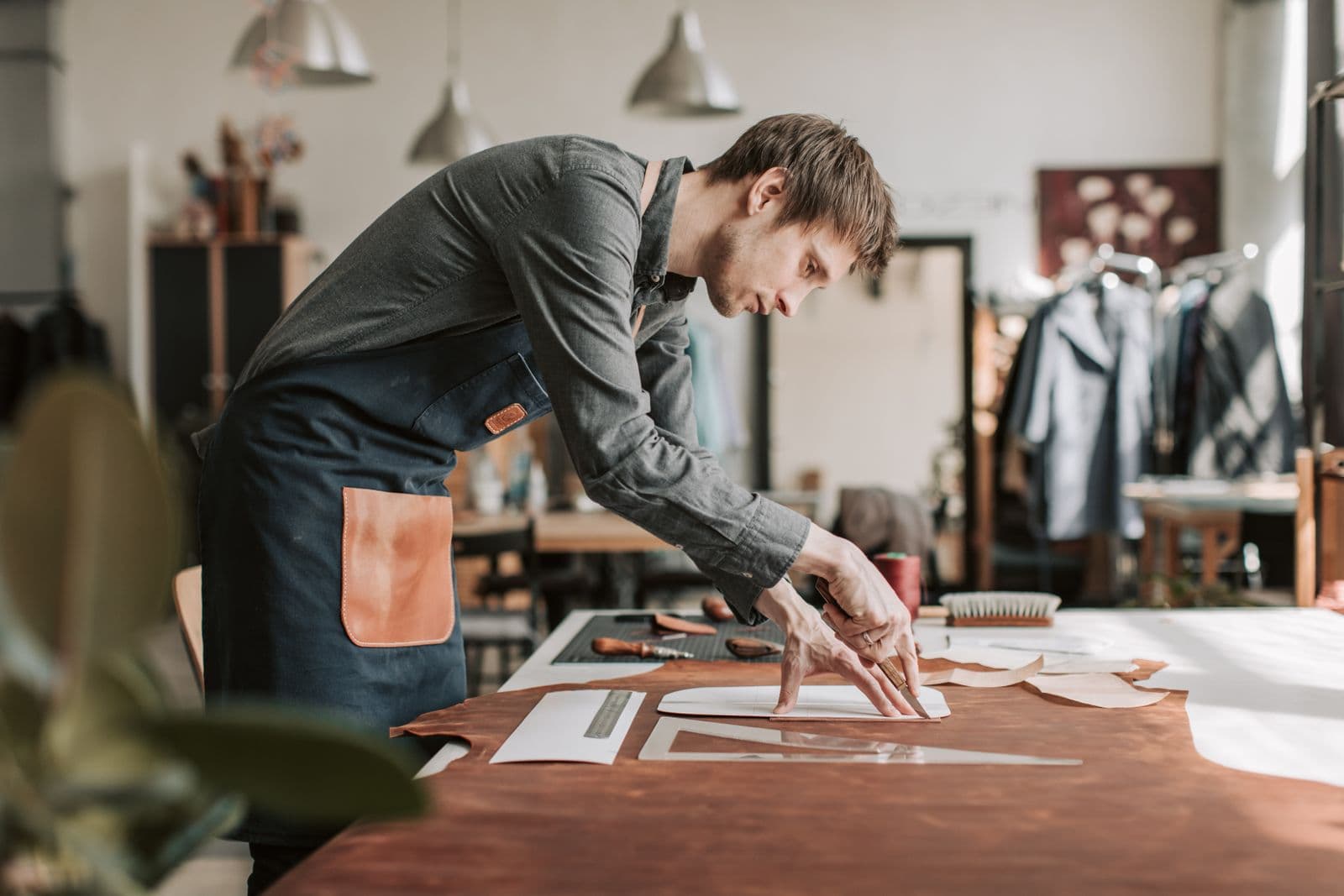
You cut finished leather into panels, skive (thin) the edges, stitch them on industrial machines, emboss a design or brand and pack the wallets and purses. Buyers are leather-goods shops, gift shops, wholesalers and online sellers. It is labour-heavy work where design and finish decide the price.
Capacity: 1,50,000 wallets and purses a year (cost of production ₹71.41 L at full capacity).
§2Is it right for you?
Who it is for
A leather artisan or a trader who already sells leather goods and can find good leather suppliers.
Who it is not for
Someone who cannot judge leather quality or has no shop and wholesale contacts.
Advantages
- Machines are cheap — ₹5.60 L sets up the whole unit
- Wallets and purses sell all year and as gifts
- Your own brand and design can earn a better price
- Leather offcuts can go into small items like card holders
Drawbacks
- Most of the money sits in leather stock
- Cheap synthetic and imported wallets push prices down
- Fashion changes quickly — old designs stop selling
- Needs skilled stitching hands
Skills you need
- Judging and cutting leather with little waste
- Skiving and machine stitching
- Design and finishing
- Selling to shops and online
Why difficulty 3/5: Simple machines, but margin depends on design, finish and selling skill.
§3Market
Who buys
- Leather-goods and gift shops
- Wholesalers in leather markets
- Corporate gift buyers
How it sells
- Wholesale supply to shops
- Online marketplaces under your own brand
- Fairs and exhibitions
Good to know
- The KVIC profile calls it a fashion-oriented, labour-intensive industry.
- Design and finish decide the price more than the machines do.
§4Raw material & machinery
| Item | Qty | Cost |
|---|---|---|
| Flat-bed single-needle industrial stitching machine with motor | as per profile | — |
| Cylinder-bed industrial stitching machine with motor | as per profile | — |
| Embossing machine | as per profile | — |
| Skiving machine | as per profile | — |
| Grinding tools, hand tools, workshop and office furniture, electrification | 1 lot | — |
| Total equipment (all items above) | 1 lot | ₹5.60 lakh |
From: KVIC Project Profile — Leather Wallets and Purses (PMEGP)
- Finished leathermain input; raw material ₹60.00 lakh a year at full capacity in the profile
- Labels and packing material₹75,000 a year in the profile
- Thread, lining, zips, buttons and adhesivebought from the leather-goods market
From: KVIC Project Profile — Leather Wallets and Purses (PMEGP)
Suppliers in Building Business Bazaar
Footwear Design & Development Institute, Chandigarh (Banur) campus · Banur →Footwear Design & Development Institute, Rohtak campus · Rohtak →Footwear Design & Development Institute, Noida campus · Noida →Footwear Design & Development Institute, Fursatganj (Raebareli) campus · Fursatganj →Footwear Design & Development Institute, Jodhpur campus · Jodhpur →Footwear Design & Development Institute, Guna campus · Guna →Footwear Design & Development Institute, Patna campus · Bihta →Footwear Design & Development Institute, Ankleshwar campus · Ankleshwar →Footwear Design & Development Institute, Chhindwara campus · Chhindwara →Footwear Design & Development Institute, Kolkata campus · Kolkata →Footwear Design & Development Institute, Hyderabad campus · Hyderabad →Footwear Design & Development Institute, Chennai campus · Irungattukottai →
In our raw material database
§5Licences & registration
- Udyam registration
- GST
- Trade licence from the local body
- Trademark for your brand (optional)
§6Schemes & subsidies
- PMEGPCentralActive15–35% subsidy
- MudraCentralActiveLoan up to ₹20 lakh, no collateral
- CGTMSECentralActiveNo collateral, up to ₹10 crore
- Stand-Up IndiaCentralClosed₹10 lakh – ₹1 crore loan
PMEGP fits (the KVIC profile is made for it); MUDRA covers loans up to ₹20 L; CGTMSE gives a collateral-free guarantee; Stand-Up India for SC/ST or women founders.
§7Money
How the investment is worked out: KVIC profile: equipment ₹5.60 L (flat-bed and cylinder-bed stitching machines, embossing machine, skiving machine, grinding and hand tools, furniture, electrification) + working capital ₹11.00 L = ₹16.60 L. Land own, work shed rented (no cost in the project).
Working capital: Working capital is ₹11.00 L of the ₹16.60 L — leather and other raw material cost ₹60.00 L a year.
Year not printed on the KVIC profile — check current machinery prices.
§8Export potential
Confirm the HS code in the DGFT ITC(HS) lookup before you export
Export council / board: Council for Leather Exports (CLE)
- Confirm the 8-digit ITC(HS) line with DGFT or your customs broker.
- You need an Import Export Code (IEC) from DGFT before the first shipment.
§9Risks — where people fail
- Leather price swings
- Unsold stock when designs go out of fashion
- Competition from cheap imports
- Credit to wholesalers
§1030 / 60 / 90-day plan
A general plan that applies to any business. A plan for this business will be added after research.
- Days 1–30: Visit a working leather wallets and purses unit, ask 10 buyers about price and quantity, and get quotations from 3 suppliers.
- Days 31–60: Udyam and the licences you need (Udyam registration, GST), a project report (DPR), and the scheme or loan file.
- Days 61–90: Space and machines, trial production, and first deliveries to 10 customers.
§11Who to connect with
Associations, clusters and training institutes — the directory is being built. Connect
§12Watch
There is no episode on this business yet. Shows are coming soon on the Podcast page.
Want to start Leather Wallets and Purses?
DPR, loan file or registration — ask us on WhatsApp.
¶Sources
Data review: 6 October 2026. Spotted a mistake? Report it. For information only — not legal or financial advice.