

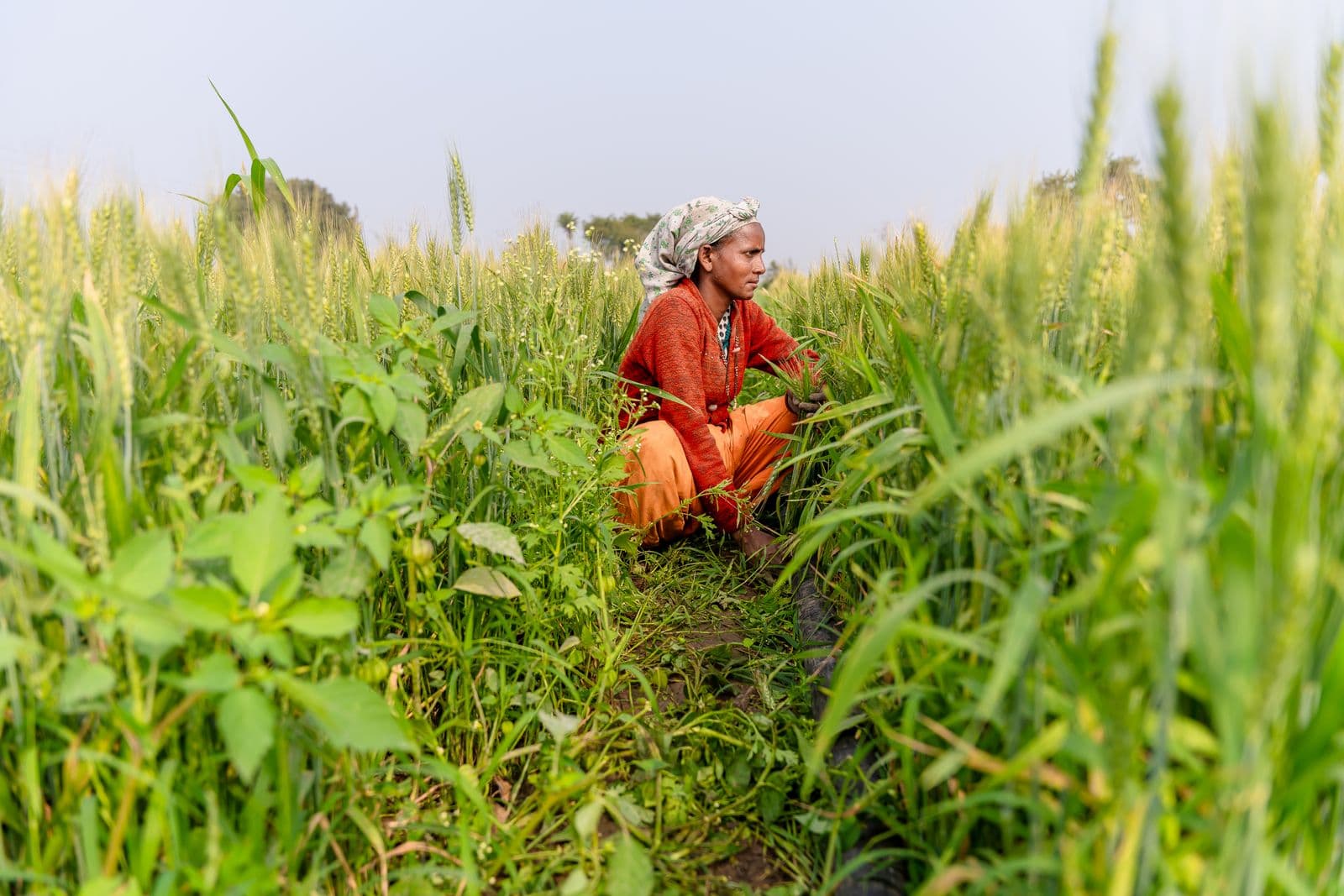
§1What this business is
A 5-hectare farm grows six medicinal plants — makoi (Solanum nigrum), kalmegh (Andrographis), bhringraj (Eclipta), boch or vach (Acorus calamus), ekangi (Kaempferia galanga) and amada or mango ginger (Curcuma amada). Leafy herbs are ready in 3–5 months, rhizomes in 8–12 months. A small shed dries, grinds, grades and packs the harvest for pharmaceutical, nutraceutical and Ayurvedic companies and export buyers.
Capacity: 5 ha in year 1 rising to 7 ha in year 5. Yield per hectare used in the costing: makoi 2,500 kg, kalmegh 1,800 kg, bhringraj 1,800 kg, vach 2,200 kg and ekangi 2,500 kg dry; amada 22,000 kg fresh rhizome.
§2Is it right for you?
Who it is for
A farmer or agriculture graduate with land access who can sign supply contracts with herbal companies.
Who it is not for
Someone hoping to sell in the open mandi without a buyer — medicinal herbs have a narrow market.
Advantages
- Short crops — leafy herbs are ready in 3–5 months
- High gross margin per kg in the report (61–85%)
- Steady buyers among Ayurvedic and pharma companies
- Drying and powdering on the farm adds value
Drawbacks
- Land purchase is the biggest single cost
- Prices of dried herbs swing a lot
- Buyers reject poor-quality lots
- Needs contract buyers before planting
Skills you need
- Growing medicinal crops organically
- Post-harvest drying and grading
- Contract farming and buyer negotiation
- Record-keeping for certifications
Why difficulty 3/5: Farming is simple, but buying land and finding assured buyers is not.
§3Market
Who buys
- Pharmaceutical companies
- Ayurvedic manufacturers
- Nutraceutical companies
- Export buyers
How it sells
- Supply contracts and contract farming
- Direct-to-consumer sales of packed herbs
- Export market development
Good to know
- Prices assumed per kg dried: makoi ₹100, kalmegh ₹175, bhringraj ₹150, vach ₹225, ekangi ₹200; amada ₹50 per kg fresh.
- The report advises GACP and GMP practice and organic certification for premium buyers.
§4Raw material & machinery
| Item | Qty | Cost |
|---|---|---|
| Drip and sprinkler irrigation system | 1 | ₹3,50,000 |
| Tractor, tiller and sprayers | 1 set | ₹6,00,000 |
| Solar and mechanical dryers | 1 set | ₹2,50,000 |
| Processing equipment (grinders, separators) | 1 set | ₹3,00,000 |
| Packing equipment (weighing, sealing, labelling) | 1 set | ₹1,50,000 |
From: Uttarakhand DUY project profile — Herbal and Medicinal Plant Cultivation
- Seeds and planting material₹15,000–30,000 a hectare depending on the crop
- Organic fertilisers₹12,000–20,000 a hectare
- Biopesticides₹8,000–12,000 a hectare
- Packing material₹6,000–12,000 a hectare
From: Uttarakhand DUY project profile — Herbal and Medicinal Plant Cultivation
§5Licences & registration
- Land title or lease papers for the farm
- Organic certification under NPOP for premium buyers (optional)
- GACP (good agricultural and collection practices) certification, which pharma buyers often ask for
- Udyam and GST once you process and sell packed herbs
§6Schemes & subsidies
AIF fits the drying, storage and processing shed. Crop cultivation itself is financed through normal farm loans; the report also names a NABARD-linked loan with a 5% subsidy for part of the debt.
§7Money
How the investment is worked out: Land 5 ha ₹15 L + land development ₹2 L + soil preparation ₹1 L + buildings ₹17 L (processing shed 200 m² ₹8 L, store 100 m² ₹5 L, staff quarters 80 m² ₹4 L) + machinery ₹16.5 L + pre-operative ₹1.5 L + working capital ₹4.5 L = ₹57.50 L. Finance: own ₹27.5 L, term loan ₹25 L (10%, 5 years), working-capital loan ₹5 L (12%).
Working capital: ₹4.5 L for the first 3 months in the project cost; the report's working-capital table later works out ₹7.98 L (half own money, half bank overdraft).
Year not printed on the DUY profile — check current machinery prices.
§8Export potential
Confirm the HS code in the DGFT ITC(HS) lookup before you export
Export council / board: Not verified yet
- Check the exact 8-digit code in the DGFT ITC-HS list before shipping.
§9Risks — where people fail
- Price volatility (rated high in the report)
- Pests, disease and bad weather
- Quality rejection by buyers
- Labour shortage at harvest
§1030 / 60 / 90-day plan
A general plan that applies to any business. A plan for this business will be added after research.
- Days 1–30: Visit a working medicinal plant cultivation (kalmegh, bhringraj and others) unit, ask 10 buyers about price and quantity, and get quotations from 3 suppliers.
- Days 31–60: Udyam and the licences you need (Land title or lease papers for the farm, Organic certification under NPOP for premium buyers (optional)), a project report (DPR), and the scheme or loan file.
- Days 61–90: Space and machines, trial production, and first deliveries to 10 customers.
§11Who to connect with
Associations, clusters and training institutes — the directory is being built. Connect
§12Watch
There is no episode on this business yet. Shows are coming soon on the Podcast page.
Want to start Medicinal Plant Cultivation (Kalmegh, Bhringraj and Others)?
DPR, loan file or registration — ask us on WhatsApp.
¶Sources
Data review: 6 October 2026. Spotted a mistake? Report it. For information only — not legal or financial advice.