

§1What this business is
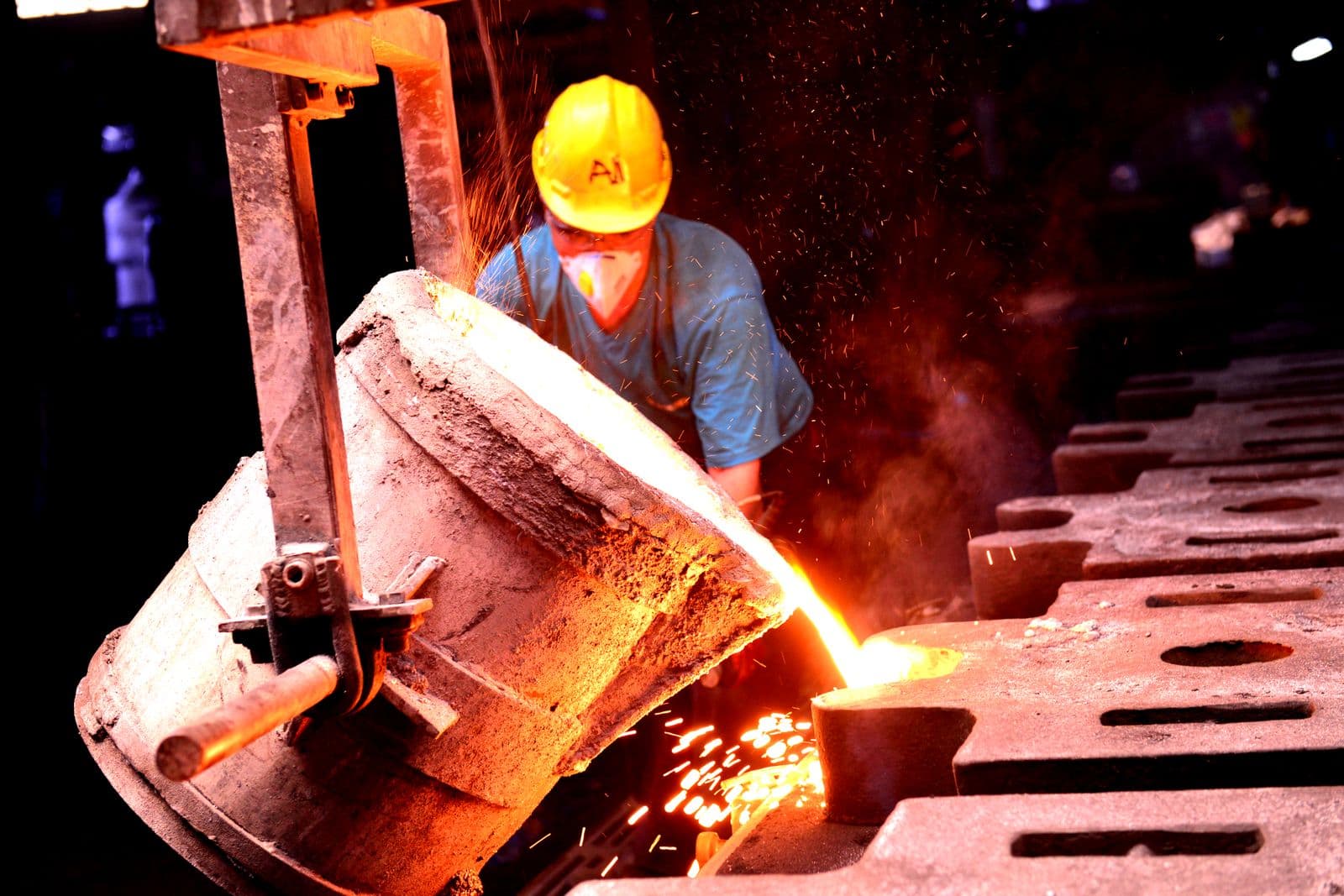
Sand moulds are made for each item, the metal is melted in a 150 kg induction furnace and poured; after cooling, castings are fettled, machined and packed. Typical products are gun metal valves and bushes, water meter bodies, aluminium connectors and clamps, impellers, bell metal castings and leaded brass bearings. They go to automobile, machinery, textile and electrical industries, both for new equipment and for replacement. A small in-house lab checks chemistry, hardness and structure.
Capacity: Installed 1,200 kg a day; 216 MT a year at 60% use, worth ₹270 L.
§2Is it right for you?
Who it is for
A foundry hand or engineer with orders from pump, valve, textile or electrical makers.
Who it is not for
Someone without casting experience or a set of steady buyers.
Advantages
- Wide product range for many industries
- Gun metal bushes alone have a very large market, says the profile
- Runners, risers and rejects are sold back or remelted
- Induction melting gives cleaner metal than coke furnaces
Drawbacks
- Metals are costly, so working capital is high
- Foundry pollution needs a Pollution Control Board NOC
- Big electricity load from the induction furnace
- Yield is about 60% with 10% rejection in the profile
Skills you need
- Pattern and sand mould making
- Alloy melting and pouring
- Machining castings
- Lab tests for chemistry and hardness
Why difficulty 4/5: Foundry skills, costly metals and pollution rules.
§3Market
Who buys
- Automobile part makers
- Machinery and pump makers
- Textile machinery users
- Electrical and power line hardware makers
- Water meter and valve makers
How it sells
- Direct supply against buyer drawings
- Replacement-market dealers for bushes and bearings
Good to know
- The profile says the use of non-ferrous castings grows every day because of their mechanical and chemical properties.
- It names gun metal bushes as a very large market in original equipment and replacement.
§4Raw material & machinery
| Item | Qty | Cost |
|---|---|---|
| Induction furnace, 75 kW / 150 kg, with control panel, hydraulic tilting and crucible | 1 | ₹15,00,000 |
| Power-operated moulding machine | 1 | — |
| Air compressor, 15 HP, with tank | 1 | ₹2,00,000 |
| Core oven / heating chamber | 1 | ₹25,000 |
| General purpose lathe, 2 HP | 1 | ₹50,000 |
| Bench drilling machine, 25 mm | 1 | ₹30,000 |
| Non-ferrous metal cutting machine | 1 | ₹25,000 |
| Hydraulic hardness tester | 1 | ₹60,000 |
| Metallurgical microscope and immersion pyrometer | 2 | ₹80,000 |
From: DC-MSME project profile — Non-Ferrous Castings (2002)
- Copper, zinc, tin and aluminium18 MT a month at an average ₹85,000 a MT in the profile
- Fluxes₹50,000 a month in the profile
- Moulding sand₹20,000 a month in the profile
From: DC-MSME project profile — Non-Ferrous Castings (2002)
Suppliers in Building Business Bazaar
Process and Product Development Centre (PPDC), Agra · Agra →Foundry Industry Cluster · Ahmedabad →Pump and Foundry Cluster, Rajkot · Rajkot →Foundry and General Engineering Cluster, Phagwara, Kapurthala · Kapurthala →Chennai Metro Pvt. Ltd · Chennai →Fine Testing Machines Sales · Kolkata →Inductothern (India) Pvt. Ltd · Ahmedabad →
§5Licences & registration
- Udyam registration
- GST
- State Pollution Control Board NOC and consent to operate (foundry)
- Factory licence under the Factories Act
- Authorisation under the Hazardous Waste Rules if you use non-ferrous scrap or dross
§6Schemes & subsidies
- CGTMSECentralActiveNo collateral, up to ₹10 crore
- Stand-Up IndiaCentralClosed₹10 lakh – ₹1 crore loan
The profile's project cost (₹83.12 L) is above the PMEGP limit for manufacturing; CGTMSE covers loans without collateral, and Stand-Up India suits SC/ST or women founders.
§7Money
How the investment is worked out: DC-MSME profile (SISI Agartala, Nov 2002): fixed capital ₹28.88 L (machinery and testing equipment including a ₹15 L induction furnace, electrification, pre-operative) + working capital for 3 months ₹54.24 L = ₹83.12 L. Shed of 300 sq m rented at ₹7,500 a month.
Working capital: Working capital is ₹54.24 L for 3 months — metals are costly (18 MT a month at an average ₹85,000 a MT).
Prices from 2002 — machinery, raw material and wage costs will be much higher now.
§8Export potential
Confirm the HS code in the DGFT ITC(HS) lookup before you export
Export council / board: EEPC India
- Machined valves, bearings and fittings may fall under their own headings; confirm the 8-digit ITC(HS) line with DGFT or a customs broker.
- You need an Import Export Code (IEC) from DGFT before the first shipment.
§9Risks — where people fail
- Copper, tin and zinc price swings
- Rejections from blowholes and leaks
- Power cost
- Pollution compliance
§1030 / 60 / 90-day plan
A general plan that applies to any business. A plan for this business will be added after research.
- Days 1–30: Visit a working non-ferrous castings foundry (brass, bronze, gun metal) unit, ask 10 buyers about price and quantity, and get quotations from 3 suppliers.
- Days 31–60: Udyam and the licences you need (Udyam registration, GST), a project report (DPR), and the scheme or loan file.
- Days 61–90: Space and machines, trial production, and first deliveries to 10 customers.
§11Who to connect with
Associations, clusters and training institutes — the directory is being built. Connect
§12Watch
There is no episode on this business yet. Shows are coming soon on the Podcast page.
Want to start Non-Ferrous Castings Foundry (Brass, Bronze, Gun Metal)?
DPR, loan file or registration — ask us on WhatsApp.
¶Sources
Data review: 6 October 2026. Spotted a mistake? Report it. For information only — not legal or financial advice.