

§1What this business is
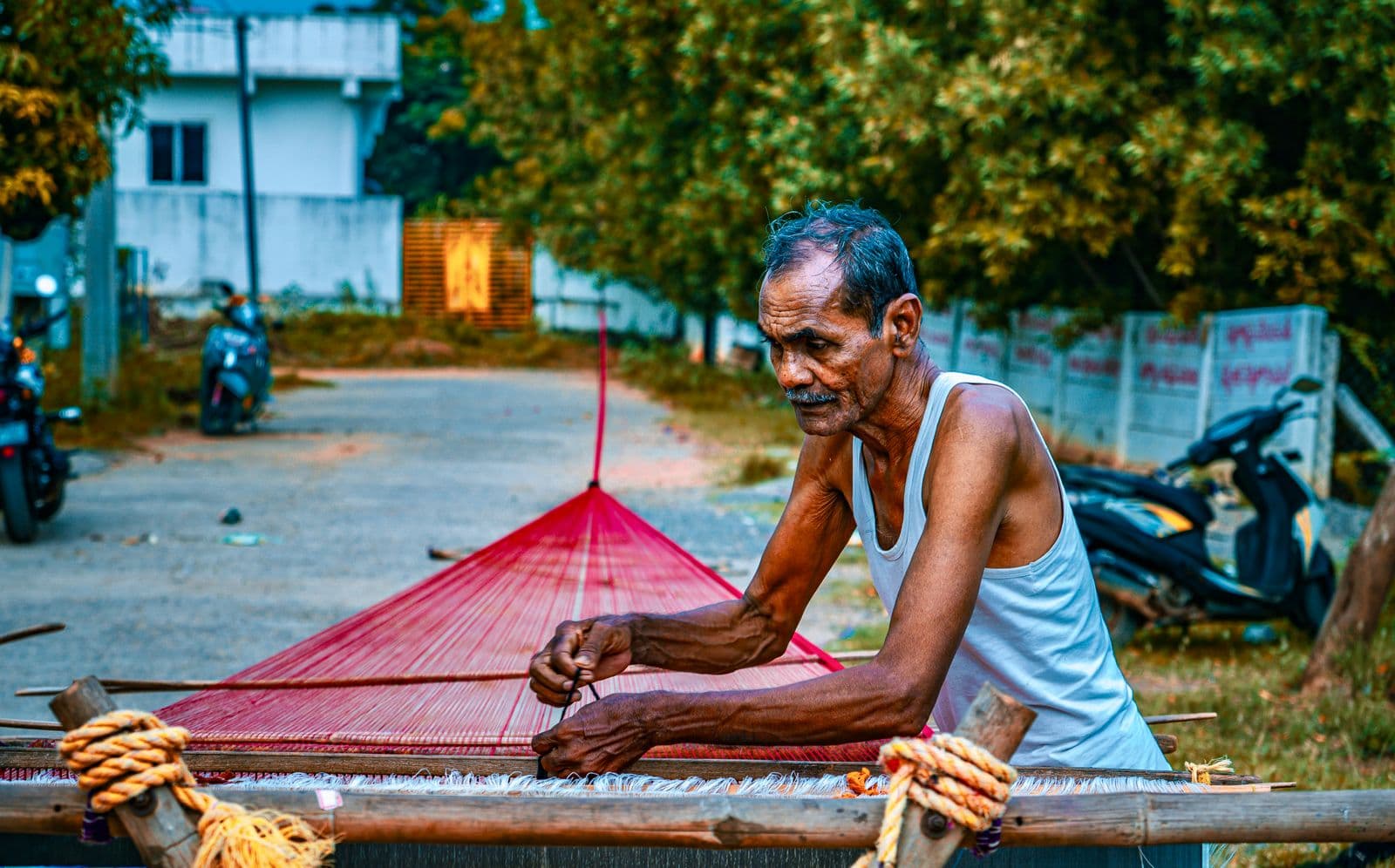
Wool, cotton and silk yarns are cleaned, dyed with natural dyes and woven on handlooms and powerlooms in local patterns. The cloth is embroidered, cut and stitched into pichora (the women's wedding drape), woollen ghagris and shawls, men's angarkhas and dhotis, stoles, topis and waistcoats, plus fusion jackets and scarves. Buyers are local families for weddings and rituals, folk artists, tourists, urban customers, hotels, cultural centres and tourism boards.
§2Is it right for you?
Who it is for
Someone from a weaving family or craft background who knows Garhwali and Kumaoni dress traditions.
Who it is not for
A founder looking for fast, standard mass production.
Advantages
- Every Pahadi wedding and ritual needs traditional dress
- Keeps local weaving and embroidery alive and gives work to women
- Tourists and the hill diaspora buy heritage dress as gifts
- Fusion jackets and scarves reach urban buyers
Drawbacks
- Demand peaks in the wedding season
- Hand work is slow and costly to scale
- Cheap machine-made copies undercut prices
- Sizes and designs vary by region and family custom
Skills you need
- Handloom weaving and natural dyeing
- Traditional embroidery and tailoring
- Knowledge of regional dress customs
- Selling at fairs, online and to the diaspora
Why difficulty 3/5: Skilled hand work and seasonal demand; the craft knowledge matters more than machines.
§3Market
Who buys
- Local families for weddings and rituals
- Folk artists and cultural troupes
- Tourists and urban customers
- Hotels, cultural centres and tourism boards
How it sells
- Own outlet and craft fairs
- Online sales
- Custom costume sets for weddings and cultural events
- Institutional orders
Good to know
- The profile plans home furnishings such as cushion covers, wall hangings and table runners later.
- Quality checks focus on colour fastness, stitching strength and sizing.
§4Raw material & machinery
| Item | Qty | Cost |
|---|---|---|
| Handlooms and powerlooms | 15 | — |
| Dyeing vats and steam boiler | 3 | — |
| Embroidery machines | 4 | — |
| Fabric cutting and stitching machines | 6 | — |
| Finishing, pressing and ironing equipment | 2 | — |
| Quality testing instruments (colour fastness, strength) | 1 set | — |
| Packaging and labelling machine | 1 | — |
| Machinery & tools in total | — | ₹20,00,000 |
From: Uttarakhand DUY project profile — Pahadi Specialised Costume Weaving Unit
- Woolfrom cooperatives in Chamoli, Bageshwar and Almora
- Silk and cotton yarnfrom Dehradun and Haridwar
- Natural dyesfrom local forest-based enterprises
- Embroidery threads, buttons, clasps and linings
From: Uttarakhand DUY project profile — Pahadi Specialised Costume Weaving Unit
§5Licences & registration
- Udyam registration
- GST registration
- State Pollution Control Board consent where the state requires it (dyeing)
- Handloom Mark for handwoven products (optional)
- Artisan identity card (Pehchan) from the Development Commissioner (Handicrafts) — useful for fairs and schemes
§6Schemes & subsidies
- CGTMSECentralActiveNo collateral, up to ₹10 crore
- Stand-Up IndiaCentralClosed₹10 lakh – ₹1 crore loan
- MudraCentralActiveLoan up to ₹20 lakh, no collateral
At ₹60 L the project is above the ₹50 L PMEGP manufacturing limit; the profile names the National Handloom Development Programme for subsidy. CGTMSE for a collateral-free loan; Stand-Up India for SC/ST and women founders; MUDRA for a smaller start.
§7Money
How the investment is worked out: Land & shed ₹15 L + machinery & tools ₹20 L + initial raw material ₹6 L + training ₹2 L + branding & marketing ₹3 L + first-year salaries ₹9 L + utilities ₹3 L + contingency ₹2 L = ₹60 L.
Working capital: Initial raw material ₹6 L and one year of salaries ₹9 L are inside the project cost. Finance: 25% promoter, 60% term loan from a bank or SIDBI, 15% subsidy under the National Handloom Development Programme or state MSME policy.
Year not printed on the profile — check current machinery and yarn prices.
§8Export potential
Confirm the HS code in the DGFT ITC(HS) lookup before you export
Export council / board: HEPC (Handloom Export Promotion Council)
- Other garments fall under different headings in Chapters 61 and 62 — confirm the 8-digit ITC(HS) line with DGFT.
- You need an Import Export Code (IEC) from DGFT before the first shipment.
§9Risks — where people fail
- Seasonal sales and unsold stock
- Shortage of skilled weavers
- Colour bleeding from poor dyeing
- Copying of designs by mills
§1030 / 60 / 90-day plan
A general plan that applies to any business. A plan for this business will be added after research.
- Days 1–30: Visit a working pahadi traditional costume weaving unit, ask 10 buyers about price and quantity, and get quotations from 3 suppliers.
- Days 31–60: Udyam and the licences you need (Udyam registration, GST registration), a project report (DPR), and the scheme or loan file.
- Days 61–90: Space and machines, trial production, and first deliveries to 10 customers.
§11Who to connect with
Associations, clusters and training institutes — the directory is being built. Connect
§12Watch
There is no episode on this business yet. Shows are coming soon on the Podcast page.
Want to start Pahadi Traditional Costume Weaving?
DPR, loan file or registration — ask us on WhatsApp.
¶Sources
Data review: 6 October 2026. Spotted a mistake? Report it. For information only — not legal or financial advice.