

§1What this business is
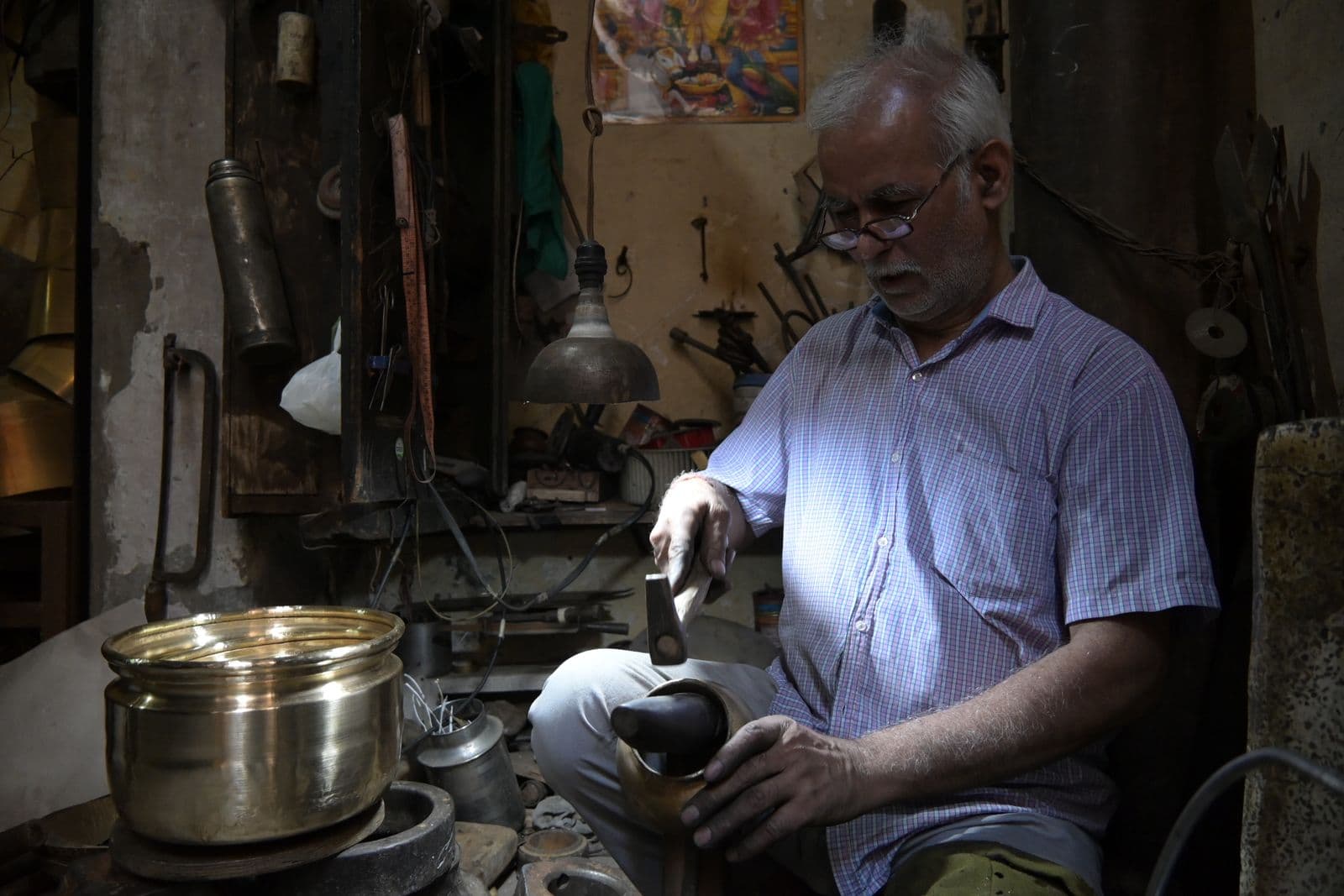
Copper, brass, bronze and iron sheets or ingots are cut, heated in furnaces, hammered, shaped or cast, then turned on lathes, engraved, polished and coated. Products are checked for weight, thickness and finish, branded and packed. Buyers are households that prefer metal over non-stick, temples, restaurants, heritage hotels and resorts, and buyers of wedding, corporate and tourist gifts.
§2Is it right for you?
Who it is for
A metal-craft entrepreneur or trader who can work with traditional artisans and sell gift and heritage sets.
Who it is not for
Someone who cannot manage metal-price risk and stock.
Advantages
- Health-conscious buyers are moving back to copper, kansa and iron
- Wedding, temple and gift demand all year
- Heritage collections sell well to tourists and online
- Metal scrap is re-melted, so little is wasted
Drawbacks
- Copper and brass prices swing with world metal markets
- Moradabad and other clusters already supply cheaply
- Furnace and polishing work is hot, noisy and dusty
- ₹60 L project — above the PMEGP limit
Skills you need
- Metal forging, turning and polishing
- Engraving and design
- Metal buying and stock control
- Retail, online and gift-set selling
Why difficulty 3/5: Traditional skills are available, but metal-price risk and cluster competition need care.
§3Market
Who buys
- Households preferring metal cookware
- Temples
- Restaurants, resorts and heritage hotels
- Wedding, corporate and tourist gift buyers
How it sells
- Retail and own outlet
- Online sales
- Heritage kitchen gift sets
- Bulk orders from hotels and temples
Good to know
- The profile plans engraved ceremonial utensils and Uttarakhand heritage kitchen collections.
- Scrap metal is to be melted and reused.
§4Raw material & machinery
| Item | Qty | Cost |
|---|---|---|
| Metal cutting shears and press machine | 2 | — |
| Furnaces and forging hammers | — | — |
| Lathe and turning machines | 2 | — |
| Engraving and etching machines | 2 | — |
| Polishing and buffing machines | 2 | — |
| Quality testing instruments | 1 set | — |
| Packaging and labelling machine | 1 | — |
| Machinery & tools in total | — | ₹20,00,000 |
From: Uttarakhand DUY project profile — Uttarakhand Special Utensils Manufacturing Unit
- Copper, brass, bronze and iron sheets and ingotsfrom metal suppliers in Haridwar, Delhi and Moradabad
- Flux and polishing compounds
- Wooden handlesbought locally
- Cardboard and jute packaging
From: Uttarakhand DUY project profile — Uttarakhand Special Utensils Manufacturing Unit
§5Licences & registration
- Udyam registration
- GST registration
- State Pollution Control Board consent to establish and operate (furnace, polishing)
- Factory licence if worker numbers cross the Factories Act limit
- Legal Metrology registration for pre-packed goods
- Artisan identity card (Pehchan) for craftsmen — useful for fairs and schemes
§6Schemes & subsidies
- CGTMSECentralActiveNo collateral, up to ₹10 crore
- Stand-Up IndiaCentralClosed₹10 lakh – ₹1 crore loan
- MudraCentralActiveLoan up to ₹20 lakh, no collateral
At ₹60 L the project is above the ₹50 L PMEGP manufacturing limit. CGTMSE for a collateral-free loan; Stand-Up India for SC/ST and women founders; MUDRA for a smaller start. PM Vishwakarma can help eligible artisans with tools and training.
§7Money
How the investment is worked out: Land & shed ₹15 L + machinery & tools ₹20 L + initial raw material ₹6 L + training ₹2 L + branding & marketing ₹3 L + first-year salaries ₹9 L + utilities ₹3 L + contingency ₹2 L = ₹60 L.
Working capital: Initial raw material ₹6 L and one year of salaries ₹9 L are inside the project cost. Finance: 25% promoter, 60% term loan from a bank or SIDBI, 15% subsidy.
Year not printed on the profile — check current machinery and metal prices.
§8Export potential
Confirm the HS code in the DGFT ITC(HS) lookup before you export
Export council / board: EPCH (Export Promotion Council for Handicrafts)
- Confirm the 8-digit ITC(HS) line with DGFT or your customs broker before shipping.
- Buyers abroad may ask for food-contact (lead and nickel) test reports.
§9Risks — where people fail
- Metal price rises eating the margin
- Impure alloy complaints (especially kansa)
- Workplace injuries and dust
- Competition from established utensil clusters
§1030 / 60 / 90-day plan
A general plan that applies to any business. A plan for this business will be added after research.
- Days 1–30: Visit a working pahadi traditional metal utensils (copper, kansa, brass, iron) unit, ask 10 buyers about price and quantity, and get quotations from 3 suppliers.
- Days 31–60: Udyam and the licences you need (Udyam registration, GST registration), a project report (DPR), and the scheme or loan file.
- Days 61–90: Space and machines, trial production, and first deliveries to 10 customers.
§11Who to connect with
Associations, clusters and training institutes — the directory is being built. Connect
§12Watch
There is no episode on this business yet. Shows are coming soon on the Podcast page.
Want to start Pahadi Traditional Metal Utensils (Copper, Kansa, Brass, Iron)?
DPR, loan file or registration — ask us on WhatsApp.
¶Sources
Data review: 6 October 2026. Spotted a mistake? Report it. For information only — not legal or financial advice.