

§1What this business is
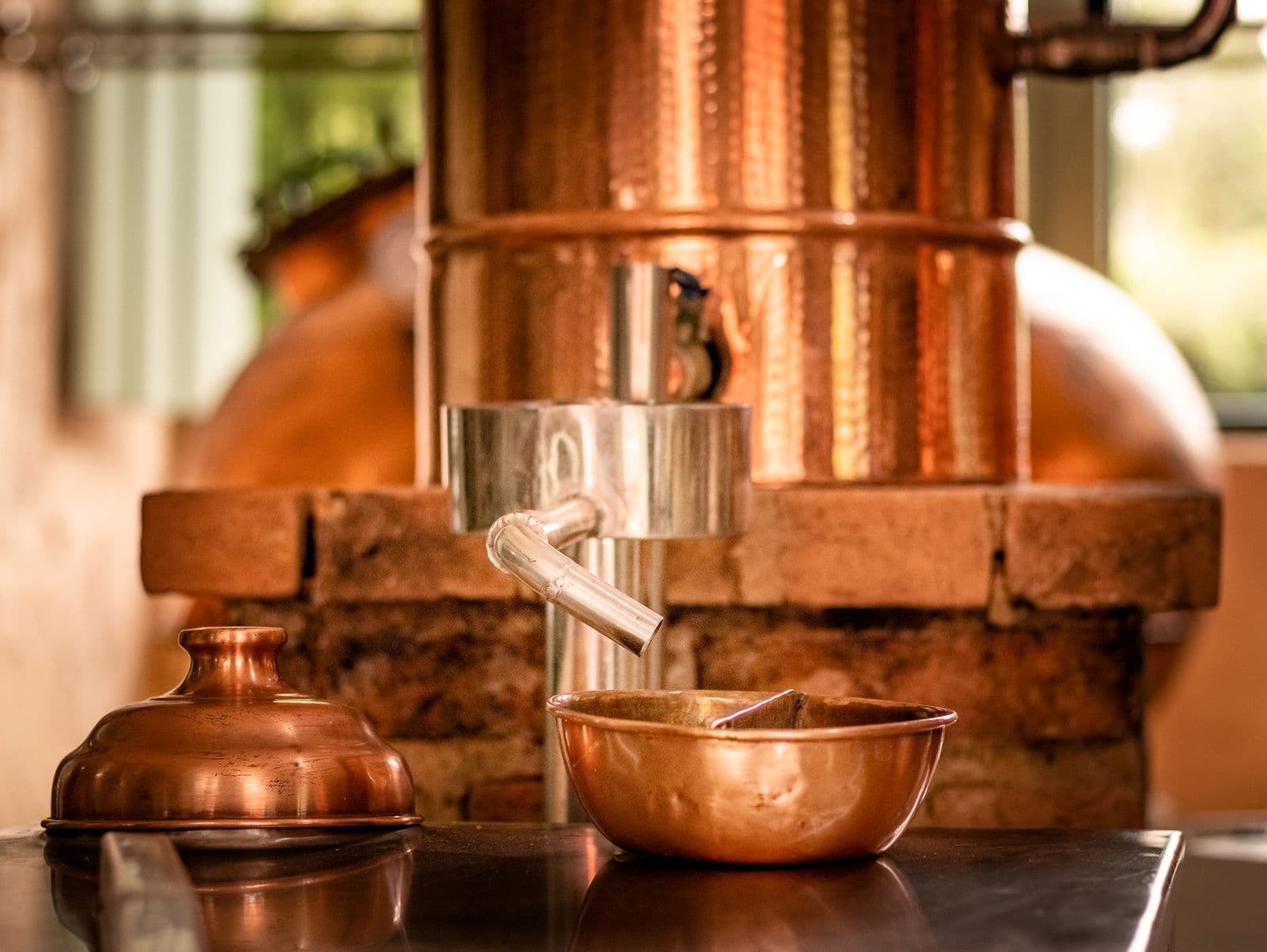
Fresh mint shoots (stem and leaves) are boiled with water in a still; the steam carries the oil to a condenser, and the oil is separated from the water and filled into bottles. The oil goes into medicines, toothpaste, mouthwash, shampoos and skin creams. Shoots are bought from farmers and kept in shade until they are distilled.
Capacity: 10 kg of oil a day, 3,000 kg (3,180 litres) a year at full capacity, sold in 100 ml bottles; year 1 at 50% = 15,900 bottles. Uses 500 tonnes of mint shoots a year at ₹15,000 a tonne.
§2Is it right for you?
Who it is for
A farmer group or trader in a mint-growing belt who can buy shoots directly from growers.
Who it is not for
Someone far from mint farms — fresh shoots cannot travel far.
Advantages
- Simple steam-distillation set-up; machinery is only ₹3.50 L
- Mint is grown widely, so shoots can be bought locally
- The oil sells to pharma, oral-care, cosmetic and aromatherapy makers
- Gross margin in the report is about 28–32%
Drawbacks
- Raw material is seasonal — shoots must be distilled soon after harvest
- Mint oil prices move with the size of the crop
- Most of the fixed cost (₹9 L) is the shed
- A lot of cash is needed to buy shoots in season
Skills you need
- Running a still and oil separator
- Buying shoots from farmers at the right price
- Oil quality testing and grading
- Selling to bulk buyers
Why difficulty 3/5: Seasonal raw material and an oil price that swings with the crop.
§3Market
Who buys
- Pharmaceutical makers (digestive, headache, cold and muscle-pain products)
- Oral-care makers (toothpaste, mouthwash)
- Shampoo, skin-cream and cosmetic makers
- Aromatherapy and essential-oil sellers
How it sells
- Bulk sale to manufacturers
- Packed bottles through retailers
Good to know
- The report links demand to rising use of aromatherapy and natural products.
- The report describes Japanese mint (Mentha arvensis) as the source plant.
§4Raw material & machinery
| Item | Qty | Cost |
|---|---|---|
| Heating vessel (still) | — | — |
| Condenser | — | — |
| Steam pipe | — | — |
| Oil–water separator | — | — |
| Water pump | — | — |
| Cooling tower | — | — |
| Water tank | — | — |
| Bottle filling machine | — | — |
| Plant & machinery (total in the cost table) | — | ₹3.50 lakh |
From: PMEGP sample project report — Peppermint Oil (prepared by Udyami/Samadhan)
- Peppermint shoots (stem and leaves)500 tonnes a year at ₹15,000 a tonne (full capacity); bought from farmers
- Bottles (packing)10 ml to 500 ml; the report uses 100 ml bottles
From: PMEGP sample project report — Peppermint Oil (prepared by Udyami/Samadhan)
Suppliers in Building Business Bazaar
Fragrance & Flavour Development Centre (FFDC), Kannauj · Kannauj →MSME Technology Centre, Imphal · Imphal →
In our raw material database
§5Licences & registration
- Udyam
- GST
- State Pollution Control Board consent
- Fire safety NOC (steam and fuel)
§6Schemes & subsidies
- PMEGPCentralActive15–35% subsidy
- MudraCentralActiveLoan up to ₹20 lakh, no collateral
- CGTMSECentralActiveNo collateral, up to ₹10 crore
PMEGP (the report is a PMEGP sample); MUDRA up to ₹20 L covers the ₹19.44 L cost; CGTMSE for collateral-free credit.
§7Money
How the investment is worked out: Samadhan report: building/shed 1,500 sq ft ₹9.00 L, plant & machinery ₹3.50 L, furniture ₹0.83 L, working capital ₹6.11 L = ₹19.44 L. Land own or rented.
Working capital: ₹6.11 L, of which bank working capital ₹5.50 L — 14 days of raw material and 10 days of finished stock.
Year not printed on the report — check current machinery prices.
§8Export potential
Confirm the HS code in the DGFT ITC(HS) lookup before you export
Export council / board: Spices Board India
- Japanese-mint (Mentha arvensis) oil falls under "other mints" (3301.25); true Mentha piperita oil is 3301.24.
- HS codes are from the WCO HS 2022 list; confirm the 8-digit ITC(HS) line with DGFT or your customs broker.
- You need an Import Export Code (IEC) from DGFT before the first shipment.
§9Risks — where people fail
- Fall in mint oil prices
- Poor or late crop
- Steam and fire safety
- Buyer complaints about purity
§1030 / 60 / 90-day plan
A general plan that applies to any business. A plan for this business will be added after research.
- Days 1–30: Visit a working peppermint (mint) oil distillation unit, ask 10 buyers about price and quantity, and get quotations from 3 suppliers.
- Days 31–60: Udyam and the licences you need (Udyam, GST), a project report (DPR), and the scheme or loan file.
- Days 61–90: Space and machines, trial production, and first deliveries to 10 customers.
§11Who to connect with
Associations, clusters and training institutes — the directory is being built. Connect
§12Watch
There is no episode on this business yet. Shows are coming soon on the Podcast page.
Want to start Peppermint (Mint) Oil Distillation?
DPR, loan file or registration — ask us on WhatsApp.
¶Sources
Data review: 6 October 2026. Spotted a mistake? Report it. For information only — not legal or financial advice.