

§1What this business is
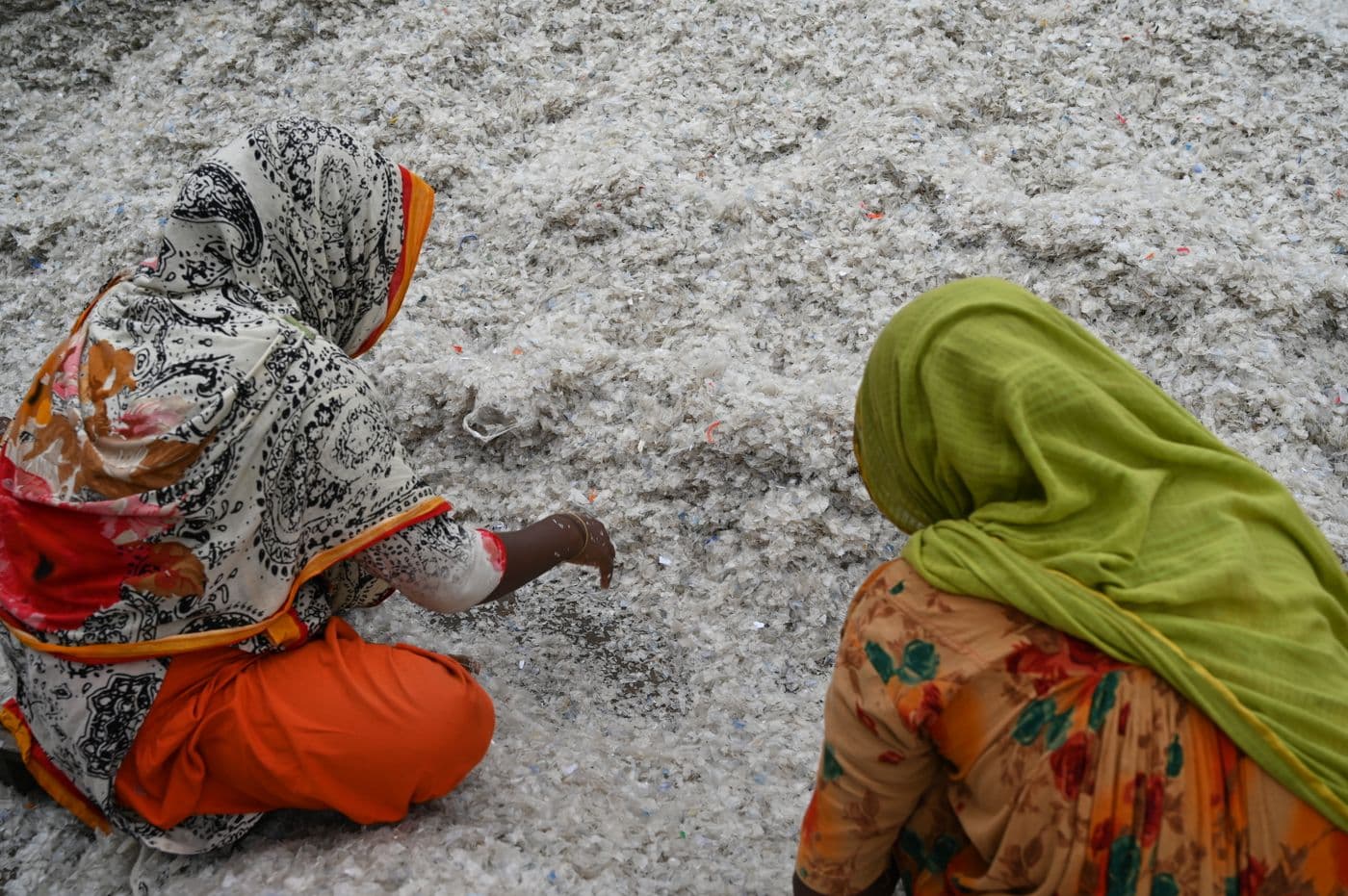
Waste bottles reach the unit through collectors, kabadiwalas and traders. They are opened from bales, sorted by hand (only PET, code 1), ground into chips, hot-washed, friction-washed, separated from caps and labels in a sink-float tank, dried and packed in 100 kg bags. The report plans 200 kg an hour, about 1,600 kg a day. Large recyclers turn the flakes into polyester fibre and other products.
Capacity: 200 kg an hour, 480 tonnes a year (8 hours, 300 days); year 1 at 50% = 240 tonnes.
§2Is it right for you?
Who it is for
Someone with links to scrap traders who can manage a noisy, wet plant and pollution paperwork.
Who it is not for
Someone without a site cleared for industrial use and water.
Advantages
- Waste bottles are available in every town
- Large fibre makers buy flakes in bulk
- Rules on recycled content push demand
- Low break-even in the report (26%)
Drawbacks
- Heavy power load (75 HP)
- Needs a lot of water and an effluent plan
- Bottle prices rise when demand is high
- Freight is a major cost, so location matters
Skills you need
- Scrap buying and grading
- Running washing and drying lines
- Quality testing of flakes
- Pollution and waste-rule compliance
Why difficulty 3/5: Simple chemistry, but power, water, pollution rules and scrap buying make it demanding.
§3Market
Who buys
- Polyester fibre and yarn makers
- Makers of strapping, sheets and other PET products
How it sells
- Direct supply contracts with large recyclers (the report counts 40+ large units in India)
- Flake traders
Good to know
- The report says nearly 70% of PET bottles are recycled in India.
- Freight is a major cost; site the plant close to bottle sources and buyers.
§4Raw material & machinery
| Item | Qty | Cost |
|---|---|---|
| Bale opener | 1 | — |
| Rotary trommel | 1 | — |
| Sorting belt with metal detector | 1 | — |
| Wet granulator / crusher | 1 | — |
| Label remover | 1 | — |
| Sink-float separation tank | 1 | — |
| Hot steam washer | 1 | — |
| Friction washer | 1 | — |
| De-watering / centrifugal dryer | 1 | — |
| Hot-air spiral pipe dryer | 1 | — |
| Water filtration and recycling system | 1 | — |
| Whole line (all items above) | 1 set | ₹20.00 lakh |
From: PMEGP sample project report — PET Bottle Recycling (rPET Flakes) (prepared by Udyami/Samadhan)
- Waste PET bottles (baled)₹32,000 a tonne in year 1; 243 tonnes in year 1
- Bottle price chain (May–Aug 2016 in the report)collectors get ₹14–15 a kg, kabadiwalas ₹24–25, traders sell to recyclers at ₹30–31
From: PMEGP sample project report — PET Bottle Recycling (rPET Flakes) (prepared by Udyami/Samadhan)
Suppliers in Building Business Bazaar
In our raw material database
Recycled plastic granules →Polyester staple fibre (PSF) →PET resin, preforms and bottles →
§5Licences & registration
- Consent to Establish and Operate from the State Pollution Control Board
- Registration as a plastic-waste processor under the Plastic Waste Management Rules
- Udyam registration and GST
- Fire safety clearance; factory licence if the workforce crosses the limit
§6Schemes & subsidies
- PMEGPCentralActive15–35% subsidy
- CGTMSECentralActiveNo collateral, up to ₹10 crore
- Stand-Up IndiaCentralClosed₹10 lakh – ₹1 crore loan
PMEGP fits a ₹36.61 L manufacturing unit; CGTMSE for a collateral-free loan; Stand-Up India for SC/ST or women founders.
§7Money
How the investment is worked out: Samadhan report ₹36.61 L = building and civil work ₹3.00 L, plant and machinery ₹20.00 L, furniture ₹1.50 L, other equipment ₹1.00 L, working capital ₹11.11 L. Term loan ₹22.95 L.
Working capital: Working capital ₹11.11 L; fresh bank limit ₹10.00 L. 15 days of bottles and 15 days of flakes in stock.
Year not printed on the report — check current machinery and raw-material prices.
§8Export potential
Confirm the HS code in the DGFT ITC(HS) lookup before you export
Export council / board: PLEXCONCIL
- Plastic scrap exports and imports are tightly regulated; check DGFT policy and the Basel rules first.
§9Risks — where people fail
- Bottle supply shortage or price spike
- Contaminated flakes rejected by buyers
- Pollution-board action over effluent
- Fire risk in the plastic store
§1030 / 60 / 90-day plan
A general plan that applies to any business. A plan for this business will be added after research.
- Days 1–30: Visit a working pet bottle recycling (rpet flakes) unit, ask 10 buyers about price and quantity, and get quotations from 3 suppliers.
- Days 31–60: Udyam and the licences you need (Consent to Establish and Operate from the State Pollution Control Board, Registration as a plastic-waste processor under the Plastic Waste Management Rules), a project report (DPR), and the scheme or loan file.
- Days 61–90: Space and machines, trial production, and first deliveries to 10 customers.
§11Who to connect with
Associations, clusters and training institutes — the directory is being built. Connect
§12Watch
There is no episode on this business yet. Shows are coming soon on the Podcast page.
Want to start PET Bottle Recycling (rPET Flakes)?
DPR, loan file or registration — ask us on WhatsApp.
¶Sources
Data review: 6 October 2026. Spotted a mistake? Report it. For information only — not legal or financial advice.