

§1What this business is
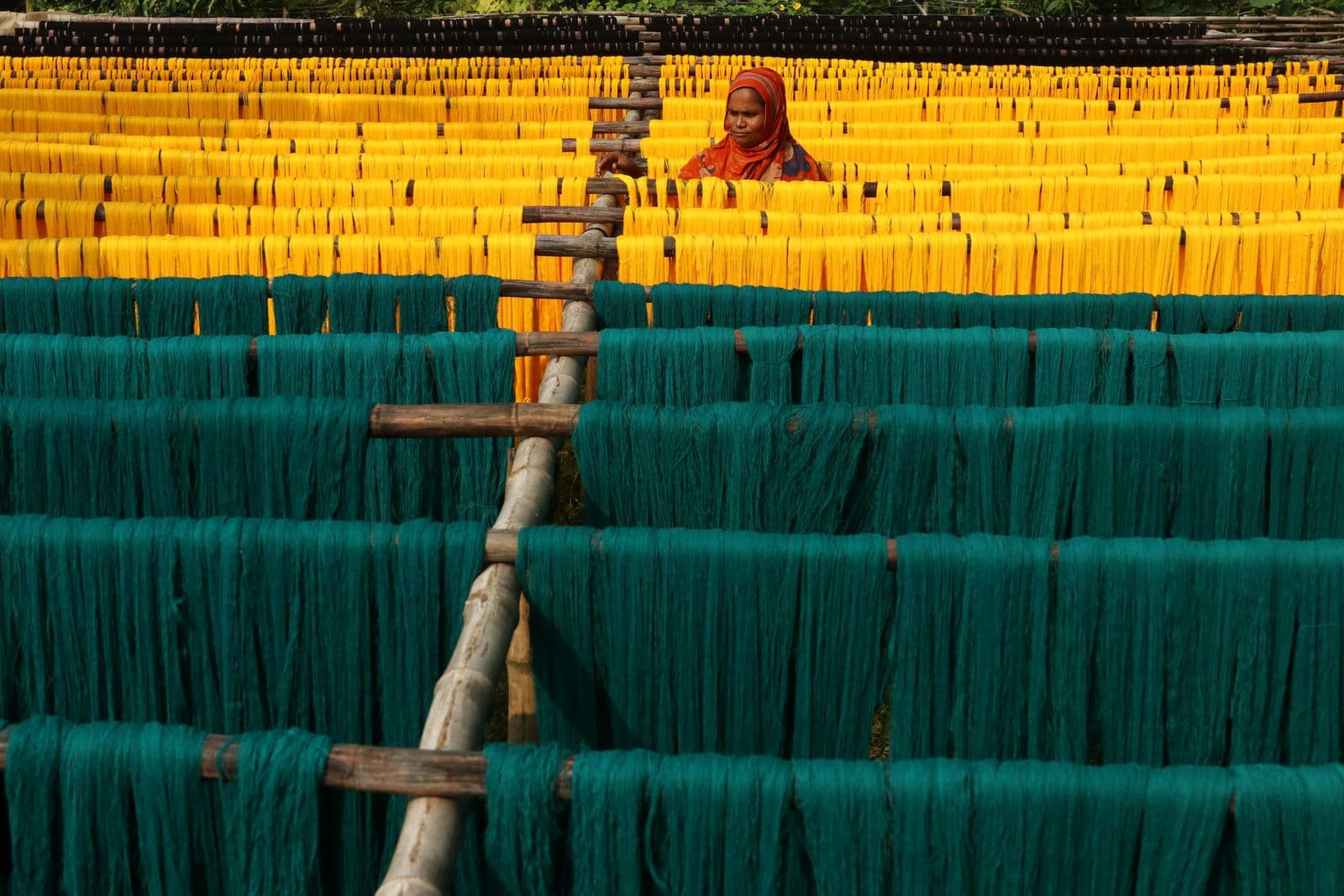
Sarees are received, relaxed and prepared, dyed in jet-dyeing and drum machines with dyes chosen for the fibre (reactive, direct, sulphur, vat, pigment, acid or disperse), the colour is fixed, and the cloth is washed, centrifuged, dried and finished. The report plans 500 pieces a day. Work comes from saree traders, weavers and boutiques.
Capacity: 500 pieces a day (10-hour shift); year 1 at 50%.
§2Is it right for you?
Who it is for
Someone in a saree or textile cluster with dyeing experience.
Who it is not for
Someone without a site where effluent treatment is allowed.
Advantages
- Steady job-work from saree clusters
- Moderate investment (₹15.32 L)
- Wedding and festival seasons bring peaks
- Can add other garments later
Drawbacks
- Coloured waste water needs treatment
- Colour matching mistakes are costly
- Depends on a few trader clients
- Dye prices move with chemicals markets
Skills you need
- Dye chemistry and shade matching
- Machine operation
- Effluent handling
- Dealing with traders
Why difficulty 3/5: Dyeing skill plus effluent rules make it more than a machine business.
§3Market
Who buys
- Saree traders and wholesalers
- Weavers and boutiques
How it sells
- Job-work orders in textile clusters
- Own dyed and printed sarees through retailers
Good to know
- The report puts India's textile chemicals market at US$ 1.5 billion in 2017.
§4Raw material & machinery
| Item | Qty | Cost |
|---|---|---|
| Horizontal paddle machine | 1 | ₹1.00 lakh |
| Drum machine | 1 | ₹2.70 lakh |
| Washing-centrifugal machine | 1 | ₹2.55 lakh |
| Jet-dyeing centrifugal machine | 1 | ₹4.50 lakh |
From: PMEGP sample project report — Saree Dyeing and Printing (prepared by Udyami/Samadhan)
- Dyes: reactive, direct, sulphur, vat, pigment, acid and disperse₹18.75 lakh in year 1 with chemicals
- Sarees (usually supplied by the client for job-work)
From: PMEGP sample project report — Saree Dyeing and Printing (prepared by Udyami/Samadhan)
§5Licences & registration
- Consent to Establish and Operate from the State Pollution Control Board (dyeing is a water-polluting activity)
- Effluent treatment plant or membership of a common effluent plant
- Udyam registration and GST
- Groundwater permission if you draw borewell water
§6Schemes & subsidies
- PMEGPCentralActive15–35% subsidy
- MudraCentralActiveLoan up to ₹20 lakh, no collateral
- CGTMSECentralActiveNo collateral, up to ₹10 crore
- Stand-Up IndiaCentralClosed₹10 lakh – ₹1 crore loan
PMEGP and MUDRA fit a ₹15.32 L unit; CGTMSE for a collateral-free loan; Stand-Up India for SC/ST or women founders.
§7Money
How the investment is worked out: Samadhan report ₹15.32 L = plant and machinery ₹10.75 L, furniture ₹1.20 L, working capital ₹3.37 L; land own or rented.
Working capital: Working capital ₹3.37 L; bank demand ₹3.03 L. 15 days of dyes, 10 days of finished goods.
Year not printed on the report — check current machinery and raw-material prices.
§8Export potential
A job-work dyer exports indirectly through saree exporters; the HS code depends on the fabric.
§9Risks — where people fail
- Pollution-board action over effluent
- Shade or bleeding complaints
- Seasonal slack
- Slow payment from traders
§1030 / 60 / 90-day plan
A general plan that applies to any business. A plan for this business will be added after research.
- Days 1–30: Visit a working saree dyeing and printing unit, ask 10 buyers about price and quantity, and get quotations from 3 suppliers.
- Days 31–60: Udyam and the licences you need (Consent to Establish and Operate from the State Pollution Control Board (dyeing is a water-polluting activity), Effluent treatment plant or membership of a common effluent plant), a project report (DPR), and the scheme or loan file.
- Days 61–90: Space and machines, trial production, and first deliveries to 10 customers.
§11Who to connect with
Associations, clusters and training institutes — the directory is being built. Connect
§12Watch
There is no episode on this business yet. Shows are coming soon on the Podcast page.
Want to start Saree Dyeing and Printing?
DPR, loan file or registration — ask us on WhatsApp.
¶Sources
Data review: 6 October 2026. Spotted a mistake? Report it. For information only — not legal or financial advice.