

§1What this business is
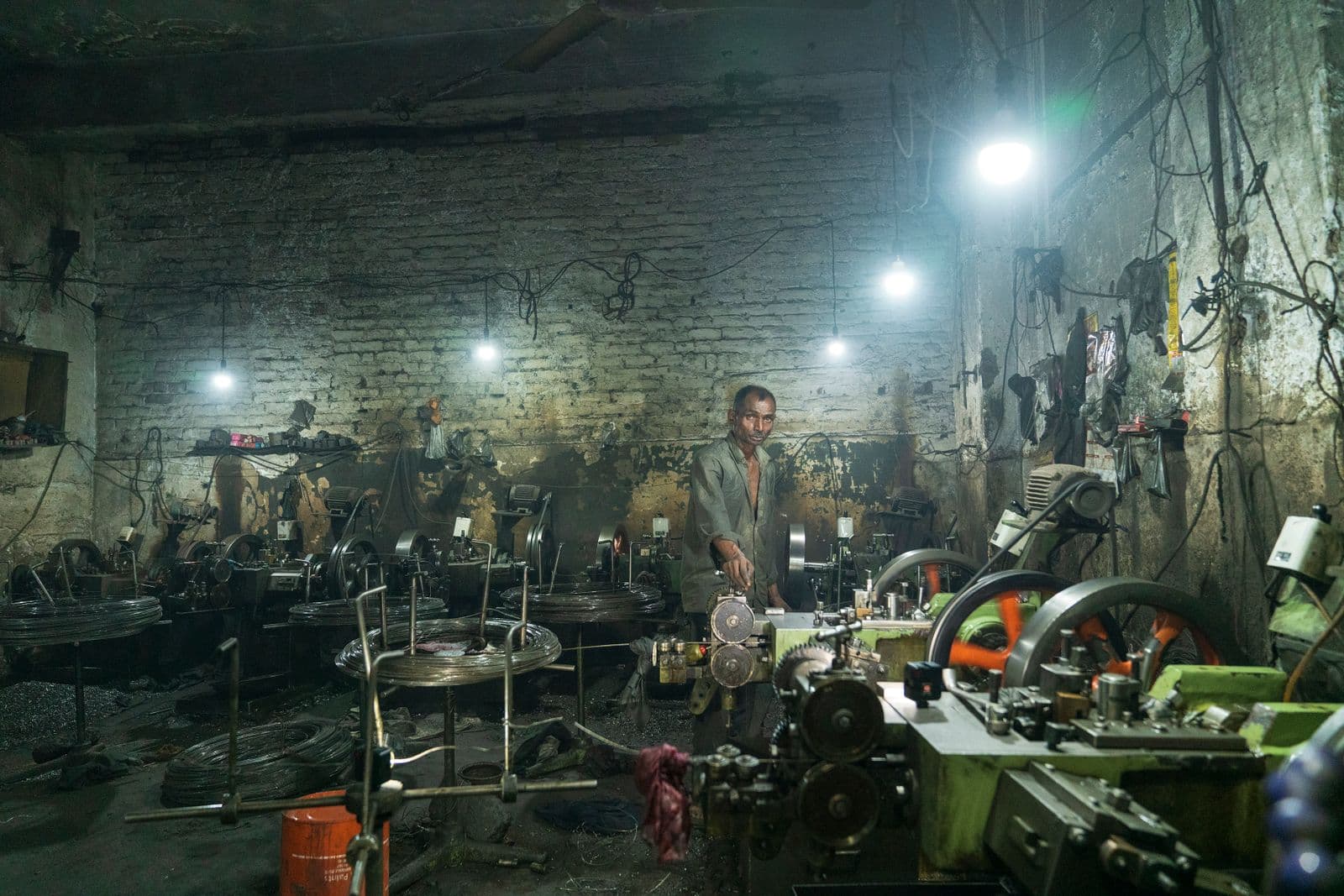
Self-tapping screws cut their own thread as they are driven into a hole, and are used to join sheet-metal parts in bus bodies, rail coaches and steel furniture. They are made from HB wire on automatic machines: the head is formed on a header, slotted on a slotting machine and the thread is rolled on a thread-rolling machine. The screws are then hardened and tempered in electric furnaces and bright zinc plated (nickel plating where sea weather is a concern). The profile follows IS 7169, IS 7170 and IS 7173.
Capacity: 1,20,000 packets of 1,000 screws a year, worth ₹96 L at ₹80 a packet (single shift, 25 days a month, 75% efficiency).
§2Is it right for you?
Who it is for
A fastener trader or mechanical engineer who knows cold heading and can manage a plating section safely.
Who it is not for
Anyone not ready to handle pollution consent and poisonous plating chemicals.
Advantages
- Automatic machines do the work; the profile says there is very little manual work
- Used wherever sheet metal is joined — bus bodies, rail coaches, steel furniture
- Demand exists in both home and export markets, as the profile notes
- Different head types and sizes can be made on the same line
Drawbacks
- Thin margin: 8.3% of sales and a break-even at 72%
- Plating and heat treatment use cyanide salts, which are poisonous
- A large team of 41 people for a small-scale unit
- Many machines to keep running — 8 headers, 10 slotters, 5 thread rollers
Skills you need
- Setting header, slotting and thread-rolling machines
- Hardening and tempering small parts
- Zinc electroplating and effluent treatment
- Gauging threads to the Indian Standards
Why difficulty 4/5: Many machines, heat treatment and a plating section with poisonous chemicals, all on a thin margin.
§3Market
Who buys
- Bus body builders
- Rail coach builders
- Steel furniture makers
- Other sheet-metal fabricators
How it sells
- Hardware and fastener wholesalers
- Direct supply to fabricators and body builders
Good to know
- Selling price in the profile: ₹80 for a packet of 1,000 screws.
- The profile says many new units are coming up as demand grows.
§4Raw material & machinery
| Item | Qty | Cost |
|---|---|---|
| Header machine, 4 x 25 mm capacity, 1 HP motor | 3 | ₹1,50,000 |
| Header machine, 5 x 35 mm capacity, 1.5 HP motor | 2 | ₹1,20,000 |
| Header machine, 6 x 40 mm capacity, 2 HP motor | 3 | ₹2,10,000 |
| Screw head slotting machine with 1 HP motor | 10 | ₹3,00,000 |
| Automatic thread rolling machine, 6 mm capacity, 3 HP motor | 3 | ₹2,25,000 |
| Automatic thread rolling machine, 4 mm capacity, 2 HP motor | 2 | ₹1,00,000 |
| Electrically heated tilting rotary furnace, 40 kg | 1 | ₹2,50,000 |
| Electric tempering furnace, 450 x 600 mm | 1 | ₹1,25,000 |
| Zinc plating barrels, 24 x 12 inch (set of three) | 1 set | ₹2,30,000 |
| Rectifier, 16 V, 1,000 A | 1 | ₹1,10,000 |
| Surface grinding machine, 500 x 250 mm, 3 HP motor | 1 | ₹85,000 |
| Centre lathe, 6 ft, 3 HP motor | 1 | ₹70,000 |
| Dies, tools, thread rolling dies and measuring instruments | — | ₹1,50,000 |
From: DC-MSME project profile — Self Tapping Screw (2009)
- HB wire in coils, 8 to 13 gauge15 tonnes a month at ₹26,000 a tonne
- Plating chemicals and consumables₹30,000 a month
- Heat-treatment salts and consumables₹10,000 a month
From: DC-MSME project profile — Self Tapping Screw (2009)
§5Licences & registration
- Udyam registration
- GST registration
- Factory licence where the worker and power limits apply
- Trade licence from the local body
- State Pollution Control Board consent (electroplating and heat treatment with cyanide salts)
- Authorisation for hazardous waste from plating
Start it in your state
Pick your state: today’s cost, central + state subsidy, raw material, land and help, on one page.
§6Schemes & subsidies
At ₹39.14 L the project is within the PMEGP ceiling of ₹50 lakh for manufacturing. CGTMSE can cover the bank loan without collateral. It is above the MUDRA limit of ₹20 lakh.
§7Money
How the investment is worked out: Fixed capital ₹25.90 L (machines, dies and tools, 10% installation and electrification ₹2.241 L, office equipment and furniture ₹1.00 L, pre-operative ₹0.25 L) + working capital for 2 months ₹13.24 L = ₹39.14 L. Shed is rented.
Working capital: Working capital for 2 months is ₹13.24 L. Monthly running cost is ₹6.62 L: raw material ₹4.20 L (15 tonnes of HB wire at ₹26,000 a tonne plus plating chemicals), staff ₹1.55 L, utilities ₹0.09 L and other expenses ₹0.78 L.
Prices from 2009 — machinery costs will be higher now.
§8Export potential
Confirm the HS code in the DGFT ITC(HS) lookup before you export
Export council / board: EEPC India
- The profile says the product has potential in international markets but gives no export figures.
§9Risks — where people fail
- Cyanide effluent harming workers or breaking pollution rules
- Wire price rising with a margin of only 8%
- Soft or brittle screws from poor heat treatment
- Cheap screws from large fastener makers
§1030 / 60 / 90-day plan
A general plan that applies to any business. A plan for this business will be added after research.
- Days 1–30: Visit a working self-tapping screw manufacturing unit, ask 10 buyers about price and quantity, and get quotations from 3 suppliers.
- Days 31–60: Udyam and the licences you need (Udyam registration, GST registration), a project report (DPR), and the scheme or loan file.
- Days 61–90: Space and machines, trial production, and first deliveries to 10 customers.
§11Who to connect with
§12Watch
There is no episode on this business yet. Shows are coming soon on the Podcast page.
Want to start Self-Tapping Screw Manufacturing?
DPR, loan file or registration — ask us on WhatsApp.
¶Sources
Data review: 6 October 2026. Spotted a mistake? Report it. For information only — not legal or financial advice.