

§1What this business is
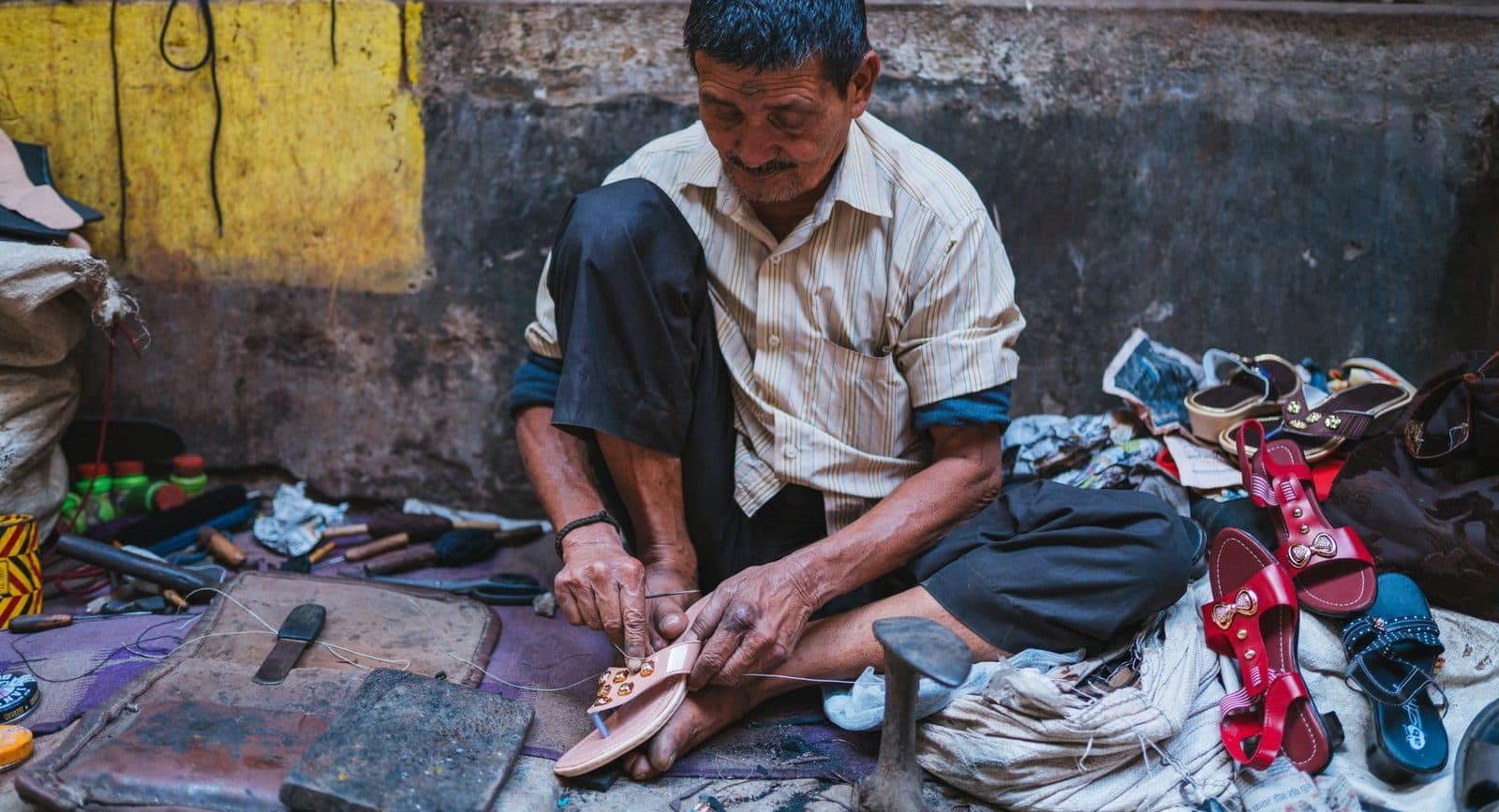
Rubber sole sheets are cut into soles, holes are drilled, straps are fitted, colour and brand are printed, and the pairs are dried and packed. The report plans 2,10,000 pairs a year with 3–4 people, selling at ₹35 a pair in year 1. Every household buys slippers, but big brands and cheap imports compete hard.
Capacity: 2,10,000 pairs a year at full capacity (700 pairs a day over 300 days); 60% in year 1.
§2Is it right for you?
Who it is for
Someone with retail or wholesale links in small towns who can sell in volume.
Who it is not for
Someone expecting a high margin on each pair.
Advantages
- Every household buys slippers — steady demand
- Simple process, quick to start (15-day setup in the report)
- Small team of 3–4
- Low machinery cost
Drawbacks
- Crowded market with big brands and cheap imports
- Raw material takes most of the sales value (₹31.19 L of ₹39.69 L in year 1)
- Low price per pair
- Needs strong local marketing
Skills you need
- Cutting and finishing quality
- Buying sole sheets and straps well
- Branding and local advertising
- Wholesale distribution
Why difficulty 2/5: Simple to make; the hard part is selling volume against big brands.
§3Market
Who buys
- Households in towns and villages
- Footwear retailers
How it sells
- Footwear wholesalers
- Local shops and weekly markets
- Own brand with local advertising (newspaper, leaflets, banners)
Good to know
- The report's selling price is ₹35 a pair in year 1, rising to ₹52 by year 5.
§4Raw material & machinery
| Item | Qty | Cost |
|---|---|---|
| Plant & machinery for cutting, hole drilling/strapping and printing (not itemised in the report) | 1 set | ₹2.70 lakh |
| Other equipment | LS | ₹2.00 lakh |
From: PMEGP sample project report — Slipper Making (prepared by Udyami/Samadhan)
- Rubber sole sheets10,500 sheets a year at full capacity; ₹430 a sheet in year 1 (report)
- Straps2 per pair, 4,20,000 a year at full capacity; ₹3 each in year 1 (report)
From: PMEGP sample project report — Slipper Making (prepared by Udyami/Samadhan)
Suppliers in Building Business Bazaar
Central Footwear Training Institute, Agra · Agra →Central Footwear Training Institute, Chennai · Chennai →S.P. Engg. Co · Kanpur →Industrial Machines (Delhi) Pvt. Ltd · Delhi →Masa Engineering (India) · Kolkata →Peelu Sales Corporation · Agra →Prototype Development · Chennai →
§5Licences & registration
- Udyam registration
- GST registration
- Trade licence from the local body
- BIS certification if your footwear type is covered by the footwear Quality Control Order — check before starting
- State Pollution Control Board consent to establish and operate
§6Schemes & subsidies
- PMEGPCentralActive15–35% subsidy
- MudraCentralActiveLoan up to ₹20 lakh, no collateral
- CGTMSECentralActiveNo collateral, up to ₹10 crore
- Stand-Up IndiaCentralClosed₹10 lakh – ₹1 crore loan
PMEGP (the report is a PMEGP sample), MUDRA up to ₹20 lakh, CGTMSE; Stand-Up India for SC/ST or women founders.
§7Money
How the investment is worked out: Samadhan report cost table: building & civil work (5,000 sq ft) ₹3.00 L, plant & machinery ₹2.70 L, other equipment ₹2.00 L, working capital ₹3.33 L = ₹11.03 L (term loan ₹6.93 L, cash credit ₹3.00 L, own money ₹1.10 L). The cover page prints ₹14.59 L, which does not match its own table.
Working capital: Working capital ₹3.33 L in the cost (cash credit ₹3.00 L); 15 days of stock.
Year not printed on the report — check current machinery and material prices.
§8Export potential
Confirm the HS code in the DGFT ITC(HS) lookup before you export
Export council / board: Council for Leather Exports (footwear)
- Get an Import Export Code (IEC) from DGFT before exporting.
- Export makes sense only after you have steady quality and volume.
§9Risks — where people fail
- Rubber price rises
- Competition from big brands
- BIS footwear quality rules
- Unsold stock of slow designs
§1030 / 60 / 90-day plan
A general plan that applies to any business. A plan for this business will be added after research.
- Days 1–30: Visit a working slipper (hawai chappal) making unit, ask 10 buyers about price and quantity, and get quotations from 3 suppliers.
- Days 31–60: Udyam and the licences you need (Udyam registration, GST registration), a project report (DPR), and the scheme or loan file.
- Days 61–90: Space and machines, trial production, and first deliveries to 10 customers.
§11Who to connect with
Associations, clusters and training institutes — the directory is being built. Connect
§12Watch
There is no episode on this business yet. Shows are coming soon on the Podcast page.
Want to start Slipper (Hawai Chappal) Making?
DPR, loan file or registration — ask us on WhatsApp.
¶Sources
Data review: 6 October 2026. Spotted a mistake? Report it. For information only — not legal or financial advice.