

§1What this business is
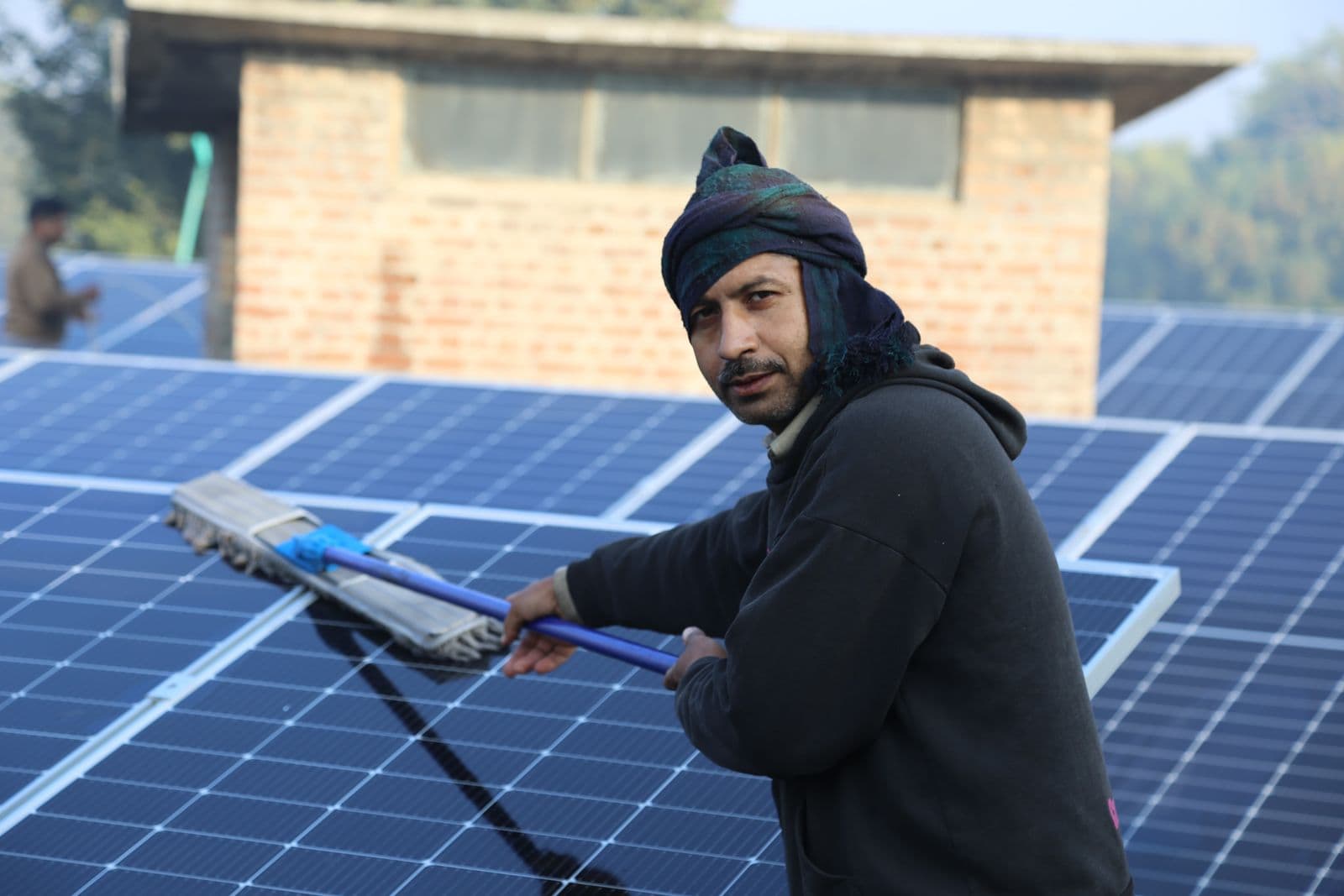
A training centre with classrooms, a workshop, demonstration solar units and a hostel. Rural youth learn to install and repair rooftop systems, solar pumps and street lights, then get help finding jobs with solar companies. Extra income comes from short courses for farmers and small businesses, installation and maintenance contracts, and selling small solar products (lanterns, chargers) assembled during practicals.
§2Is it right for you?
Who it is for
A solar installer or electrical engineer with industry contacts who wants to build a skilling and service centre.
Who it is not for
Someone without solar know-how or placement links — trainees pay for jobs, not only for certificates.
Advantages
- Every new rooftop system and solar pump needs trained hands to fit and service it
- Several income lines: fees, installation contracts, short courses, small product sales
- Government, NGO and CSR skilling money can fill batches
- Trainees from remote villages become local service points
Drawbacks
- Large project cost (₹165 L) for a training business
- Fee income is low because rural youth need subsidised rates
- Batches depend on mobilisation in scattered hill villages
- Placement results decide the centre's reputation
Skills you need
- Solar PV installation and fault finding
- Curriculum and batch planning
- Placement tie-ups with solar companies
- Village mobilisation through panchayats and SHGs
Why difficulty 4/5: Big investment, and income depends on filling batches and placing trainees.
§3Market
Who buys
- Rural youth seeking jobs or self-employment
- Solar companies needing installers
- Farmers, women entrepreneurs and small businesses (short courses)
- Government departments and CSR programmes
How it sells
- Village mobilisation through NGOs, panchayats and SHGs
- Website, social media and online registration
- Tie-ups with educational institutions and solar companies
Good to know
- The profile expects average revenue of ₹75 L a year against ₹60 L of costs.
- Suggested districts: Almora, Pithoragarh, Chamoli, Uttarkashi, Tehri Garhwal; regional centres in Dehradun, Haldwani, Haridwar.
§4Raw material & machinery
| Item | Qty | Cost |
|---|---|---|
| Solar training kits | set | — |
| Demonstration solar panels (rooftop and ground-mounted) | set | — |
| Inverters and batteries for installation practice | set | — |
| Charge controllers for testing and assembly | set | — |
| Tools and safety gear (gloves, helmets, insulated tools) | set | — |
| Testing instruments (multimeters) | set | — |
| Workshop and lab equipment (total) | lot | ₹35 lakh |
From: Devbhoomi Udyamita Yojana (Uttarakhand DUY) project profile — Rural Solar Technician Training Hub
- Consumables: wires, fuses, junction boxes, connectorsused up in practical exercises
- Small solar panels, LED bulbs and circuit boardsfor hands-on training kits
- Training kits and materials₹15 L in the project cost
From: Devbhoomi Udyamita Yojana (Uttarakhand DUY) project profile — Rural Solar Technician Training Hub
§5Licences & registration
- Udyam
- GST
- Shops and establishments registration
- Training-partner affiliation with the sector skill council (for certified courses)
- Electrical contractor licence for paid installation work
§6Schemes & subsidies
- PMEGPCentralActive15–35% subsidy
- MudraCentralActiveLoan up to ₹20 lakh, no collateral
- CGTMSECentralActiveNo collateral, up to ₹10 crore
- Stand-Up IndiaCentralClosed₹10 lakh – ₹1 crore loan
The profile counts a ₹30 L government subsidy/grant and ₹10 L CSR funding. PMEGP and MUDRA cover only a small part of a ₹165 L project; CGTMSE can guarantee the bank loan; Stand-Up India suits SC/ST and women promoters.
§7Money
How the investment is worked out: Land and building ₹40 L + infrastructure and classrooms ₹25 L + workshop and lab equipment ₹35 L + training kits ₹15 L + hostel ₹20 L + admin setup ₹10 L + marketing ₹5 L + working capital ₹15 L = ₹165 L. Finance in the profile: promoter ₹40 L, bank loan ₹85 L, government subsidy/grant ₹30 L, CSR/NGO ₹10 L.
Working capital: Working capital ₹15 L in the project cost.
Year not printed on the DUY profile — check current prices.
§8Export potential
A local training service; it has no goods to export.
§9Risks — where people fail
- Empty seats if mobilisation is weak
- Dependence on grants and CSR funding
- Electrical safety during practical training
- Fast change in solar technology makes kits outdated
§1030 / 60 / 90-day plan
A general plan that applies to any business. A plan for this business will be added after research.
- Days 1–30: Visit a working rural solar technician training centre unit, ask 10 buyers about price and quantity, and get quotations from 3 suppliers.
- Days 31–60: Udyam and the licences you need (Udyam, GST), a project report (DPR), and the scheme or loan file.
- Days 61–90: Space and machines, trial production, and first deliveries to 10 customers.
§11Who to connect with
Associations, clusters and training institutes — the directory is being built. Connect
§12Watch
There is no episode on this business yet. Shows are coming soon on the Podcast page.
Want to start Rural Solar Technician Training Centre?
DPR, loan file or registration — ask us on WhatsApp.
¶Sources
Data review: 6 October 2026. Spotted a mistake? Report it. For information only — not legal or financial advice.