

§1What this business is
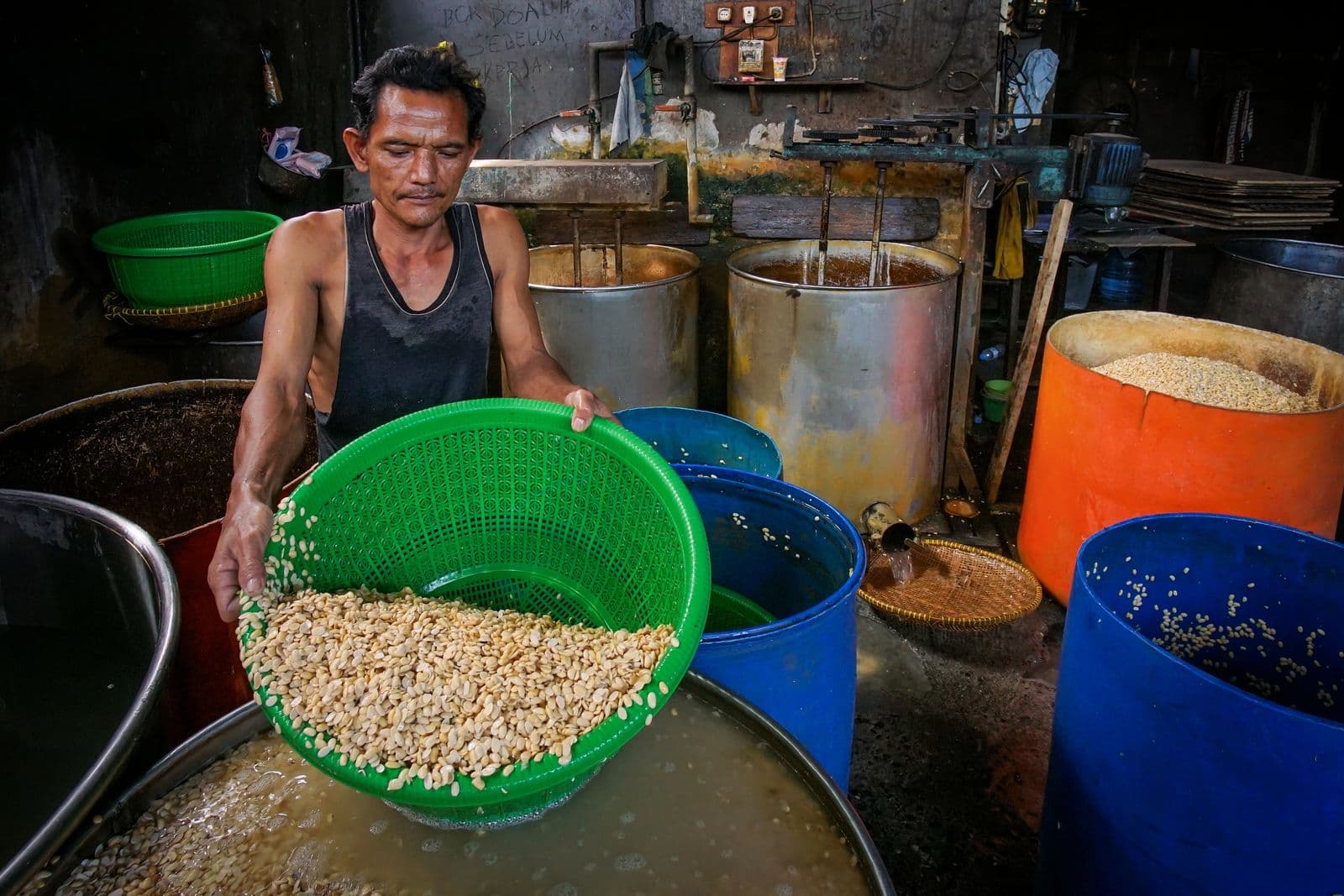
Soya flour and water are mixed into a thick slurry, cooked in the barrel of an extruder and pushed through a die where a cutter slices the pieces; escaping steam gives the meat-like texture. The chunks are dried, checked and packed. The report plans 500 kg a day, selling at ₹95 a kg in year 1. It says 100 g of uncooked chunks have 52 g of protein.
Capacity: 500 kg a day, 1,50,000 kg a year; 50% in year 1.
§2Is it right for you?
Who it is for
A food-business owner with kirana and wholesale reach.
Who it is not for
Someone without a sales network or a reliable power connection.
Advantages
- Soya chunks are a kitchen staple for vegetarians
- Raw material (soya flour) is easy to get
- Gross margin 23–29% in the report
- Fits PMFME food-processing support
Drawbacks
- High power load (40 kW)
- Low profit in early years (3% in year 1)
- Strong national brands
- Selling costs are high in the report
Skills you need
- Extruder operation
- Drying and moisture control
- Packaging and labelling
- Distributor management
Why difficulty 3/5: Simple process; brand competition and power load are the hurdles.
§3Market
Who buys
- Households
- Restaurants and caterers
- Hostels and canteens
How it sells
- Traditional grocers (kirana) through distributors
- Supermarkets and convenience stores
- Online retail
Good to know
- Average selling price ₹95 a kg in year 1, rising to ₹116 by year 5 (report).
- Two types are sold: normal-size and mini chunks.
§4Raw material & machinery
| Item | Qty | Cost |
|---|---|---|
| Plant & machinery: flour mixer, cooking extruder with die cutter, dryer and packing (not itemised in the report) | 1 set | ₹15.50 lakh |
From: PMEGP sample project report — Soya Chunks (prepared by Udyami/Samadhan)
- Soya flour1,65,000 kg a year at ₹40 a kg at full capacity; average cost ₹44 a kg in year 1 (report)
- Watermixed into the flour slurry
- Packing material₹1.38 L in year 1 (report)
From: PMEGP sample project report — Soya Chunks (prepared by Udyami/Samadhan)
In our raw material database
§5Licences & registration
- FSSAI licence or registration (by turnover)
- Udyam registration
- GST registration
- State Pollution Control Board consent to establish and operate
- Legal Metrology registration for packaged goods
§6Schemes & subsidies
- PMFMECentralUnclear35% subsidy, up to ₹10 lakh
- PMEGPCentralActive15–35% subsidy
- CGTMSECentralActiveNo collateral, up to ₹10 crore
- Stand-Up IndiaCentralClosed₹10 lakh – ₹1 crore loan
PMFME (35% subsidy up to ₹10 lakh), PMEGP, CGTMSE and Stand-Up India for SC/ST or women founders. Above MUDRA's ₹20 lakh limit.
§7Money
How the investment is worked out: Samadhan report: plant & machinery ₹15.50 L, furniture ₹1.50 L, working capital ₹5.55 L = ₹22.55 L (term loan ₹15.30 L, working capital ₹5.00 L, own money ₹2.26 L); building 2,000 sq ft own or rented.
Working capital: Working capital ₹5.55 L (bank ₹5.00 L); 20 days of raw material and 10 days of finished stock.
Year not printed on the report — check current machinery and material prices.
§8Export potential
Confirm the HS code in the DGFT ITC(HS) lookup before you export
Export council / board: APEDA
- Get an Import Export Code (IEC) from DGFT before exporting.
§9Risks — where people fail
- Soya flour price swings
- Power cuts stopping the extruder
- Brand competition
- Food-safety failures
§1030 / 60 / 90-day plan
A general plan that applies to any business. A plan for this business will be added after research.
- Days 1–30: Visit a working soya chunks manufacturing unit, ask 10 buyers about price and quantity, and get quotations from 3 suppliers.
- Days 31–60: Udyam and the licences you need (FSSAI licence or registration (by turnover), Udyam registration), a project report (DPR), and the scheme or loan file.
- Days 61–90: Space and machines, trial production, and first deliveries to 10 customers.
§11Who to connect with
Associations, clusters and training institutes — the directory is being built. Connect
§12Watch
There is no episode on this business yet. Shows are coming soon on the Podcast page.
Want to start Soya Chunks Manufacturing?
DPR, loan file or registration — ask us on WhatsApp.
¶Sources
Data review: 6 October 2026. Spotted a mistake? Report it. For information only — not legal or financial advice.