

§1What this business is
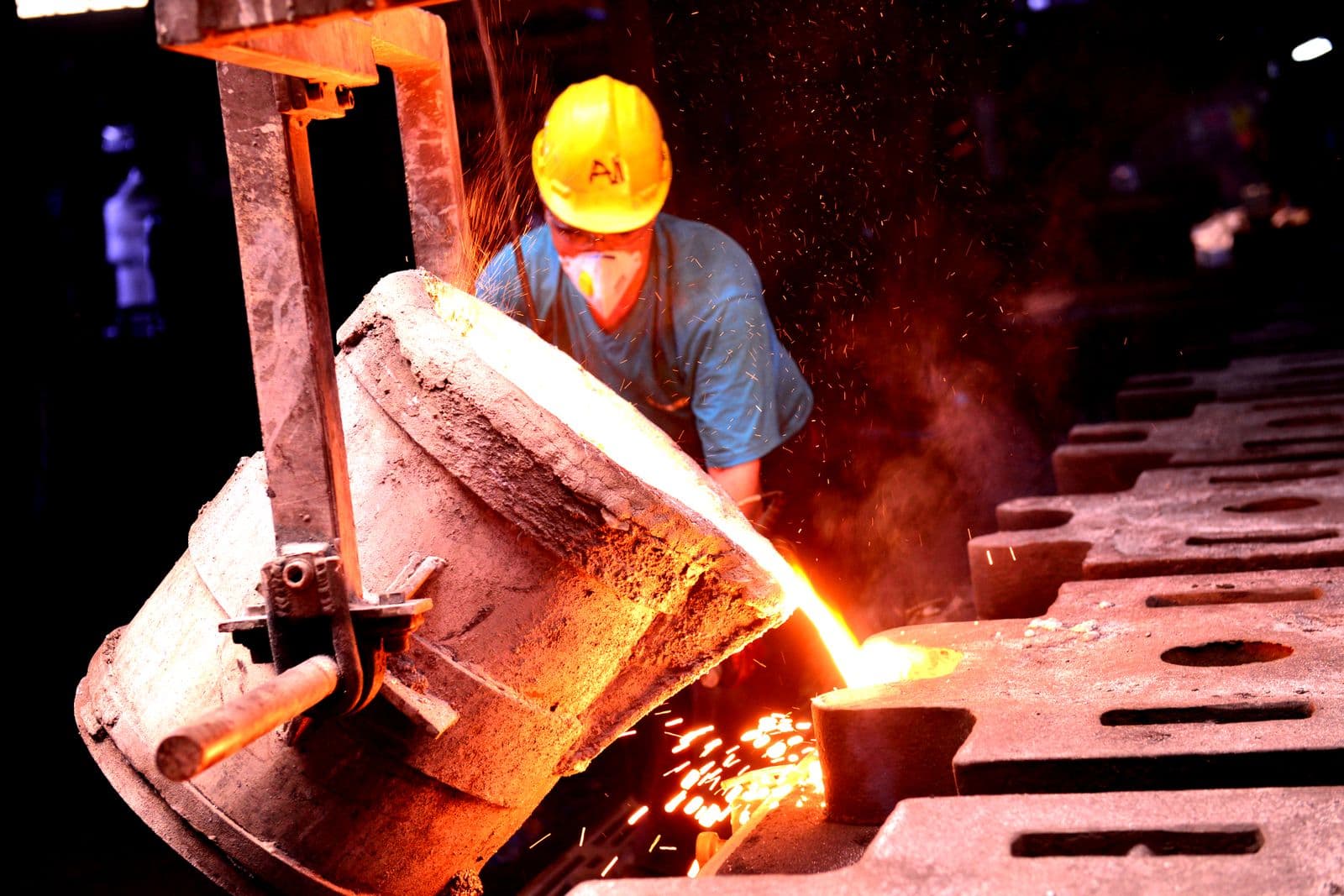
Steel rods are cut to length on a shearing or hacksaw machine as the customer's drawing needs. The pieces are heated to forging temperature in an oil-fired furnace and shaped between dies under a pneumatic or drop hammer. The extra metal is trimmed off on a press. Parts are then normalised, checked for hardness, shot-blasted and cleaned before despatch. Forged parts are stronger than cast or machined ones, so they are used where safety and strength matter. The unit works to each customer's specification.
Capacity: 684 MT of forgings a year in the profile's sales estimate, on a single shift of 25 days a month at 75% efficiency.
§2Is it right for you?
Who it is for
A metallurgist or forge-shop hand with experience, land outside a residential area and orders from vehicle or machine makers.
Who it is not for
A first-time founder with no forging experience or no confirmed buyer.
Advantages
- Forged parts are needed wherever strength and safety matter
- Once a part is approved, orders for it repeat
- Machining can be added later to earn more per part
Drawbacks
- High break-even of 60.77% and a profit of only 9.09% on sales
- Heat, noise, dust and scale; pollution clearance is a must
- Furnace oil and power are large running costs
- A new die is needed for every new part
Skills you need
- Heating steel to the right forging temperature
- Die design and die maintenance
- Operating power hammers safely
- Heat treatment and hardness testing
Why difficulty 4/5: Heavy machines, hot work, pollution clearance and demanding industrial buyers.
§3Market
Who buys
- Vehicle and auto part makers
- Machine and engineering goods makers
- Defence and aerospace suppliers
- Machine shops that finish forged blanks
How it sells
- Job orders against customer drawings
- Approved-vendor supply to manufacturers
- Sub-contract work for larger forge shops
Good to know
- The profile names aerospace, defence and automotive as the largest buyers of forgings.
- It takes a selling price of ₹30,000 per MT and scrap at ₹10,000 a tonne (2003).
§4Raw material & machinery
| Item | Qty | Cost |
|---|---|---|
| Heavy duty centre lathe with 3 HP motor | 1 | ₹1,10,000 |
| Double ended pedestal grinder, 2 HP | 1 | ₹11,600 |
| High speed shaping machine, 630 mm stroke, 3 HP | 1 | ₹1,15,000 |
| Electric normalising furnace, 1500 mm × 600 mm | 1 | ₹1,70,000 |
| Oil fired pre-heating furnace with burners, blowers and oil tank | 1 | ₹1,75,000 |
| Pillar drill machine, 1 HP | 1 | ₹12,000 |
| Platform weighing machine, 500 kg | 1 | ₹12,000 |
| Pneumatic power hammer, 500 kg, with 33 HP motor | 1 | ₹5,40,000 |
| Power hacksaw, 1 HP | 1 | ₹30,000 |
| Rockwell hardness tester | 1 | ₹40,000 |
| Friction drop hammer, 500 kg, with 25 HP motor | 1 | ₹4,00,000 |
| Shot blasting chamber with 7.5 HP motor | 1 | ₹3,60,000 |
| Tools, dies and equipment | — | ₹1,50,000 |
| Trimming power press, 60 tonnes, with 5 HP motor | 1 | ₹1,75,000 |
| Installation and electrification | — | ₹1,79,000 |
From: DC-MSME project profile — Steel Forgings (2003)
- Forging quality steel ingots or rods to the customer's specification60 MT a month at ₹19,000 per MT (2003)
- Die steel and MS plates₹58,000 a month
- Furnace oilfor the pre-heating furnace; the profile prints no separate cost
- Lubricating oil, cotton waste and packing material₹9,000 a month
From: DC-MSME project profile — Steel Forgings (2003)
§5Licences & registration
- Udyam registration
- GST registration
- Factory licence
- State Pollution Control Board consent (the profile requires an NOC)
- Licence to store furnace oil where the quantity needs it
- BIS certification where a Quality Control Order applies
Start it in your state
Pick your state: today’s cost, central + state subsidy, raw material, land and help, on one page.
§6Schemes & subsidies
Even at 2003 prices the project cost of ₹89,23,025 is above PMEGP's ceiling of ₹50 lakh for manufacturing, and today's cost will be much higher — check today's cost before you look at PMEGP. CGTMSE can back a collateral-free loan of up to ₹10 crore.
§7Money
How the investment is worked out: Fixed capital as the profile totals it ₹46,19,600 (land of 2 acres ₹20,00,000, building ₹96,000, machinery, tools, furniture, installation and pre-operative expenses ₹25,33,600) + working capital for 3 months ₹43,03,425 = ₹89,23,025. The printed lines for fixed capital add up to ₹46,29,600, which is ₹10,000 more than the profile's own total. Land and building are owned.
Working capital: ₹14,34,475 a month: steel ₹11,49,000 (60 MT at ₹19,000 per MT plus consumables), wages ₹99,475, utilities ₹94,100 and other expenses ₹91,900. The profile funds 3 months, ₹43,03,425.
Prices from 2003 — machinery, land, steel and wage costs will be much higher now.
§8Export potential
Export council / board: EEPC India
- The profile prints no HS code and does not discuss export.
§9Risks — where people fail
- Slowdown in the vehicle industry
- Rise in steel and furnace oil prices
- Burns and hammer injuries
- Rejection of a whole batch for cracks or wrong hardness
§1030 / 60 / 90-day plan
A general plan that applies to any business. A plan for this business will be added after research.
- Days 1–30: Visit a working steel forgings (hammer forging unit) unit, ask 10 buyers about price and quantity, and get quotations from 3 suppliers.
- Days 31–60: Udyam and the licences you need (Udyam registration, GST registration), a project report (DPR), and the scheme or loan file.
- Days 61–90: Space and machines, trial production, and first deliveries to 10 customers.
§11Who to connect with
§12Watch
There is no episode on this business yet. Shows are coming soon on the Podcast page.
Want to start Steel Forgings (Hammer Forging Unit)?
DPR, loan file or registration — ask us on WhatsApp.
¶Sources
Data review: 6 October 2026. Spotted a mistake? Report it. For information only — not legal or financial advice.