

§1What this business is
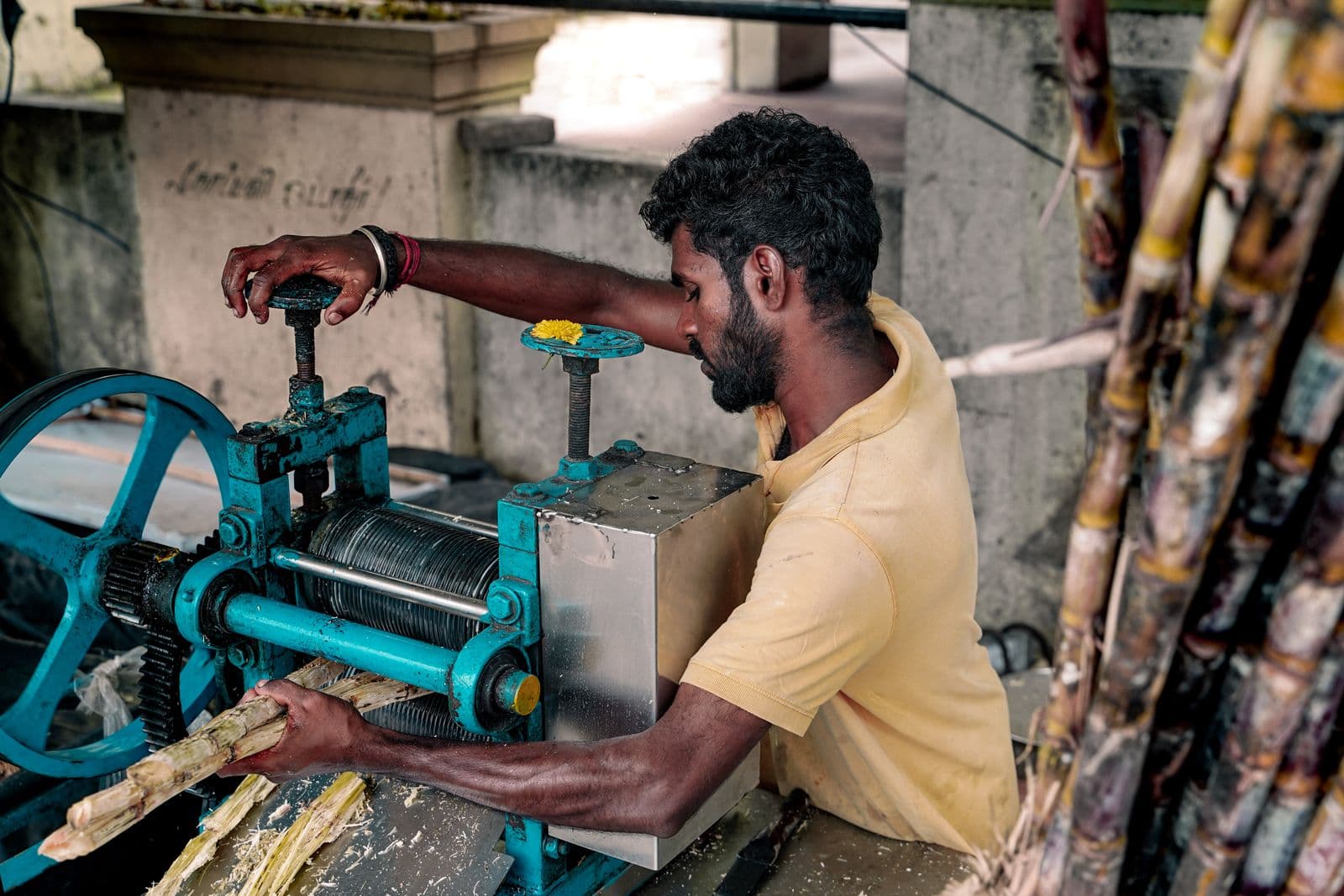
Clean, mature cane is soaked, washed and crushed; the juice is clarified, filtered and homogenised, permitted preservatives and flavours are added, and it is bottled in 200 ml bottles, crown-corked, pasteurised and cooled. Raw juice turns brown and ferments within hours, so hygiene and speed matter. Buyers are shops, cafés, canteens, events and branded juice outlets.
Capacity: 2.5 tonnes of cane a day giving 1,000 litres of juice; 250 working days, 2,50,000 litres a year; 60% in year 1.
§2Is it right for you?
Who it is for
A cane-belt entrepreneur with food-processing training and access to cold-chain retail.
Who it is not for
Anyone who cannot maintain strict hygiene or arrange year-round cane.
Advantages
- UP is India's largest cane-growing state (38.61% share in the report)
- Healthy drink with a big summer market
- Cane is cheap (₹3,000 a tonne in the report)
- Branded, hygienic juice can replace roadside stalls
Drawbacks
- Juice spoils within hours unless processed fast
- Cane supply is seasonal
- Bagasse attracts flies and must be cleared quickly
- Shelf life and taste after pasteurisation must be proven
Skills you need
- Food hygiene and pasteurisation
- Shelf-life testing
- Cane procurement
- Retail and HoReCa sales
Why difficulty 4/5: Fast spoilage and food-safety demands make this harder than it looks; the report's margins look optimistic.
§3Market
Who buys
- Grocery and general stores
- Cafés, canteens and restaurants
- Events, offices and institutions
How it sells
- Distributors with cold storage
- Own or franchised juice outlets
- Modern retail
Good to know
- The report says cane juice is mostly sold by roadside vendors in unhygienic conditions, and a few entrepreneurs have started branded chains of franchised outlets.
- It names Uttar Pradesh, Maharashtra and Karnataka as the top cane-producing states.
§4Raw material & machinery
| Item | Qty | Cost |
|---|---|---|
| Sugarcane juice machine (cutting, peeling, crushing and juice making) | 1 | ₹8,50,000 |
| Bottle / tetra-pack filling machine | 1 | ₹2,50,000 |
| Material handling equipment | 1 | ₹75,000 |
| Weighing scale | 1 | ₹25,000 |
| Miscellaneous tools | 1 lot | ₹15,000 |
From: PMEGP sample project report — Sugarcane Juice Making Plant (prepared by Udyami/Samadhan)
- Fresh, mature sugarcane625 tonnes a year (2.5 t a day × 250 days) at ₹3,000 a tonne = ₹18.75 L; cane gives 50–55% juice
- Permitted preservatives, spices and flavours
- 200 ml glass bottles or tetra packs and crown corksISI-standard bottles and closures
From: PMEGP sample project report — Sugarcane Juice Making Plant (prepared by Udyami/Samadhan)
In our raw material database
§5Licences & registration
- Udyam
- GST
- FSSAI licence
- Legal Metrology registration for packed goods
- State Pollution Control Board consent where applicable (the report says to check)
- Bottles and crown corks to ISI standards (the report's condition)
§6Schemes & subsidies
- PMFMECentralUnclear35% subsidy, up to ₹10 lakh
- PMEGPCentralActive15–35% subsidy
- MudraCentralActiveLoan up to ₹20 lakh, no collateral
- CGTMSECentralActiveNo collateral, up to ₹10 crore
PMFME (micro food processing), PMEGP, MUDRA up to ₹20 L and CGTMSE fit.
§7Money
How the investment is worked out: PMEGP sample report: building & civil work 5,000 sq ft ₹3.30 L, plant & machinery ₹12.15 L, furniture ₹0.50 L, pre-operative ₹0.50 L, working capital ₹8.55 L = ₹25.00 L. Land rented or owned.
Working capital: Working capital ₹8.55 L (bank ₹7.70 L): the report keeps 30 days of finished juice and 45 days of cane.
Year not printed on the report — check current machinery prices.
§8Export potential
Export council / board: APEDA
- The report gives no HS code; confirm the ITC(HS) line for packaged sugarcane juice with DGFT or a customs broker.
- APEDA registers exporters of processed fruit and vegetable products.
§9Risks — where people fail
- Spoilage and product recalls
- Cane availability off-season
- Food-safety inspections
- Competition from cheaper soft drinks
§1030 / 60 / 90-day plan
A general plan that applies to any business. A plan for this business will be added after research.
- Days 1–30: Visit a working bottled sugarcane juice plant unit, ask 10 buyers about price and quantity, and get quotations from 3 suppliers.
- Days 31–60: Udyam and the licences you need (Udyam, GST), a project report (DPR), and the scheme or loan file.
- Days 61–90: Space and machines, trial production, and first deliveries to 10 customers.
§11Who to connect with
Associations, clusters and training institutes — the directory is being built. Connect
§12Watch
There is no episode on this business yet. Shows are coming soon on the Podcast page.
Want to start Bottled Sugarcane Juice Plant?
DPR, loan file or registration — ask us on WhatsApp.
¶Sources
Data review: 6 October 2026. Spotted a mistake? Report it. For information only — not legal or financial advice.