

§1What this business is
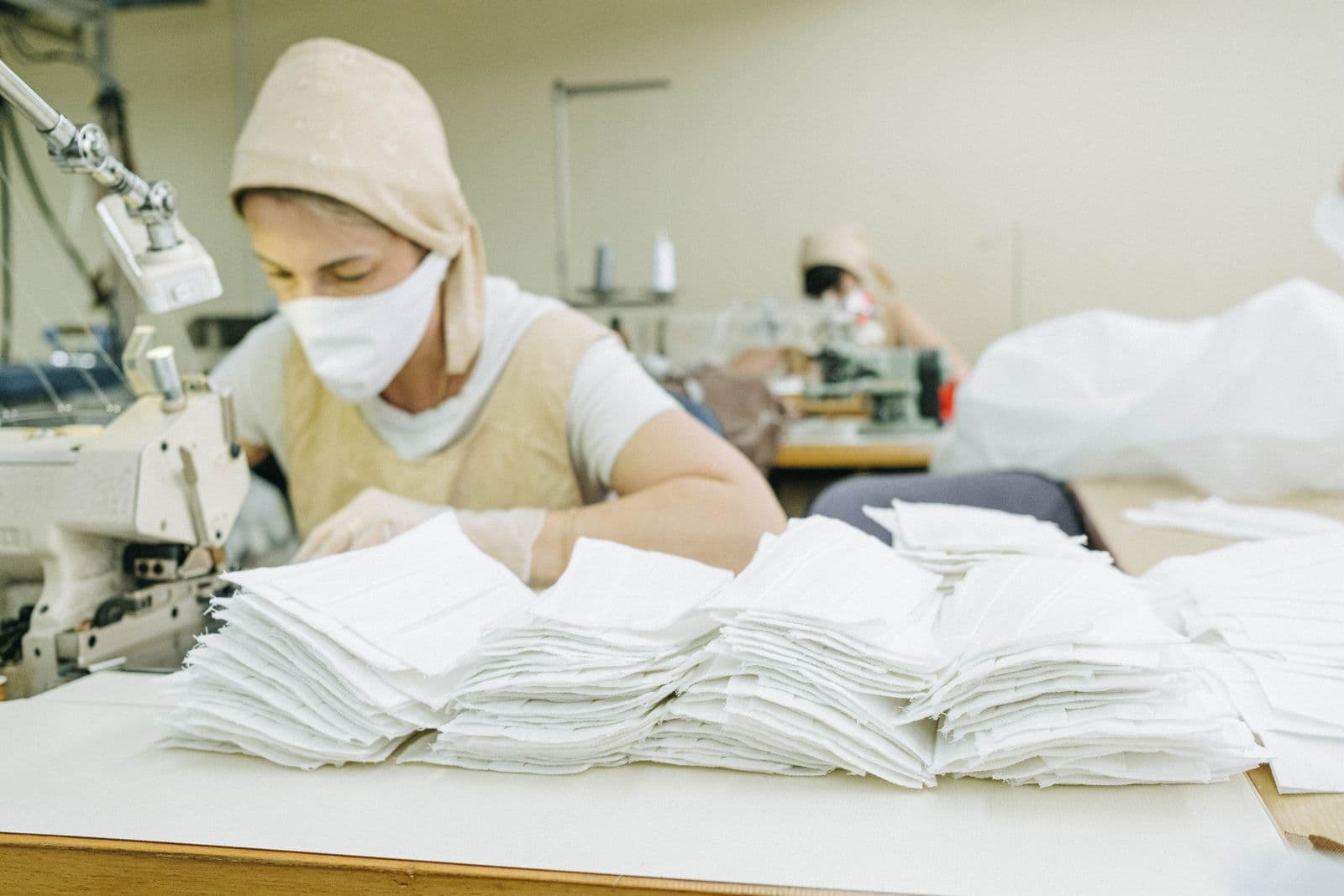
Non-woven fabric is layered on a cutting table, cut to pattern, and stitched by tailors into operation gowns and nurse gowns with rib cuffs and velcro; caps, hoods and masks are cut and stitched from the same fabric, using cutting waste for ties. Gowns are packed singly and small items in sets of 12. Buyers are hospitals, nursing homes, clinics and medical distributors.
Capacity: 6,00,000 pieces a year: 75,000 operation gowns, 75,000 nurse gowns, 1,50,000 surgeon hoods, 1,00,000 nurse caps, 1,00,000 three-layer and 1,00,000 four-layer masks; 60% in year 1.
§2Is it right for you?
Who it is for
A garment unit owner or medical distributor who can supply hospitals regularly.
Who it is not for
Someone counting on a repeat of pandemic-time demand.
Advantages
- Disposable wear cuts infection risk, so hospitals keep buying
- Only sewing machines needed
- Employs many tailors
- Easy to add new items like shoe covers or aprons
Drawbacks
- Fabric is the main cost — ₹124.46 L of ₹182.32 L sales in year 5
- Mask demand rose sharply during COVID and then fell back
- Hospitals buy on price through tenders
- Quality and sterility claims must be backed up
Skills you need
- Pattern cutting
- Running a stitching floor
- Hospital and tender sales
- Quality checks on seams and fabric GSM
Why difficulty 2/5: Simple stitching work; steady hospital orders are the challenge.
§3Market
Who buys
- Hospitals and nursing homes
- Clinics and diagnostic centres
- Medical distributors
How it sells
- Hospital purchase departments
- Government tenders and GeM
- Medical distributors
Good to know
- The report says non-woven disposable garments have distinct demand at home and abroad because they are light, cheap and come in many colours.
- No product specification is available, so quality depends on the fabric and stitching you choose.
§4Raw material & machinery
| Item | Qty | Cost |
|---|---|---|
| Singer model SNLS sewing machine | 8 | ₹4,80,000 (₹60,000 each) |
| Fabric cutting machine and table | 1 | ₹1,00,000 |
| Electric iron | 4 | ₹10,000 (₹2,500 each) |
| Miscellaneous | 1 lot | ₹75,000 |
From: PMEGP sample project report — Surgical Dresses (prepared by Udyami/Samadhan)
- Non-woven fabric, 60 GSM1,20,000 metres a year at ₹70 a metre at full capacity
- Non-woven fabric, 30 GSM1,00,000 metres a year at ₹40 a metre
- Rib knitted cloth for cuffs25 kg at ₹220 a kg
- Velcro, plastic film and polyester sewing thread₹40,000 a year together
From: PMEGP sample project report — Surgical Dresses (prepared by Udyami/Samadhan)
§5Licences & registration
- Udyam
- GST
- GeM seller registration
- Check with the State Drugs Controller if you sell sterile or medical-grade masks and gowns — Medical Devices Rules may apply
§6Schemes & subsidies
- PMEGPCentralActive15–35% subsidy
- MudraCentralActiveLoan up to ₹20 lakh, no collateral
- CGTMSECentralActiveNo collateral, up to ₹10 crore
- Stand-Up IndiaCentralClosed₹10 lakh – ₹1 crore loan
PMEGP (the report was made for it), MUDRA up to ₹20 L, CGTMSE for a collateral-free loan, Stand-Up India for SC/ST or women founders.
§7Money
How the investment is worked out: PMEGP sample report: building & civil work 2,000 sq ft ₹4.00 L, plant & machinery ₹6.65 L, furniture ₹1.50 L, pre-operative ₹0.80 L, working capital ₹8.05 L = ₹21.00 L. Land rented or owned.
Working capital: Working capital ₹8.05 L (bank ₹7.24 L): 15 days of fabric and finished stock; debtors are the largest item.
Year not printed on the report — check current machinery prices.
§8Export potential
Confirm the HS code in the DGFT ITC(HS) lookup before you export
Export council / board: Apparel Export Promotion Council (AEPC)
- Confirm the 8-digit ITC(HS) line with DGFT or your customs broker.
§9Risks — where people fail
- Fabric price rise
- Demand swings
- Tender price pressure
- Claims of sterility without proper process
§1030 / 60 / 90-day plan
A general plan that applies to any business. A plan for this business will be added after research.
- Days 1–30: Visit a working surgical dresses (disposable gowns, caps and masks) unit unit, ask 10 buyers about price and quantity, and get quotations from 3 suppliers.
- Days 31–60: Udyam and the licences you need (Udyam, GST), a project report (DPR), and the scheme or loan file.
- Days 61–90: Space and machines, trial production, and first deliveries to 10 customers.
§11Who to connect with
Associations, clusters and training institutes — the directory is being built. Connect
§12Watch
There is no episode on this business yet. Shows are coming soon on the Podcast page.
Want to start Surgical Dresses (Disposable Gowns, Caps and Masks) Unit?
DPR, loan file or registration — ask us on WhatsApp.
¶Sources
Data review: 6 October 2026. Spotted a mistake? Report it. For information only — not legal or financial advice.