

§1What this business is
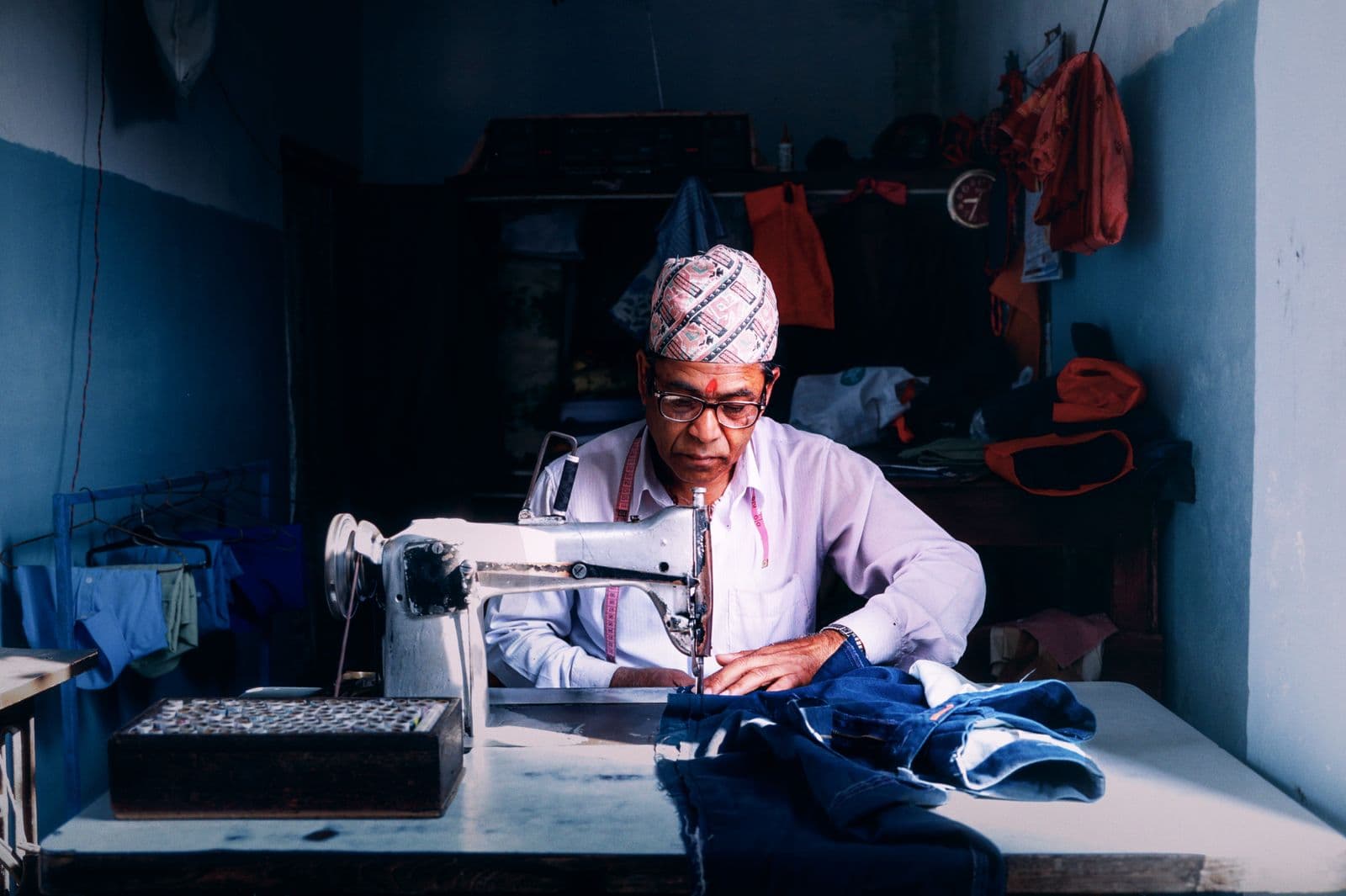
The customer brings the cloth; the tailor master takes measurements, cuts the cloth and stitches it on sewing and overlock machines. Buttonholes and buttons are done by hand, and the garment is ironed and delivered. The shop can also take job work for made-ups, home furnishings, tent decoration and small orders from garment units. The profile suggests a spot next to a cloth shop for steady work.
§2Is it right for you?
Who it is for
A trained tailor who wants an own shop, ideally next to a cloth shop.
Who it is not for
Someone who cannot cut and fit well — bad fitting loses customers quickly.
Advantages
- Very small investment
- Many customers in towns and villages still prefer tailor-made clothes
- Wedding and festival seasons bring rush orders
Drawbacks
- Income depends on the master tailor's own skill and speed
- Ready-made garments take away simple orders
- Delivery-date pressure in peak season
Skills you need
- Measuring and pattern cutting
- Stitching and finishing
- Keeping delivery dates
- Dealing with customers
Why difficulty 2/5: Tiny investment, but the business is only as good as the tailor's skill.
§3Market
Who buys
- Individual customers wanting tailor-made clothes
- Cloth shops passing on stitching work
- Ready-made garment units (small job orders)
- Tent and interior decoration work
How it sells
- Walk-in customers
- Tie-up with a nearby cloth shop
Good to know
- The profile says tailor-made clothes are cost-effective compared with ready-made in rural and semi-urban areas.
- Job-work income in the profile is ₹17,000 a month.
§4Raw material & machinery
| Item | Qty | Cost |
|---|---|---|
| Cloth cutting table | 1 | ₹2,200 |
| Sewing machine, foot-operated | 4 | ₹22,000 |
| Overlock machine, foot-operated | 1 | ₹7,700 |
| Scissors, tape, irons, hangers | lot | ₹500 |
| Furniture and fixtures | lot | ₹1,000 |
From: MSME-DI Hyderabad project profile — Tailoring Unit
- Customer's own clothbrought by the customer
- Lining and pocketing fabric, buttons, hooks and bars, sewing thread₹3,500 a month
§5Licences & registration
- Shop and establishment registration (state law)
- Trade licence from the local body
- Udyam registration
- GST registration once turnover crosses the limit
§6Schemes & subsidies
A MUDRA Shishu loan covers the cost; PMEGP also funds tailoring units.
§7Money
How the investment is worked out: Machines and equipment printed as ₹43,400 (cutting table ₹2,200; 4 foot-operated sewing machines at ₹5,500 = ₹22,000; 1 foot-operated overlock ₹7,700; scissors, tape, irons, hangers ₹500; furniture ₹1,000 — these items add to ₹33,400) + one month's materials ₹3,500. Range ₹36,900–46,900. Shop rented at ₹2,000 a month.
Working capital: Lining and pocketing fabric, buttons, hooks and bars and sewing thread ₹3,500 a month.
Year not printed on the MSME-DI Hyderabad profile; the prices are old — check current machinery and material prices.
§8Export potential
This is a local service business; there is no goods export.
§9Risks — where people fail
- Ready-made clothes getting cheaper
- Losing skilled helpers
- Seasonal ups and downs
- Rent rises at a good spot
§1030 / 60 / 90-day plan
A general plan that applies to any business. A plan for this business will be added after research.
- Days 1–30: Visit a working tailoring shop unit, ask 10 buyers about price and quantity, and get quotations from 3 suppliers.
- Days 31–60: Udyam and the licences you need (Shop and establishment registration (state law), Trade licence from the local body), a project report (DPR), and the scheme or loan file.
- Days 61–90: Space and machines, trial production, and first deliveries to 10 customers.
§11Who to connect with
Associations, clusters and training institutes — the directory is being built. Connect
§12Watch
There is no episode on this business yet. Shows are coming soon on the Podcast page.
Want to start Tailoring Shop?
DPR, loan file or registration — ask us on WhatsApp.
¶Sources
Data review: 6 October 2026. Spotted a mistake? Report it. For information only — not legal or financial advice.