

§1What this business is
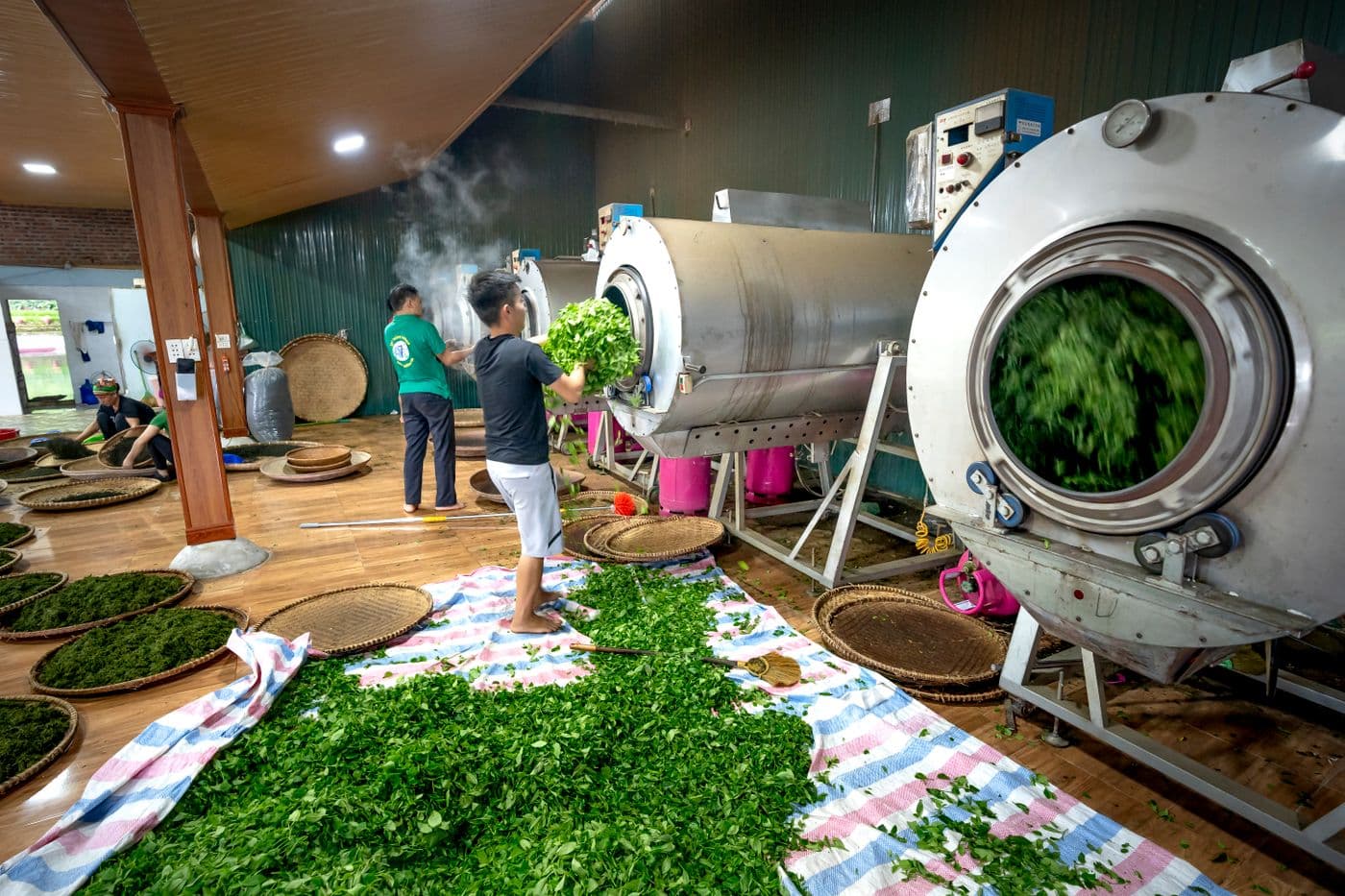
The unit buys made tea and herbs, mixes them to its own recipe, and packs them in packets and tea bags with a tea-bag machine and sealer. The report plans three products: milk tea (65% of output), herbal tea (25%) and green tea (10%). It does not grow or process green leaf.
Capacity: 400 kg a day, 1,20,000 kg a year; year 1 at 50% (60,000 kg). Dehumidifier 50 kg/hour, tea-bag machine 30–40 bags a minute.
§2Is it right for you?
Who it is for
A trader or food entrepreneur who knows tea grades and has a distribution network to kirana shops and HoReCa buyers.
Who it is not for
A first-time founder with little capital; most of the money goes into stock and selling, not machines.
Advantages
- Tea is drunk in almost every home, so demand is steady
- Blending and packing needs no tea garden
- Herbal and green teas carry higher prices (₹790 and ₹675 a kg in year 1 of the report)
- Tea bags and small packs suit offices, hotels and shops
Drawbacks
- Large working capital (₹40 lakh) for stock
- Crowded market with big national brands
- Margins depend on buying tea well at auctions or from dealers
- Project cost is above the PMEGP manufacturing ceiling of ₹50 lakh
Skills you need
- Tea tasting and blending
- Buying tea and herbs at the right price
- Brand building and packaging
- Distributor and retailer network
Why difficulty 4/5: Big working capital and strong brands in the market — selling is harder than blending.
§3Market
Who buys
- Households
- Offices, hotels and canteens
- Health-conscious buyers for green and herbal tea
How it sells
- Kirana shops through distributors
- Supermarkets and online stores
- Bulk supply to HoReCa
Good to know
- Selling prices in year 1 of the report: milk tea ₹195, green tea ₹675, herbal tea ₹790 a kg.
- Machine cost in the report (₹19 lakh) excludes GST and transport.
§4Raw material & machinery
| Item | Qty | Cost |
|---|---|---|
| Main machine (dehumidifier, tea-bag machine) | — | ₹15.00 lakh |
| Ancillary machines (punch sealing etc.) | — | ₹4.00 lakh |
From: PMEGP sample project report — Tea Blending Unit (prepared by Udyami/Samadhan)
- Tea for milk tea₹140–150 a kg (₹150 in year 1 of the report)
- Green tea₹450–500 a kg (₹460 in year 1)
- Herbal tea ingredients₹500–550 a kg (₹520 in year 1)
- Packaging and tea-bag materialpackaging cost ₹2.35 lakh in year 1
From: PMEGP sample project report — Tea Blending Unit (prepared by Udyami/Samadhan)
Suppliers in Building Business Bazaar
Quality Control Laboratory, Tea Board India, Siliguri · Siliguri →TLABS, Tea Research Association, Kolkata · Kolkata →Tlabs, Tea Research Association, Tocklai Tea Research Institute, Jorhat · Jorhat →
In our raw material database
§5Licences & registration
- FSSAI licence
- Udyam registration
- GST registration
- Fire and pollution clearances as required
- Trademark for the brand
- Legal Metrology registration for packaged goods
- Tea Board registration if you buy at tea auctions
§6Schemes & subsidies
PMFME's 35% subsidy (up to ₹10 lakh) can cover part of a micro food unit; CGTMSE gives collateral-free cover. At ₹82.42 lakh the report's plan is above the PMEGP limit of ₹50 lakh, so it would need to be scaled down to use PMEGP.
§7Money
How the investment is worked out: Sample report total ₹82.42 lakh: building/civil work ₹15.00 lakh, plant & machinery ₹22.42 lakh, furniture & other assets ₹5.00 lakh, working capital ₹40.00 lakh. Finance: own share ₹20.61 lakh, bank term loan ₹31.82 lakh, working-capital limit ₹30.00 lakh.
Working capital: Working capital is the largest item at ₹40.00 lakh (bank limit ₹30.00 lakh) — tea and herbs are bought in bulk.
Year not printed on the sample report — check current machinery prices.
§8Export potential
Confirm the HS code in the DGFT ITC(HS) lookup before you export
Export council / board: Tea Board of India
- Exporters of tea need an IEC and registration with the Tea Board of India.
- Check buyer-country residue limits for tea and herbs.
§9Risks — where people fail
- Tea price swings between seasons
- Moisture spoiling stock
- Competition from big brands
- Credit to distributors locking up cash
§1030 / 60 / 90-day plan
A general plan that applies to any business. A plan for this business will be added after research.
- Days 1–30: Visit a working tea blending and packing unit unit, ask 10 buyers about price and quantity, and get quotations from 3 suppliers.
- Days 31–60: Udyam and the licences you need (FSSAI licence, Udyam registration), a project report (DPR), and the scheme or loan file.
- Days 61–90: Space and machines, trial production, and first deliveries to 10 customers.
§11Who to connect with
Associations, clusters and training institutes — the directory is being built. Connect
§12Watch
There is no episode on this business yet. Shows are coming soon on the Podcast page.
Want to start Tea Blending and Packing Unit?
DPR, loan file or registration — ask us on WhatsApp.
¶Sources
Data review: 6 October 2026. Spotted a mistake? Report it. For information only — not legal or financial advice.