

§1What this business is
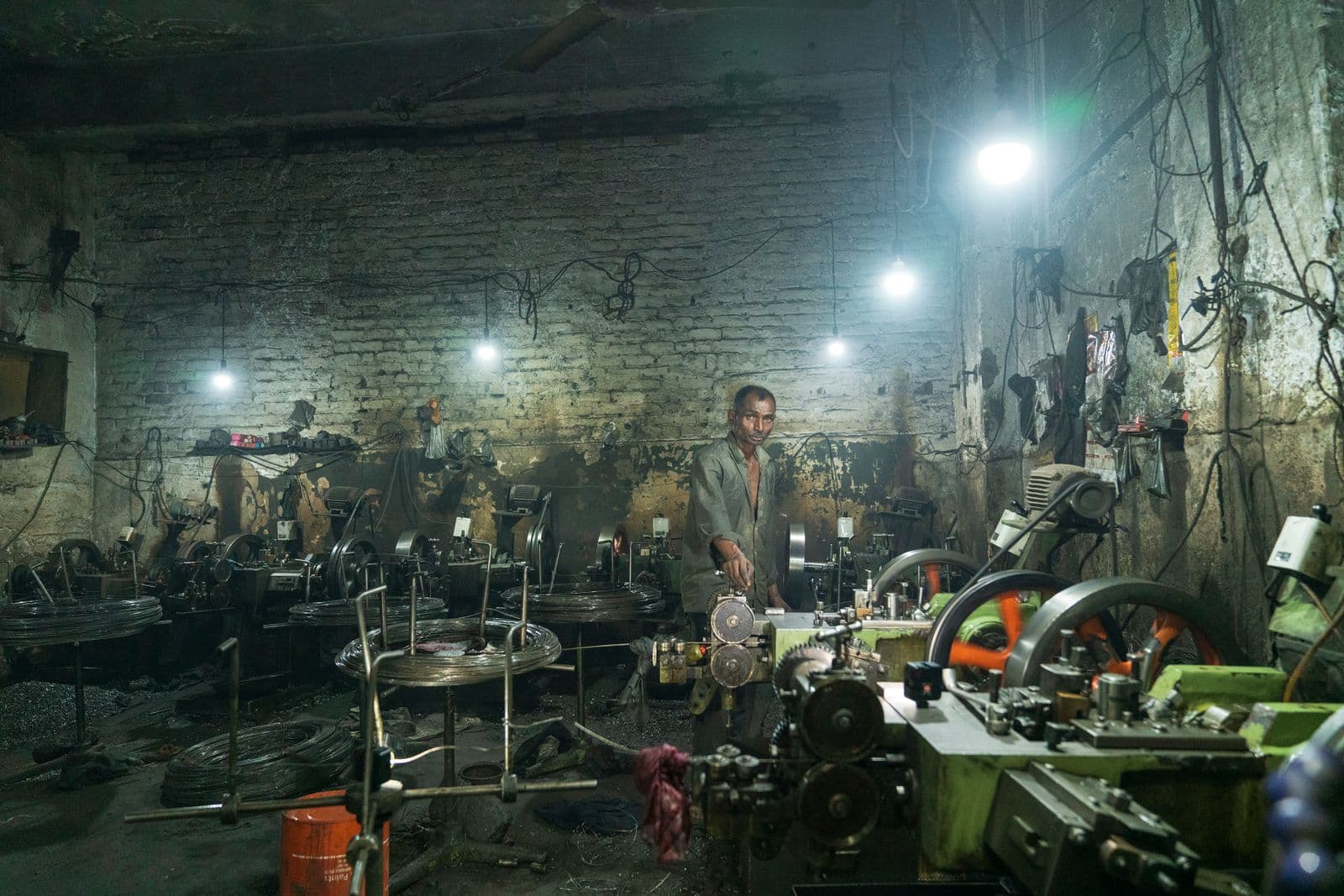
Lock bodies and cylinders are pressure die-cast from a zinc-based alloy called Mazak (or from aluminium), then deburred and polished. Levers are press-cut from brass or mild-steel sheet and fitted with springs; shackles are cut from MS rod, notched, bent and nickel-plated; keys are made of brass or mild steel. Parts are assembled and pinned, then painted or nickel-plated. The profile makes 20 to 40 mm locks to IS 4230:1967 for doors, shutters, windows, almirahs and trunks, sold through hardware shops and wholesalers.
Capacity: 1.2 lakh locks a year (48,000 of 20–25 mm, 60,000 of 30–35 mm, 12,000 of 40 mm), worth ₹41.1 lakh.
§2Is it right for you?
Who it is for
Someone from the lock or die-casting trade with hardware-market contacts.
Who it is not for
Someone without a sales channel to hardware wholesalers.
Advantages
- Locks are an everyday household need
- Die casting gives accurate parts that need little machining
- Modest investment
- Several sizes from one set of machines
Drawbacks
- Established lock clusters and cheap imports set prices
- Electroplating waste needs proper disposal
- Keys and levers must not be interchangeable — tight quality control
- Buyers trust known brands
Skills you need
- Pressure die casting
- Press tools for levers
- Plating and finishing
- Selling to hardware wholesalers
Why difficulty 3/5: Moderate investment, but die casting, plating and a price-driven market.
§3Market
Who buys
- Households and shopkeepers
- Hardware wholesalers and retailers
- Almirah and trunk makers
How it sells
- Hardware shops
- Hardware wholesale markets
Good to know
- The profile calls the lock an essential household item with ever-increasing demand.
- Prices in the profile: ₹25 (20–25 mm), ₹37.50 (30–35 mm), ₹55 (40 mm).
§4Raw material & machinery
| Item | Qty | Cost |
|---|---|---|
| Hand-operated hot-chamber pneumatic pressure die casting machine (up to 400 g) | 5 | ₹4,25,000 |
| Power press, 10 tonne, with 1 HP motor | 2 | ₹1,30,000 |
| Air compressor for die casting | 5 | ₹75,000 |
| Bench drilling machine, 10 mm | 2 | ₹25,000 |
| Bench grinder, 200 mm | 1 | ₹5,500 |
| Lathe, 1,500 mm bed, with 2 HP motor | 1 | ₹75,000 |
| Electroplating plant / painting equipment | L.S. | ₹1,00,000 |
| Dies, tools and measuring instruments | — | ₹1,00,000 |
From: DC-MSME project profile — Tumbler Locks (PMRY series, prepared by SISI) (2003)
- Mazak (zinc-based) alloy1.5 tonnes a month at ₹70,000 a tonne in the profile
- Springs100 kg a month at ₹25 a kg
- MS sheet, 24 SWG500 kg a month at ₹20 a kg (levers)
- Electroplating salts, paint, oil and diesel₹75,000 a month
From: DC-MSME project profile — Tumbler Locks (PMRY series, prepared by SISI) (2003)
Suppliers in Building Business Bazaar
Essential Machine Tools (P) Ltd · Mumbai →Atlas Engg. Works · Batala →Basant Industries · Ludhiana →Bhag Sons · Ludhiana →Bombay Metal Syndicate · Mumbai →Daulat Industries Corporation · Ludhiana →Hind Engg. Works · Aligarh →Hindustan Metal and Engg. Co · Mumbai →James Engg. Works · Chennai →Komal Industries Corporation · Mumbai →Non-Ferrous Metal Corpn · Mumbai →P. K. Engg. Works · Aligarh →
§5Licences & registration
- Udyam registration
- GST
- State Pollution Control Board consent (electroplating)
- Trade licence from the local body
- BIS certification if a Quality Control Order covers padlocks — check the current BIS list
§6Schemes & subsidies
- PMEGPCentralActive15–35% subsidy
- MudraCentralActiveLoan up to ₹20 lakh, no collateral
- CGTMSECentralActiveNo collateral, up to ₹10 crore
- Stand-Up IndiaCentralClosed₹10 lakh – ₹1 crore loan
At about ₹15 lakh it fits PMEGP (manufacturing up to ₹50 lakh) and MUDRA (loans up to ₹20 lakh); CGTMSE backs a loan without collateral; Stand-Up India suits SC/ST and women founders.
§7Money
How the investment is worked out: Fixed capital ₹11.20 lakh (machinery ₹8.355 lakh + erection ₹0.84 lakh + dies, tools and measuring instruments ₹1.00 lakh + office equipment ₹0.50 lakh + pre-operative ₹0.50 lakh) + working capital for 1½ months ₹3.88 lakh = ₹15.08 lakh. Shed rented (300 sq m at ₹5,000 a month).
Working capital: ₹2.585 lakh a month; the profile funds only 1½ months (₹3.88 lakh).
Prices from 2003 — machinery, material and wage costs will be much higher now.
§8Export potential
Confirm the HS code in the DGFT ITC(HS) lookup before you export
Export council / board: EEPC India
- Confirm the 8-digit ITC(HS) line with DGFT or your customs broker before shipping.
- You need an Import Export Code (IEC) from DGFT before the first shipment.
§9Risks — where people fail
- Zinc alloy price swings
- Competition from established lock makers and imports
- Pollution compliance for electroplating
- Quality complaints about weak shackles or duplicate keys
§1030 / 60 / 90-day plan
A general plan that applies to any business. A plan for this business will be added after research.
- Days 1–30: Visit a working tumbler lock (padlock) manufacturing unit, ask 10 buyers about price and quantity, and get quotations from 3 suppliers.
- Days 31–60: Udyam and the licences you need (Udyam registration, GST), a project report (DPR), and the scheme or loan file.
- Days 61–90: Space and machines, trial production, and first deliveries to 10 customers.
§11Who to connect with
Associations, clusters and training institutes — the directory is being built. Connect
§12Watch
There is no episode on this business yet. Shows are coming soon on the Podcast page.
Want to start Tumbler Lock (Padlock) Manufacturing?
DPR, loan file or registration — ask us on WhatsApp.
¶Sources
Data review: 6 October 2026. Spotted a mistake? Report it. For information only — not legal or financial advice.